China welcomes PM Modi's planned visit to attend SCO Summit
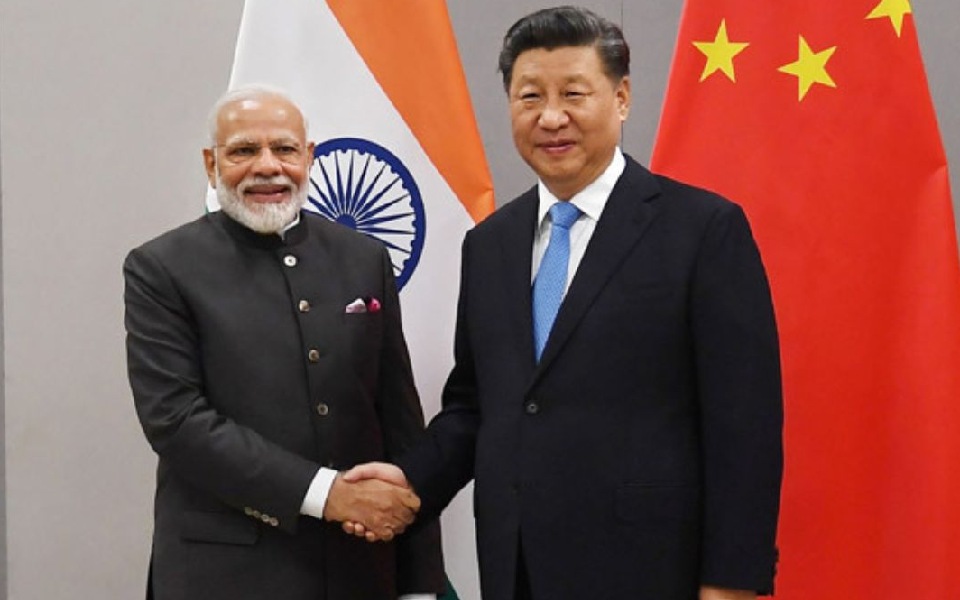
Beijing, Aug 8 (PTI): China on Friday welcomed Prime Minister Narendra Modi’s planned visit to the Tianjin Summit of the Shanghai Cooperation Organisation (SCO) to be held later this month, expressing hope that the event would be a "gathering of solidarity, friendship and fruitful results".
Prime Minister Modi is expected to travel to China later this month after a gap of over seven years to attend the annual summit of the SCO, people familiar with the matter in Delhi said this week.
"China welcomes Prime Minister Modi to China for the SCO Tianjin Summit," Foreign Ministry Spokesperson Guo Jiakun said while responding to a question on reports about Modi's visit to China to attend the Tianjin summit to be held from August 31 to September 1.
"We believe that with the concerted effort of all parties, the Tianjin summit will be a gathering of solidarity, friendship and fruitful results, and the SCO will enter a new stage of high-quality development featuring greater solidarity, coordination, dynamism and productiveness," Guo said.
Guo said that leaders of over 20 countries, including all member states of the SCO and heads of 10 international organisations, will attend relevant events.
"The SCO Tianjin Summit will be the largest summit in scale since the establishment of the SCO," the spokesperson added.
Also, Indian Ambassador to China Pradeep Rawat on Friday met with Liu Jinsong, Director-General of the Department of Asian Affairs of the Ministry of Foreign Affairs.
The two sides had a comprehensive and in-depth exchange of views on China-India relations and issues of common concern, said a press release issued by the Chinese Foreign Ministry.
Modi is expected to embark on a visit to Japan around August 29, and after concluding the trip, he will travel to the Chinese city of Tianjin for the SCO summit.
There is no official confirmation yet on Modi's two-nation visit to Japan and China.
Modi last visited China in June 2018 to attend the SCO summit. Chinese President Xi Jinping visited India in October 2019 for the second "informal summit". However, the relationship came under stress due to the eastern Ladakh border face-off.
The military standoff in eastern Ladakh began in May 2020 and the clashes at the Galwan Valley in June that year resulted in a severe strain in ties.
The face-off effectively ended following completion of the disengagement process from the last two friction points of Demchok and Depsang under an agreement finalised on October 21 last year.
In the last few months, both sides revived the Special Representative dialogue on the boundary question and other dialogue mechanisms.
The decision to revive various dialogue mechanisms was taken at a meeting between Prime Minister Modi and President Xi at Kazan in Russia on October 23, 2024.
The Modi-Xi meeting came two days after India and China firmed up a disengagement pact for Depsang and Demchok.
The two sides also took a number of initiatives to rebuild the ties, which included the resumption of Kailash Mansarovar Yatra and New Delhi restarting issuance of tourist visas to Chinese nationals.
Both sides are also discussing modalities to resume direct flight services between the two countries.
Defence Minister Rajnath Singh, External Affairs Minister S Jaishankar and NSA Ajit Doval visited China in the last two months to attend the SCO meetings.
China is the current chair of the SCO.
It is not immediately clear whether PM Modi and President Xi will hold a bilateral meeting on the sidelines of the SCO summit.
It is expected that Russian President Vladimir Putin will be among the top leaders who will participate in the SCO summit.
The SCO, comprising India, China, Russia, Pakistan, Kazakhstan, Kyrgyzstan, Tajikistan, Uzbekistan, Iran and Belarus, is an influential economic and security bloc that has emerged as one of the largest transregional international organisations.
It was founded at a summit in Shanghai in 2001 by the presidents of Russia, China, the Kyrgyz Republic, Kazakhstan, Tajikistan and Uzbekistan.
Pakistan became a permanent member along with India in 2017. Iran joined the grouping in 2023 and Belarus in 2024.
Let the Truth be known. If you read VB and like VB, please be a VB Supporter and Help us deliver the Truth to one and all.
Ruckus outside counting centre in Mamata's constituency, TMC claims entry of car with BJP flag
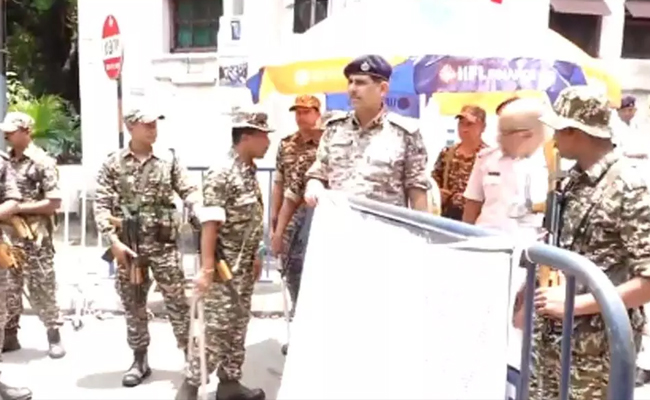
Kolkata (PTI): The counting centre at West Bengal Chief Minister Mamata Banerjee's Bhabanipur assembly constituency witnessed a ruckus a day ahead of the counting of votes, with TMC workers alleging two cars bearing the BJP's flag were allowed entry to the compound where EVMs are kept.
The incident comes close on the heels of a four-hour-long sit-in by Banerjee in front of the same counting centre at the Sakhawat Memorial Girls School on Thursday night, alleging unauthorised entry of persons into the strongroom.
With the polling now over, the wrangling for power in West Bengal has turned into a battle of nerves between the incumbent TMC and the BJP. Workers and leaders of both parties have been keeping a steely gaze on the security of strongrooms across the state where the electoral fate of the candidates is sealed.
Despite expressing her confidence in a "landslide victory", Banerjee has repeatedly aired her apprehensions of "counting malpractice and EVM tampering ahead of the day of results".
On Sunday morning, TMC workers camping 100 metres from the counting centre alleged that two cars with BJP flags entered the premises and went near the strongroom.
"The CAPF personnel at the spot are not allowing any vehicle or person to enter the premises of the counting centre without valid identity proof. Then how come this car, which we have not seen in the past few days, was allowed entry? Once we protested, the central forces asked us to move 100 metres away," a TMC activist said.
The TMC claimed that while the police personnel posted there promised the vehicle would be removed from the spot, it remained there for some time.
A senior Election Commission official said the car was passing by the Harish Mukherjee Road, and after checking by security forces and police, it was allowed to leave as nothing objectionable was found in it.
On Thursday night, two counting centres, including one at Sakhawat Memorial Girls School in the city, witnessed high drama after TMC leaders alleged a lack of transparency and possible malpractice at the strongrooms housing sealed EVMs of the assembly polls, which concluded on April 29.
TMC leaders and candidates, Sashi Panja and Kunal Ghosh, held a sit-in outside the Khudiram Anushilan Kendra counting centre on Thursday evening, alleging unauthorised activities inside the strongroom amid the absence of TMC agents
In Howrah, TMC protested renovation work by the public works department at a place adjacent to the strongroom, and the EC stopped the work temporarily.
On Saturday, the ruling party filed a complaint with the poll panel, alleging unauthorised sorting of postal ballot covers at the EVM strongroom in Khudiram Anushilan Kendra.
Similar scenes were witnessed on Saturday outside the strongrooms at Asansol College in Paschim Bardhaman and the Barasat Government College in North 24 Parganas districts, where TMC workers held protests, alleging that CCTV cameras were switched off for several minutes.
The EC turned down all allegations, saying the surveillance cameras were working in an uninterrupted manner.
BJP spokesperson Sajal Ghosh told reporters that the people of Bengal were finding it "hilarious" that the TMC, "which used to win elections through unfair means and strongarm tactics" were now coming up with all sorts of "frivolous charges".
"Are they scared of losing?" he posed.