China's Wuhan city discharges last three COVID-19 patients from hospital
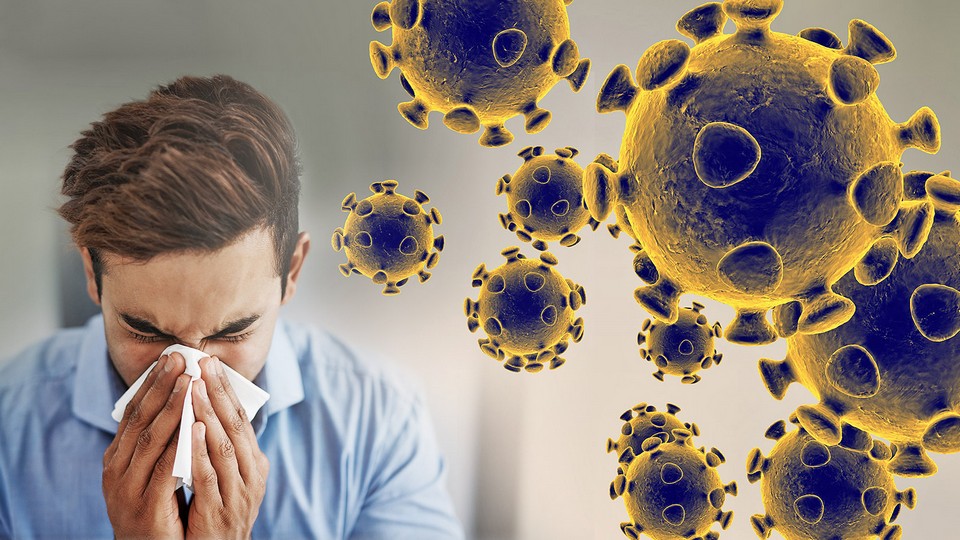
Beijing: The last three coronavirus patients in Wuhan, the first epicenter of the COVID-19, have been discharged and the central Chinese city has recorded zero cases of the virus after mass testing of about 10 million people, state media reported on Friday.
According to China's National Health Commission (NHC), five imported cases, including four in Shanghai and one in Sichuan Province, were reported in China on Thursday.
Also on Thursday, three new asymptomatic cases were reported taking the total of such cases under medical observation to 297, the NHC said.
As of Thursday, the overall confirmed cases on the mainland have reached 83,027, including 66 patients who were still being treated, and 78,327 people who had been discharged after recovery.
Altogether 4,634 people have died of the disease, the NHC said.
The last three COVID-19 patients in Wuhan, the capital of the Hubei Province, have recovered and been discharged from a hospital, state-run People's Daily reported on Friday.
They were discharged on Thursday after they tested negative for two nucleic acid tests within 24 hours, their temperatures fell to normal levels and their symptoms disappeared, according to the report.
By Thursday, all COVID-19 patients in Hubei, the province most affected by the COVID-19 epidemic in China, have been discharged from the hospitals. In total, the province reported 68,135 cases, with 63,623 recovered and discharged. In all 4,512 people died due to coronavirus in the province.
As of Wednesday, Wuhan still has 245 people with asymptomatic symptoms were under quarantine.
Asymptomatic cases also known as silent spreaders, pose a problem as the patients are tested COVID-19 positive but develop no symptoms such as fever, cough, or sore throat. However, they pose a risk of spreading the disease to others.
Hubei has accomplished seven zeros by Thursday: zero new COVID-19 cases, zero new suspected cases, zero new deaths, zero silent carriers, zero imported cases, zero existing confirmed cases, and zero existing suspected cases, state-run Global Times reported.
All districts in Wuhan, about 10 million have been tested and are now assessed to be low risk for the coronavirus infection. Dongxihu district, the last medium-risk district in the city, reported zero new cases for 14 consecutive days to June 1 and its risk level was adjusted to low on June 2, the report said.
Let the Truth be known. If you read VB and like VB, please be a VB Supporter and Help us deliver the Truth to one and all.
Man held for blackmailing woman using explicit photos, videos
Bengaluru (PTI): A 46-year-old man has been arrested for allegedly blackmailing a woman using her explicit photos and videos to force her into a sexual relationship with him, police said on Saturday.
The accused, Haniyur Chandregowda, is a member of the Child Welfare Committee in Ramanagara, they said.
Obscene photos of several other women were also found on his mobile phone during examination, police said.
The case came to light after a 43-year-old woman, who works as a make-up artist, filed a complaint at the Rajarajeshwari Nagar police station on April 30, they said.
According to FIR, the woman met Chandregowda in 2021. He told her he was connected to TV serials and took her phone number on the pretext of offering make-up work. The woman had been living separately from her husband for about eight years.
The accused started visiting her house frequently and told her he was a lecturer with a good salary and promised to marry her and entered into a physical relationship with her, she alleged.
Police said Chandregowda later used private photos and videos of their intimate moments to threaten her. He allegedly warned that he would make them public if she did not agree to his demands, and continued the relationship under pressure.
The FIR also stated that in 2024, he rented a house using the woman's documents by falsely claiming to be her husband.
The woman also alleged that he used a fake ID claiming he was a Superintendent of Police to avoid paying toll fees.
She claimed that he had taken around Rs 5 lakh from her since 2021 and had not returned the money.
The FIR further stated that he added his name to the educational documents of the woman's daughter, pretending to be her husband.
Based on the complaint, a case under sections 69 (sexual intercourse by deceitful means) and 204 (impersonating a public servant) of the Bharatiya Nyaya Sanhita was registered. He was later arrested, a senior police officer said.