Chinese satellites heading to moon fail to reach orbit after rocket falters
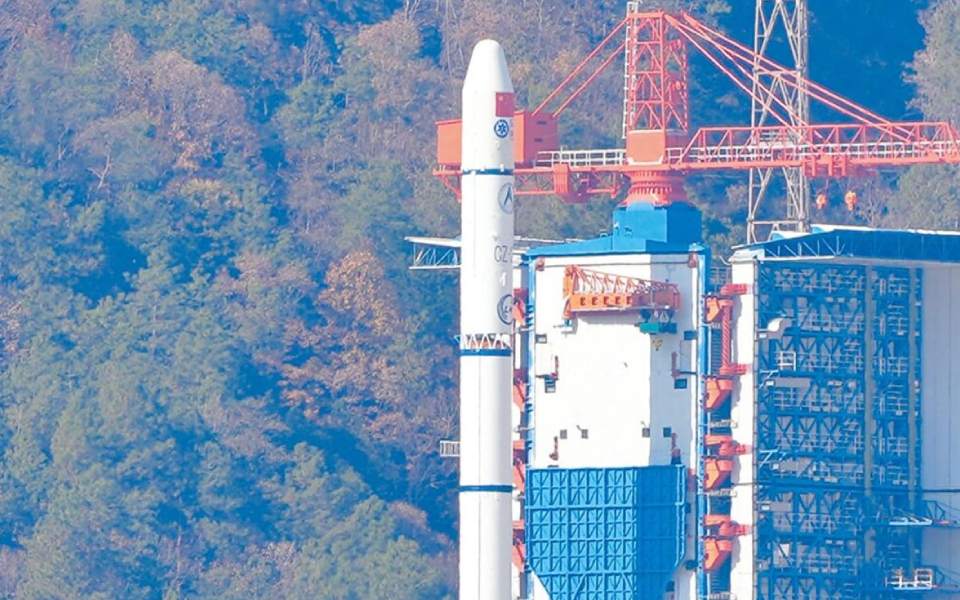
Beijing, Mar 15: A pair of Chinese satellites failed to reach a planned orbit on their way to the moon after experiencing abnormalities, a rare setback for Beijing's high-profile space programme.
The satellites, known as DRO-A and DRO-B, were launched on Wednesday evening from the Xichang Satellite Launch Centre in the Sichuan Province, the launch centre said in a press release on Thursday.
They were carried by A Yuanzheng-1S (Expedition-1S) upper-stage aircraft, attached to a Long March-2C carrier rocket, it said.
The first and second stages of the rocket operated normally, while the upper stage encountered an abnormality during flight, causing the satellites to fail to enter the preset orbit accurately, it said.
The relevant disposal work is currently underway, state-run Xinhua news agency reported, citing the launch centre.
The plan was for the two satellites to head towards the moon and enter a distant retrograde orbit (DRO).
From there, they would fly in formation and work with DRO-L a third satellite that was successfully placed into low-Earth orbit by a Jielong 3 rocket last month to test laser-based navigation technologies between the Earth and the moon, known as cislunar space, the Hong Kong-based South China Morning Post reported.
The DRO orbit is at a high altitude, tens of thousands of kilometres above the lunar surface. It is highly stable, allowing spacecraft to remain on track for a long time without using fuel, and is an advantageous waypoint for research and exploration, according to Chinese scientists.
Long March rockets have been integral to China's space ambitions, including moon missions.
China's manned space station is currently in orbit.
Let the Truth be known. If you read VB and like VB, please be a VB Supporter and Help us deliver the Truth to one and all.
Telangana rains: Four farmers dead, three injured as sheds collapse in Mancherial

Karimnagar (Telangana) (PTI): Four farmers died, and three others were injured after tin-roofed sheds and dilapidated structures collapsed in two separate incidents in Mancherial district of Telangana, officials said on Wednesday.
The incidents occurred in two villages of Luxettipet mandal late on Tuesday night, when the farmers were taking shelter in the structures following heavy rain and strong winds.
According to officials, two people died when a shed caved in at Kothuru village.
In a separate incident in Gampalapalli village, two more persons died after another structure collapsed, police and district authorities said.
The three injured were shifted to a hospital in Karimnagar for treatment, police said.
Preliminary reports indicate that unseasonal rains accompanied by strong winds weakened the structures, leading to the collapses.
Authorities are assessing the situation, and further investigation is underway.