Cleric Fethullah Gulen, accused of 2016 coup against Turkey's Erdogan, passes away in US
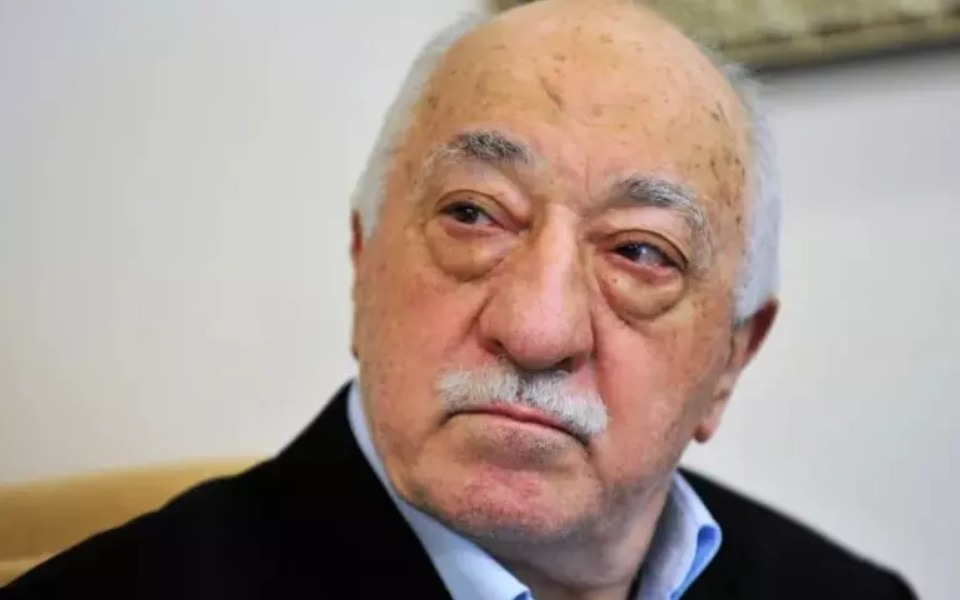
Saylorsburg, Oct 21: Fethullah Gulen, a reclusive US-based Islamic cleric who inspired a global social movement while facing accusations he masterminded a failed 2016 coup in his native Turkiye, has passed away.
Abdullah Bozkurt, the former editor of the Gulen-linked Today's Zaman newspaper, who is now in exile in Sweden, said on Monday that he spoke to Gulen's nephew, Kemal Gulen, who confirmed the death. Fethullah Gülen was in his eighties and had long been in ill health.
The state-run Anadolu Agency quoted Turkish Foreign Minister Hakan Fidan as saying the death has been confirmed by Turkish intelligence sources.
Gulen spent the last decades of his life in self-exile, living on a gated compound in Pennsylvania's Pocono Mountains from where he continued to wield influence among his millions of followers in Turkiye and throughout the world.
He espoused a philosophy that blended Sufism — a mystical form of Islam — with staunch advocacy of democracy, education, science and interfaith dialogue.
Gülen began as an ally of Turkish leader Recep Tayyip Erdogan, but became a foe. He called Erdogan an authoritarian bent on accumulating power and crushing dissent. Erdogan cast Gülen as a terrorist, accusing him of orchestrating the attempted military coup on the night of July 15, 2016, when factions within the military used tanks, warplanes and helicopters to try to overthrow Erdogan's government.
Heeding a call from the president, thousands took to the streets to oppose the takeover attempt. The coup-plotters fired at crowds and bombed parliament and other government buildings. A total of 251 people were killed and around 2,200 others were wounded. Around 35 alleged coup plotters were also killed.
Gülen adamantly denied involvement, and his supporters dismissed the charges as ridiculous and politically motivated. Turkiye put Gulen on its most-wanted list and demanded his extradition, but the United States showed little inclination to send him back, saying it needed more evidence. Gulen was never charged with a crime in the US, and he consistently denounced terrorism as well as the coup plotters.
In Turkiye, Gulen's movement — sometimes known as Hizmet, Turkish for “service” — was subjected to a broad crackdown. The government arrested tens of thousands of people for their alleged link to the coup plot, sacked more than 130,000 suspected supporters from civil service jobs and more than 23,000 from the military, and shuttered hundreds of businesses, schools and media organisations tied to Gulen.
Gulen called the crackdown a witch hunt and denounced Turkiye's leaders as “tyrants”.
“The last year has taken a toll on me as hundreds of thousands of innocent Turkish citizens are being punished simply because the government decides they are somehow connected' to me or the Hizmet movement and treats that alleged connection as a crime,” he said on the one-year anniversary of the failed coup.
Turkish Foreign Minister Fidan said on Monday that Gulen's death “will not make us complacent. Our nation and state will continue to fight against this organisation, as they do against all terrorist organisations”.
Fethullah Gulen was born in Erzurum, in eastern Turkiye. His official birth date was April 27, 1941, but that has long been in dispute. Y. Alp Aslandogan, who leads a New York-based group that promotes Gulen's ideas and work, said Gülen was actually born sometime in 1938.
Trained as an imam, or prayer leader, Gulen gained notice in Turkiye some 50 years ago. He preached tolerance and dialogue between faiths, and he believed religion and science could go hand in hand. His belief in merging Islam with Western values and Turkish nationalism struck a chord with Turks, earning him millions of followers.
Gülen's acolytes built a loosely affiliated global network of charitable foundations, professional associations, businesses and schools in more than 100 countries, including 150 taxpayer-funded charter schools throughout the United States.
In Turkiye, supporters ran universities, hospitals, charities, a bank and a large media empire with newspapers and radio and TV stations.
But Gulen was viewed with suspicion by some in his homeland, a deeply polarised country split between those loyal to its fiercely secular traditions and supporters of the Islamic-based party associated with Erdogan that came to power in 2002.
Gulen had long refrained from openly supporting any political party, but his movement forged a de facto alliance with Erdogan against the country's old guard of staunch, military-backed secularists, and Gulen's media empire threw its weight behind Erdogan's Islamic-oriented government.
Gulenists helped the governing party win multiple elections. But the Erdogan-Gulen alliance began to crumble after the movement criticized government policy and exposed alleged corruption among Erdogan's inner circle. Erdogan, who denied the allegations, grew weary of the growing influence of Gulen's movement.
The Turkish leader accused Gulen's followers of infiltrating the country's police and judiciary and setting up a parallel state, and began agitating for Gulen's extradition to Turkiye even before the failed 2016 coup.
The cleric had lived in the United States since 1999, when he came to seek medical treatment.
In 2000, with Gulen still in the US, Turkish authorities charged him with leading an Islamist plot to overthrow the country's secular form of government and establish a religious state.
Some of the accusations against him were based on a tape recording on which Gulen was alleged to have told supporters of an Islamic state to bide their time: “If they come out too early, the world will quash their heads.” Gulen said his comments were taken out of context.
The cleric was tried in absentia and acquitted, but he never returned to his homeland. He won a lengthy legal battle against the administration of then-President George W. Bush to obtain permanent residency in the US.
Rarely seen in public, Gulen lived quietly on the grounds of an Islamic retreat centre in the Poconos. He occupied a small apartment on the sprawling compound and left mostly only to see doctors for ailments that included heart disease and diabetes, spending much of his time in prayer and meditation and receiving visitors from around the world.
Gulen never married and did not have children. It is not known who, if anyone, will lead the movement.
Let the Truth be known. If you read VB and like VB, please be a VB Supporter and Help us deliver the Truth to one and all.
CM Siddaramaiah alleges ‘criminal conspiracy’ in Sringeri recount, vows legal action
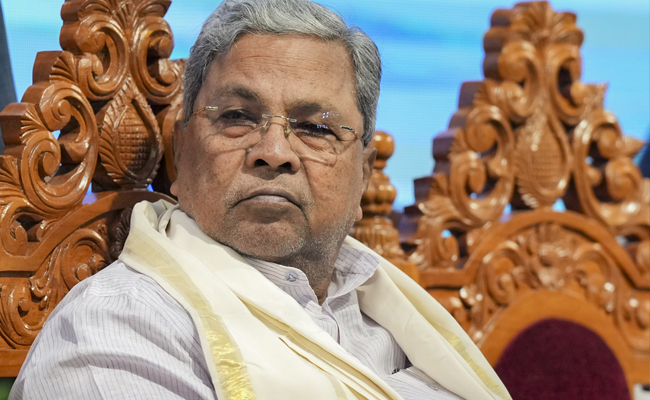
Bengaluru (PTI): Alleging a “criminal conspiracy” by BJP candidate D N Jeevaraj in the Sringeri Assembly poll recounting, Karnataka CM Siddaramaiah on Tuesday said the outcome was manipulated after valid postal ballot votes in favour of Congress leader T D Raje Gowda were tampered with during the recounting process.
Following a Karnataka High Court order on an election petition filed by Jeevaraj, challenging Raje Gowda’s election, the reverification and recounting were conducted on Saturday.
After the reverification and recount of postal ballots for the Sringeri Assembly constituency, votes polled in favour of Raje Gowda were reduced by 255, the returning officer said.
A report on the matter has been submitted to the Election Commission of India for further action, the officer added.
Congress leader Raje Gowda had won the 2023 Assembly polls from Sringeri by 201 votes, defeating his nearest rival Jeevaraj.
Addressing a press conference in Bengaluru, Siddaramaiah said the High Court had directed the recounting of postal ballots and that irregularities were noticed during the exercise conducted on May 2.
“This is a clear case of criminal conspiracy,” Siddaramaiah said, alleging that valid votes cast in favour of Raje Gowda were altered after being accepted by counting agents of all parties, including Congress, BJP, and JD(S).
He claimed that during the recounting of postal ballots, 255 votes were initially accepted as valid by all agents but were later tampered with by subordinate officials.
“There is a second mark on the votes polled in favour of Raje Gowda. They had accepted these as valid votes. Subsequently, another mark was made by officials. This is a clear case of criminal conspiracy,” he said.
When asked who was behind the alleged conspiracy, the CM replied, “It was hatched by Jeevaraj and others. It is planned.”
Siddaramaiah further alleged that the returning officer acted improperly by declaring the result despite the presence of an Election Commission observer during the recounting.
“Immediately after the counting, the returning officer announced the result. He should not have done so; this is against the law,” he said.
He pointed out that Raje Gowda had originally won by 201 votes, but after the recounting, the BJP candidate was declared the winner by 52 votes.
“The BJP has committed a criminal act of conspiracy. This is not vote chori but vote dacoity,” he alleged.
The CM said a police complaint had already been filed by Raje Gowda’s election agent, Sudhir Kumar, and emphasised the need for electoral integrity.
“We want transparency and free and fair elections. That is what our Constitution mandates,” he added.
Stating that the government would pursue legal remedies, Siddaramaiah said, “We are preparing an appeal challenging the returning officer’s announcement in a court of law.”
Responding to a separate query on elections in other states, the CM said there appeared to be an anti-incumbency factor in West Bengal, while results in Tamil Nadu were “surprising,” adding that Vijay’s party was emerging as the largest there.
Following the victory of party candidates in Bagalkote and Davanagere South, Siddaramaiah expressed confidence about future electoral prospects in Karnataka.
“Even in 2028, we will win the Assembly elections. We will come back,” the CM said.
Siddaramaiah added that he would order a forensic examination into the alleged tampering of postal ballots.