Coronavirus in China may have come from bats: studies
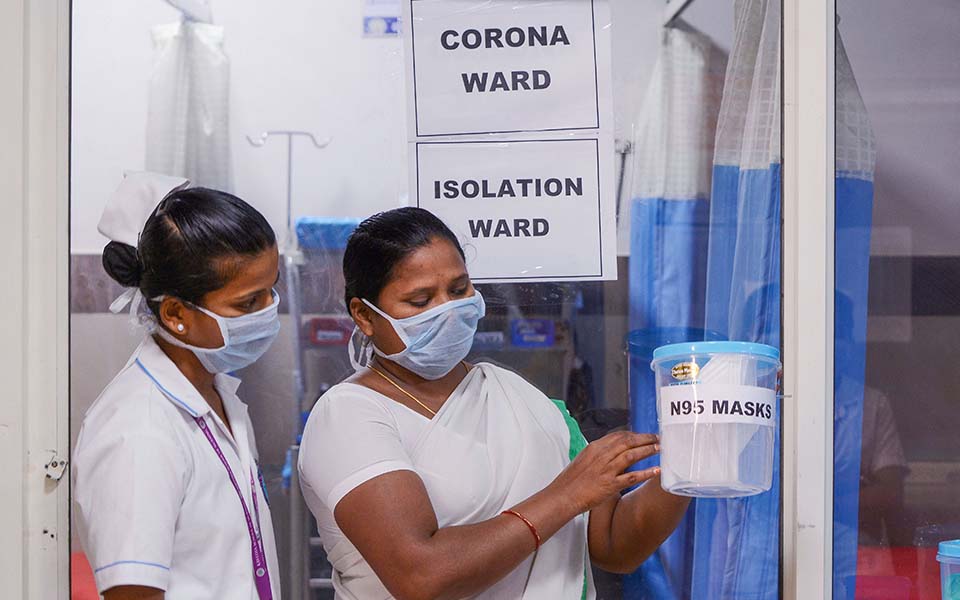
Beijing, Feb 3: The novel coronavirus that has claimed over 350 lives and infected thousands in China may have originated from bats, according to two latest studies published in the journal Nature on Monday.
In the first study, the researchers carried out a genome sequence of the virus associated with the respiratory disease outbreak in China, isolated from a patient working in the seafood market linked to the initial cases.
The study found that the virus was closely related to a group of SARS-like coronaviruses previously identified in bats in China.
The coronavirus outbreak, which originated in the central Hubei province of China in December, has killed 361 with 57 deaths reported on Sunday while the number of confirmed cases has climbed to 17,205. The Philippines on Sunday reported the first death outside China from the epidemic that has spread to 25 countries, including India, the US, the UK and Russia.
In China, all the deaths have been reported in Hubei Province - the epicentre of the virus outbreak. The virus was declared a global health emergency by the World Health Organisation (WHO) on January 31.
The first patient was admitted to a hospital on December 12 last year, and investigations have identified a seafood market, which also sold wild animals, in Wuhan, capital of Hubei, as the potential source of the outbreak.
Yong-Zhen Zhang and colleagues from Fudan University in China studied a 41-year-old male market worker admitted to a hospital in Wuhan on December 26, who experienced symptoms of respiratory illness, including fever, chest tightness and cough.
A combination of antibiotic, antiviral and glucocorticoid therapy was administered. However, the patient exhibited respiratory failure and his condition did not improve after three days of treatment.
The researchers performed genome sequencing on a sample of bronchoalveolar lavage fluid - a lung secretion - collected from the patient.
They identified a novel virus and found that the viral genome shared 89.1 per cent nucleotide similarity with severe acute respiratory syndrome (SARS)-like coronaviruses from bats.
It is not possible to conclude from the analysis of a single patient that this coronavirus is the cause of the current outbreak, the researchers said.
The findings have been corroborated by independent investigations in other patients, they said.
Another study, published in Nature, carried out the identification and characterisation of the coronavirus associated with the recent outbreak, revealed similarities with SARS coronaviruses.
The analysis uncovers evidence that the coronavirus has an origin in bats, although the animal source of this outbreak has not been confirmed.
Coronaviruses have been a source of infectious disease epidemics in humans, such as SARS and Middle East respiratory syndrome (MERS).
SARS-related coronaviruses are mainly found in mammals such as bats and are a potential threat to public health.
As of December 2019, an outbreak of respiratory illness has been reported, originating in a seafood market in Wuhan. Symptoms include fever, shortness of breath and pneumonia.
Zheng-Li Shi and colleagues from Wuhan Institute of Virology in China analysed samples from seven patients with severe pneumonia, six of whom were identified as workers from the seafood market in Wuhan, where the cases were first reported in December.
Full-length genome sequences obtained from five of these patients are found to be almost (over 99.9 per cent) identical to each other, and share 79.5 per cent sequence identity with SARS coronaviruses.
The researchers also found that the virus sequence was 96 per cent identical at the whole-genome level to a bat coronavirus, suggesting that bats are a probable source of this coronavirus.
The identification and sequencing of seven non-structural proteins also found in SARS coronaviruses demonstrates that this virus is a SARS-related coronavirus, which the authors provisionally name novel coronavirus 2019 (2019-nCoV), they said.
The researchers determined that 2019-nCoV enters cells through the same route as SARS coronaviruses, via the ACE2 cell receptor.
Antibodies isolated from patients infected with 2019-nCoV are shown to have the potential to neutralise the virus.
A previously identified horse antibody against SARS-CoV also neutralizes the virus at a low serum dilution, but whether or not anti-SARS-CoV antibodies cross-react with 2019-nCoV needs to be confirmed using serum from humans who have convalesced from SARS-CoV infection.
The researchers developed a test that can differentiate 2019-nCoV from all other human coronaviruses.
They showed that 2019-nCoV was detected in initial oral swab samples, but that subsequent samples (taken around 10 days later) did not have a positive viral result.
This finding suggest that the most likely route of transmission is through the airways of individuals, although the researchers note that other possible routes may be possible, and more patient data is needed to investigate the transmission routes further.
Let the Truth be known. If you read VB and like VB, please be a VB Supporter and Help us deliver the Truth to one and all.
National Synodal Assembly 2026 begins in Bengaluru with over 220 delegates
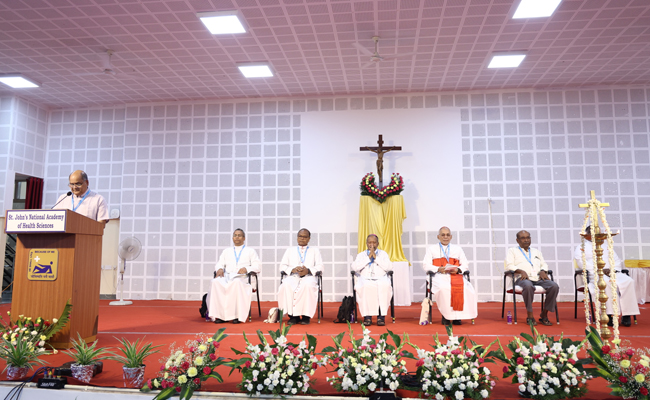
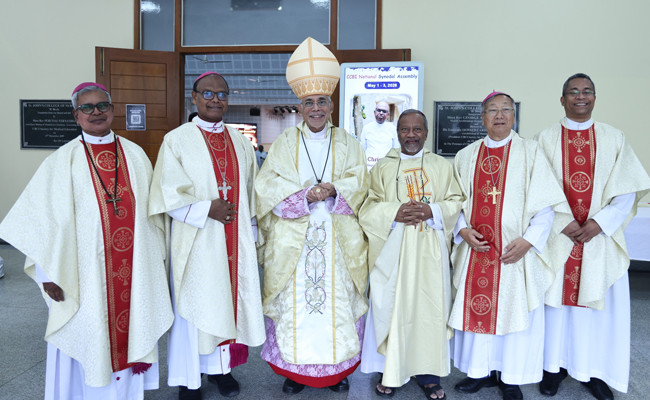
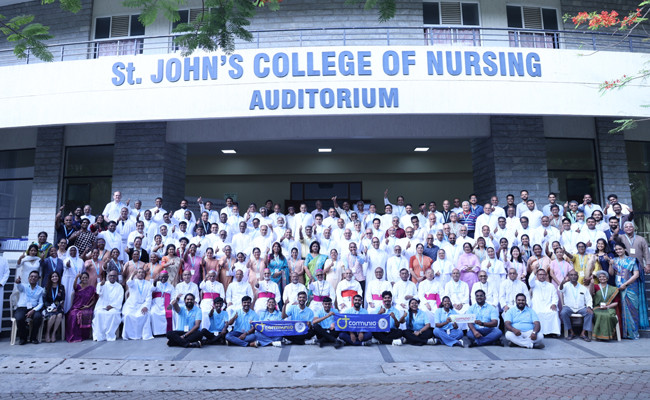
Bengaluru: The Conference of Catholic Bishops of India (CCBI) on May 1 inaugurated its National Synodal Assembly 2026 at St. John’s Medical College, bringing together more than 220 delegates from across the country under the theme Synodal Pilgrims of Hope.
The assembly is part of the global synodal process initiated in 2021 by Pope Francis, which calls for greater participation, dialogue and shared responsibility within the Church. In India, the process has involved consultations at diocesan, regional and national levels.
Participants at the assembly include two Cardinals, 25 Bishops, 65 priests, more than 20 women religious, and over 100 lay faithful, including youth and women leaders.
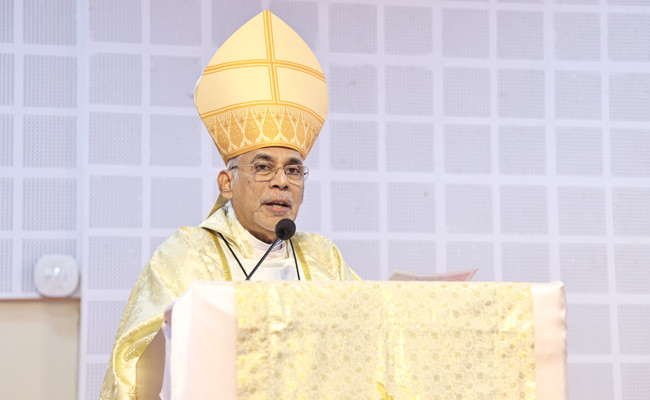
The gathering began with a Eucharistic celebration led by Filipe Neri Ferrão. In his homily, he described the assembly as a moment of grace and discernment and called on delegates to walk together in prayer, listening and missionary commitment.
He spoke about the importance of the Risen Christ in the mission of the Church and urged the faithful to be witnesses of the Gospel. Referring to the conversion of St Paul, he said every baptised person has a role in spreading the message of Christ. He also highlighted the example of St Joseph the Worker, stressing the dignity of labour and the call to holiness in everyday life.
The formal inauguration included the invocation of the Holy Spirit through Veni Creator Spiritus and the lighting of the ceremonial lamp. Deputy Secretary General Fr. Stephen Alathara welcomed the delegates and described the gathering as a spiritual journey.
In his presidential address, Cardinal Ferrão referred to the CCBI pastoral plan titled Journeying Towards a Synodal Church: Mission 2033 and called on participants to build on the vision outlined at the 36th Plenary Assembly held in Bhubaneswar in 2025.
Delegates will reflect on four key themes identified from 16 pastoral priorities: interreligious dialogue and peacebuilding, inclusion of the excluded, poverty and integral ecology, and support for children and youth.
The discussions are being conducted through a method of spiritual conversation aimed at encouraging listening, dialogue and collective decision-making. The focus is on translating these discussions into practical actions within the Church.
The assembly also looks ahead to the Jubilee Year 2033, which will mark 2,000 years of the Redemption, and aims to strengthen the Church’s mission in the coming years.
Further consultations are scheduled for September 2026, with the process expected to conclude at the 38th Plenary Assembly of the CCBI in January 2027.
Organisers said the assembly seeks to strengthen unity within the Church and promote participation of all sections, including women and youth, in shaping its future direction.