COVID-19 cases rise in Shanghai with millions under lockdown
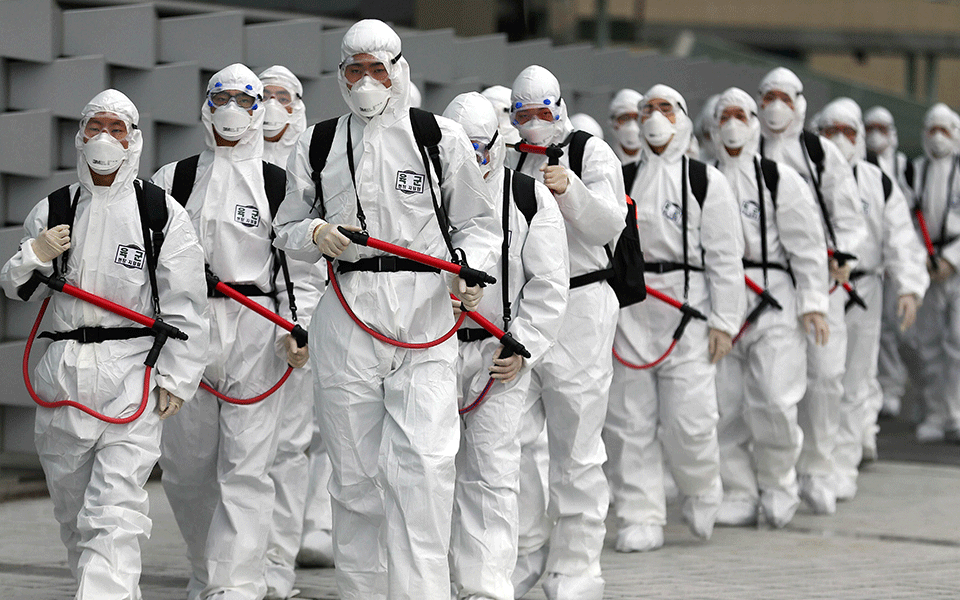
Beijing(AP): COVID-19 cases in China's largest city of Shanghai are still rising as millions remain isolated at home under a sweeping lockdown.
Health officials on Sunday reported 438 confirmed cases detected over the previous 24 hours, along with 7,788 asymptomatic cases. Both figures were up slightly from the day before.
While small by the standards of some countries, the daily case numbers are some of the largest since the virus was first detected in the central city of Wuhan in late 2019.
Shanghai with its 26 million people last week began a two-stage lockdown, with residents of the eastern Pudong section supposed to be allowed to leave their homes Friday, while their neighbours in the western Puxi section underwent their own four-day isolation period.
Despite that assurance, millions in Pudong continue to be confined to their homes amid complaints over food deliveries and the availability of medications and health services.
Notices delivered to residents said they were required to self-test for COVID-19 daily and take precautions including wearing masks at home and avoiding contact with family members measures not widely enforced since the early days of the pandemic.
A city official last week apologised in response to complaints over the government's handling of the lockdown, and a vice premier made sweeping demands for improvements during a tour of Shanghai on Saturday.
Sun Chunlan, who sits on the ruling Communist Party's Politburo, urged resolute and swift moves to stem the spread of COVID-19 in Shanghai in the shortest time possible," the official Xinhua News Agency reported.
However, Sun stressed unswerving adherence" to China's hardline zero-COVID" approach, mandating lockdowns, forced isolation of all suspected cases and mass testing, even while acknowledging the social and economic toll that is taking.
It is an arduous task and huge challenge to combat the omicron variant while maintaining the normal operation of core functions in a megacity, Sun said.
She called for safeguarding key industries and institutions and the functioning of supply and industrial chains in the commercial hub, along with ensuring people's basic living conditions and normal medical needs."
State media reports indicate president and Communist Party leader Xi Jinping is directing the continuing tough approach, while seeking to avoid further damage to the sputtering economy and ensure overall stability ahead of a key party congress expected for November.
Let the Truth be known. If you read VB and like VB, please be a VB Supporter and Help us deliver the Truth to one and all.
Maharashtra sets up state vaccination task force to strengthen immunisation programme
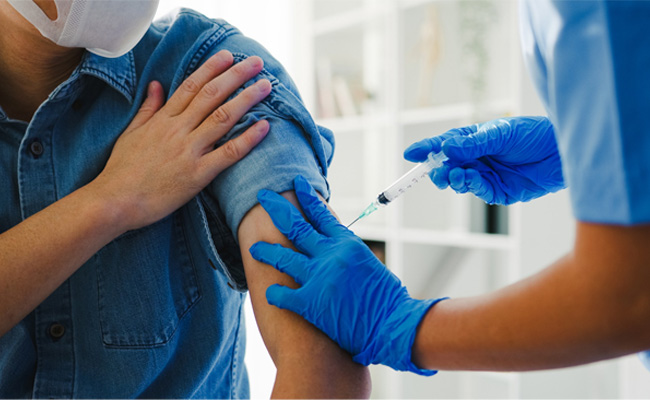
Mumbai (PTI): The Maharashtra government has set up a State Vaccination Task Force to strengthen the regular immunisation programme and review the progress of related campaigns, a health department official said on Monday.
The State Vaccination Task Force will comprise at least 29 members and will be headed by the administrative head of the health department, he informed.
The government has also constituted separate district-level and municipal vaccination task forces to improve implementation and address challenges at the grassroots level, he said.
Municipal task forces, chaired by respective civic commissioners, have been constituted in view of the vast urban population in Maharashtra and the role of civic bodies in implementing different health programmes.
The district-level task forces will function under the chairmanship of collectors.
"Complete immunisation of children at the appropriate age is an extremely simple, cost-effective and highly effective measure to reduce child mortality and the prevalence of diseases among kids. Immunisation is a powerful tool for reducing illness in children," maintained the official.
To ensure full vaccination of all children, the state government implements various campaigns from time to time as per the central government guidelines, he pointed out.
"Active participation and cooperation of other relevant government departments are essential (in making these campaigns successful)," according to the official.
The state-level body will review the regular immunisation programme, associated campaigns and vaccine-preventable diseases in detail. It will also conduct focused assessments of high-risk districts and municipal corporations, including vacancies at district, municipal and sub-district levels, availability of cold chain equipment, resource gaps and training requirements, he noted.
The state task force will review allocation and utilisation of funds for immunisation and ensure timely action by officers concerned based on reports from district and municipal task forces and state-level monitoring mechanisms, the official said.
It will also ensure active coordination and participation of other government departments in immunisation drives, while district and municipal task forces will carry out similar functions at their respective levels, the official added.