COVID-19 not 'exploded' in India but risk remains: WHO expert
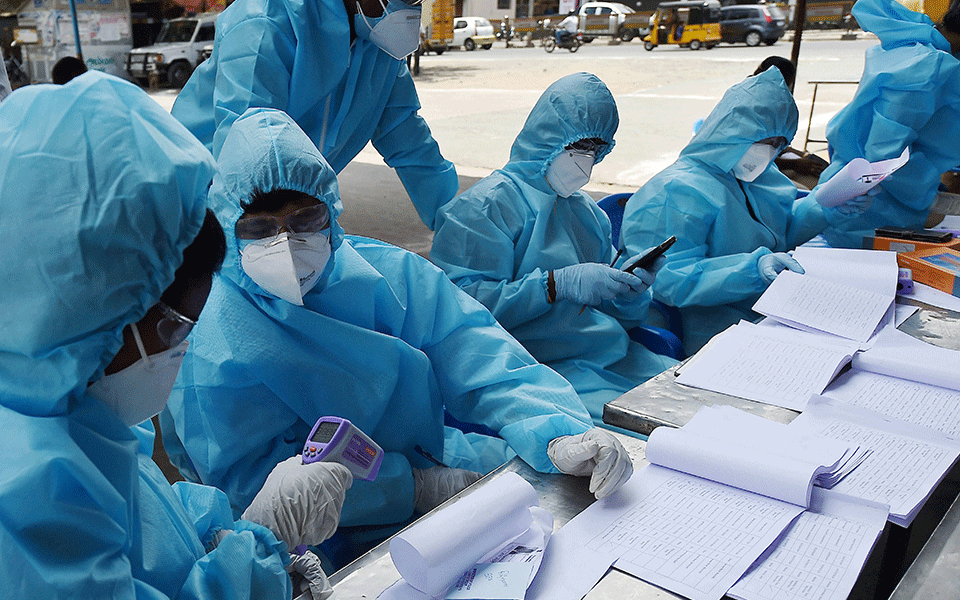
United Nations: The coronavirus disease has not "exploded" in India, but the risk of that happening remains as the country moves towards unlocking its nationwide lockdown that was imposed in March to contain the COVID-19, according to a top WHO expert.
WHO Health Emergencies Programme Executive Director Michael Ryan on Friday said the doubling time of the coronavirus cases in India is about three weeks at this stage.
So the direction of travel of the epidemic is not exponential but it is still growing, he said, adding that the impact of the pandemic is different in different parts of India and varies between urban and rural settings.
In South Asia, not just in India but in Bangladesh and...in Pakistan, other countries in South Asia, with large dense populations, the disease has not exploded. But there is always the risk of that happening, Ryan said in Geneva.
He stressed that as the disease generates and creates a foothold in communities, it can accelerate at any time as has been seen in a number of settings.
Ryan noted that measures taken in India such as the nationwide lockdown have had an impact in slowing transmission but the risk of an increase in cases looms as the country opens up.
The measures taken in India certainly had an impact in dampening transmission and as India, as in other large countries, open up and as people begin to move again, there's always a risk of the disease bouncing back up, he said.
He added that there are specific issues in India regarding the large amount of migration, the dense populations in the urban environment and the fact that many workers have no choice but to go to work every day.
India went past Italy to become the sixth worst-hit nation by the COVID-19 pandemic.
India saw a record single-day jump of 9,887 coronavirus cases and 294 deaths on Saturday, pushing the nationwide infection tally to 2,36,657 and the death toll to 6,642, according to the health ministry.
The lockdown in India, was first clamped on March 25 and spanned for 21 days, while the second phase of the curbs began on April 15 and stretched for 19 days till May 3. The third phase of the lockdown was in effect for 14 days and ended on May 17. The fourth phase ended on May 31.
The country had registered 512 coronavirus infection cases till March 24.
The nation-wide lockdown in containment zones will continue till June 30 in India but extensive relaxations in a phased manner from June 8 are listed in the Union Home Ministry's fresh guidelines on tackling the COVID-19 pandemic issued last week.
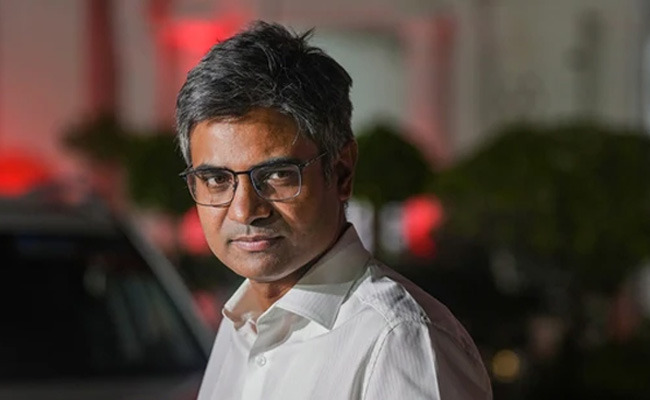
WHO Chief Scientist Soumya Swaminathan said the over 200,000 current coronavirus cases in India, a country of over 1.3 billion people, "look big but for a country of this size, it's still modest.
She stressed that it is important for India to keep track of the growth rate, the doubling time of the virus and to make sure that that number doesn't get worse.
She said that India is a heterogeneous and huge country with very densely populated cities and much lower density in some rural areas and varying health systems in different states and these offer challenges to the control of COVID-19.
Swaminathan added that as the lockdown and restrictions are lifted, it must be ensured that all precautions are taken by people.
We've been making this point repeatedly that really if you want behaviour change at a large level, people need to understand the rationale for asking them to do certain things (such as) wearing masks, she said.
In many urban areas in India, it's impossible to maintain physical distancing, she said adding that it then becomes very important for people to wear appropriate face coverings when they are out, in office settings, in public transport and educational institutions.
As some states are thinking about opening, every institution, organisation, industry and sector needs to think about what are the measures that need to be put in place before you can allow a functioning and it may never be back to normal.
She said that in many professions working from home can be encouraged but in several jobs, people have to go to work and in such cases measures must be put in place that allow people to protect themselves and others.
I think communication and behaviour change is a very large part of this whole exercise, she added.
Let the Truth be known. If you read VB and like VB, please be a VB Supporter and Help us deliver the Truth to one and all.
Man held for blackmailing woman using explicit photos, videos
Bengaluru (PTI): A 46-year-old man has been arrested for allegedly blackmailing a woman using her explicit photos and videos to force her into a sexual relationship with him, police said on Saturday.
The accused, Haniyur Chandregowda, is a member of the Child Welfare Committee in Ramanagara, they said.
Obscene photos of several other women were also found on his mobile phone during examination, police said.
The case came to light after a 43-year-old woman, who works as a make-up artist, filed a complaint at the Rajarajeshwari Nagar police station on April 30, they said.
According to FIR, the woman met Chandregowda in 2021. He told her he was connected to TV serials and took her phone number on the pretext of offering make-up work. The woman had been living separately from her husband for about eight years.
The accused started visiting her house frequently and told her he was a lecturer with a good salary and promised to marry her and entered into a physical relationship with her, she alleged.
Police said Chandregowda later used private photos and videos of their intimate moments to threaten her. He allegedly warned that he would make them public if she did not agree to his demands, and continued the relationship under pressure.
The FIR also stated that in 2024, he rented a house using the woman's documents by falsely claiming to be her husband.
The woman also alleged that he used a fake ID claiming he was a Superintendent of Police to avoid paying toll fees.
She claimed that he had taken around Rs 5 lakh from her since 2021 and had not returned the money.
The FIR further stated that he added his name to the educational documents of the woman's daughter, pretending to be her husband.
Based on the complaint, a case under sections 69 (sexual intercourse by deceitful means) and 204 (impersonating a public servant) of the Bharatiya Nyaya Sanhita was registered. He was later arrested, a senior police officer said.