Crisis-hit Sri Lanka lifts state of emergency
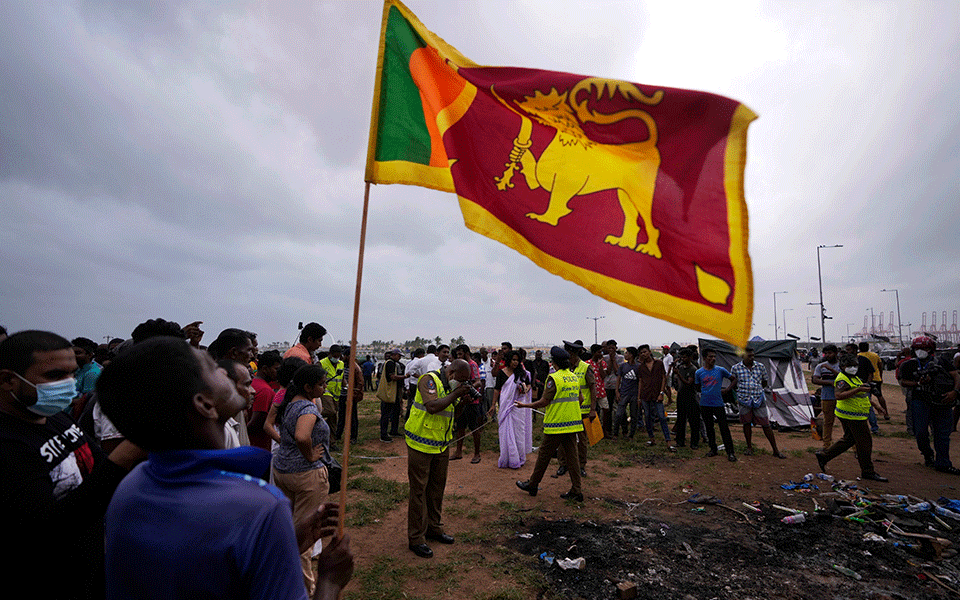
Colombo(PTI): The Sri Lankan government lifted the state of emergency from Saturday, nearly two weeks after it was imposed across the island nation as it faced unprecedented economic and anti-government protests.
Embattled Sri Lankan President Gotabaya Rajapaksa had declared a state of emergency with effect from May 6 midnight, the second time in just over a month amidst growing countrywide anti-government protests over the economic crisis.
The Presidential Secretariat stated that the state of emergency has been lifted with effect from Friday midnight, Hiru News reported. The move was taken with the improvement of the law and order situation in the island nation.
The state of emergency gave the police and the security forces sweeping power to arbitrarily arrest and detain people.
The president's decision to declare the emergency had come amidst weeks of protests demanding his resignation and the government, blaming the powerful Rajapaksa clan for mishandling the island nation's economy, already hit by the pandemic.
Nine people were killed and over 200 injured in clashes between pro- and anti-government protesters.
Sri Lanka is facing its worst economic crisis since gaining independence from Britain in 1948. The crisis is caused in part by a lack of foreign currency, which has meant that the country cannot afford to pay for imports of staple foods and fuel, leading to acute shortages and very high prices.
An inflation rate spiralling towards 40 per cent, shortages of food, fuel and medicines and rolling power blackouts have led to nationwide protests and a plunging currency, with the government short of the foreign currency reserves it needed to pay for imports.
New York-based ratings agency Fitch has downgraded debt-ridden Sri Lanka's sovereign rating to restricted default after the country defaulted on making international sovereign bond payments.
On April 12, Fitch had downgraded Sri Lanka to C'.
Let the Truth be known. If you read VB and like VB, please be a VB Supporter and Help us deliver the Truth to one and all.
Vijay''s TVK wins an impressive 108 seats in TN polls

Chennai (PTI): Vijay-led TVK secured an impressive 108 seats trouncing the incumbent DMK led by M K Stalin which finished with only 59 seats in the Tamil Nadu Assembly elections held on April 23, as per the final tally of the ECI on Tuesday.
The opposition AIADMK won 47 seats while its allies the PMK obtained 4 and the BJP and AMMK clinched one seat each respectively in the election, according to the data available on the Election commission of India's website.
The DMK's allies - the Congress managed to win 5 seats, the IUML, CPI, CPI (M), and VCK: 2 each and DMDK secured one seat, among a total of 234 Assembly constituencies in the state.
The votes were taken up for counting on May 4 and the final tally was announced on Tuesday.
Actor-politician Vijay's Tamilaga Vettri Kazhagam on Monday created a record of sorts in the electoral history of Tamil Nadu and emerged as the single largest party by delivering a shock defeat to DMK and its president Stalin in his Kolathur constituency, while the AIADMK was pushed to a distant third spot.
Vijay won from both Perambur and Tiruchirappalli East constituencies.
The TVK has clocked nearly 35 per cent (34.92) vote share in its debut polls.
This will be the first time in Tamil Nadu that a party will assume power a little over two years after its founding in February 2024.