Croatian scientist successfully treats own cancer with lab-grown viruses

In an unconventional approach to treating cancer, Croatian virologist Beata Halassy, 49, recently treated her recurrent breast cancer using lab-grown viruses in a procedure known as oncolytic virotherapy (OVT). With the tumour shrinking significantly, Halassy was able to undergo successful surgical removal and has remained cancer-free for four years. This unusual self-treatment has sparked discussions around the ethics of self-experimentation in medicine.
The treatment, detailed in the journal ‘Vaccines’, involved injecting the tumour with viruses she cultivated herself. Halassy used two viruses consecutively – a measles virus and vesicular stomatitis virus (VSV), both known to target her tumour type and previously trialled in other forms of cancer. Over two months, she administered the injections with research-grade material prepared in her lab. Monitoring by her oncologists allowed her to shift to conventional chemotherapy if necessary, though the treatment proceeded without significant side effects. Ultimately, the tumour detached from surrounding tissue, facilitating its surgical removal. Post-surgery analysis confirmed an immune response, with lymphocytes actively infiltrating the tumour.
Although the approach proved effective, Halassy faced challenges in publishing her findings, with journals hesitant over ethical concerns. Jacob Sherkow, a law and medicine researcher, pointed out the ethical risks of promoting self-experimentation, as it may encourage patients to bypass standard treatments. However, Sherkow noted the value of preserving the knowledge gained from such cases.
OVT remains experimental, with some forms approved for metastatic melanoma in the U.S., but no official treatment for breast cancer. Halassy, who is not an oncologist, emphasised that her expertise in virology gave her confidence in attempting the treatment, though she warns others not to view self-treatment as a first option in cancer care.
Let the Truth be known. If you read VB and like VB, please be a VB Supporter and Help us deliver the Truth to one and all.
CM Siddaramaiah alleges ‘criminal conspiracy’ in Sringeri recount, vows legal action
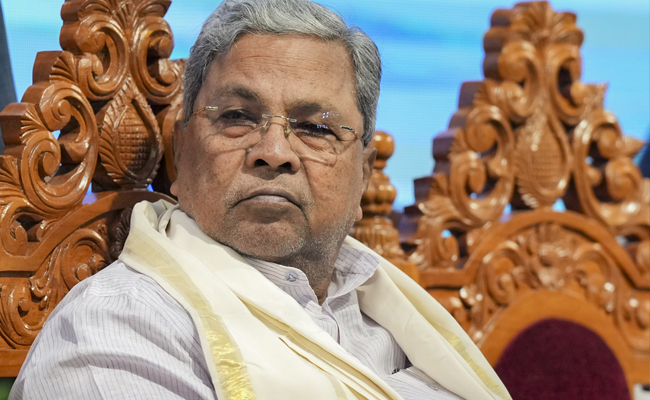
Bengaluru (PTI): Alleging a “criminal conspiracy” by BJP candidate D N Jeevaraj in the Sringeri Assembly poll recounting, Karnataka CM Siddaramaiah on Tuesday said the outcome was manipulated after valid postal ballot votes in favour of Congress leader T D Raje Gowda were tampered with during the recounting process.
Following a Karnataka High Court order on an election petition filed by Jeevaraj, challenging Raje Gowda’s election, the reverification and recounting were conducted on Saturday.
After the reverification and recount of postal ballots for the Sringeri Assembly constituency, votes polled in favour of Raje Gowda were reduced by 255, the returning officer said.
A report on the matter has been submitted to the Election Commission of India for further action, the officer added.
Congress leader Raje Gowda had won the 2023 Assembly polls from Sringeri by 201 votes, defeating his nearest rival Jeevaraj.
Addressing a press conference in Bengaluru, Siddaramaiah said the High Court had directed the recounting of postal ballots and that irregularities were noticed during the exercise conducted on May 2.
“This is a clear case of criminal conspiracy,” Siddaramaiah said, alleging that valid votes cast in favour of Raje Gowda were altered after being accepted by counting agents of all parties, including Congress, BJP, and JD(S).
He claimed that during the recounting of postal ballots, 255 votes were initially accepted as valid by all agents but were later tampered with by subordinate officials.
“There is a second mark on the votes polled in favour of Raje Gowda. They had accepted these as valid votes. Subsequently, another mark was made by officials. This is a clear case of criminal conspiracy,” he said.
When asked who was behind the alleged conspiracy, the CM replied, “It was hatched by Jeevaraj and others. It is planned.”
Siddaramaiah further alleged that the returning officer acted improperly by declaring the result despite the presence of an Election Commission observer during the recounting.
“Immediately after the counting, the returning officer announced the result. He should not have done so; this is against the law,” he said.
He pointed out that Raje Gowda had originally won by 201 votes, but after the recounting, the BJP candidate was declared the winner by 52 votes.
“The BJP has committed a criminal act of conspiracy. This is not vote chori but vote dacoity,” he alleged.
The CM said a police complaint had already been filed by Raje Gowda’s election agent, Sudhir Kumar, and emphasised the need for electoral integrity.
“We want transparency and free and fair elections. That is what our Constitution mandates,” he added.
Stating that the government would pursue legal remedies, Siddaramaiah said, “We are preparing an appeal challenging the returning officer’s announcement in a court of law.”
Responding to a separate query on elections in other states, the CM said there appeared to be an anti-incumbency factor in West Bengal, while results in Tamil Nadu were “surprising,” adding that Vijay’s party was emerging as the largest there.
Following the victory of party candidates in Bagalkote and Davanagere South, Siddaramaiah expressed confidence about future electoral prospects in Karnataka.
“Even in 2028, we will win the Assembly elections. We will come back,” the CM said.
Siddaramaiah added that he would order a forensic examination into the alleged tampering of postal ballots.