Crown prince a 'red line' in Khashoggi probe: Saudi FM
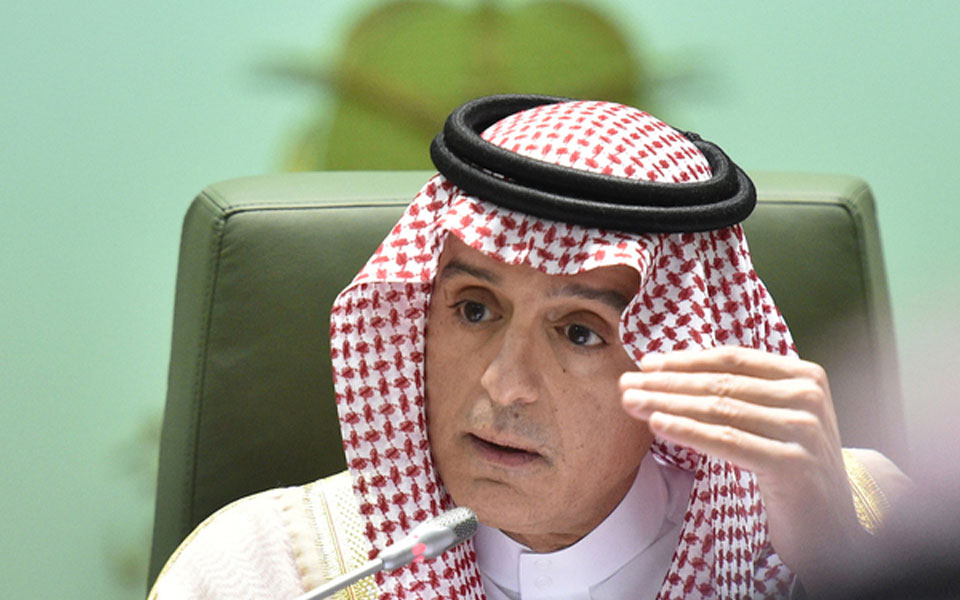
London, Nov 22 : Calls for Saudi Crown Prince Mohammed bin Salman to be held accountable for the murder of journalist Jamal Khashoggi are a "red line", Saudi Foreign Minister Adel al-Jubeir has said.
In a BBC television interview, Jubeir said on Wednesday any disparaging discussion about Prince Mohammed or his father, the Saudi monarch, would not be tolerated.
"In Saudi Arabia our leadership is a red line. The custodian of the two holy mosques (King Salman) and the crown prince are a red line," Jubeir said.
"They represent every Saudi citizen and every Saudi citizen represents them.
And we will not tolerate any discussion of anything that is disparaging towards our monarch or our crown prince."
Khashoggi, a US resident who wrote for The Washington Post and had been critical of Prince Mohammed, was lured to the Saudi consulate in Istanbul on October 2, killed and reportedly dismembered.
After lengthy denials, Saudi authorities admitted responsibility and said 21 people had been taken into custody. However, a CIA analysis leaked to the US media went further, reportedly pointing the finger at the crown prince.
Jubeir insisted that Prince Mohammed had not been involved in the killing.
"We have made that very clear. We have investigations ongoing and we will punish the individuals who are responsible for this," he said.
He called on Turkey to come forward with all its evidence about the slaying and stop leaking out information.
The foreign minister said the murder was a "rogue operation" by intelligence officers.
Jubeir also said any possible US sanctions on Saudi Arabia would be short-sighted.
US President Donald Trump on Wednesday ignored criticism that he gave Saudi Arabia a free pass on Khashoggi's murder, instead praising the Islamic kingdom for keeping oil prices low.
Let the Truth be known. If you read VB and like VB, please be a VB Supporter and Help us deliver the Truth to one and all.
Brothers awaiting board exam results drown in canal

Erode (Tamil Nadu) (PTI): Minor brothers who were awaiting their board exam results have drowned in a canal in this district while spending their Summer holidays at their aunt's place, police said.
According to Arachalure Police, Santhosh, aged 17, and his younger brother Sanjai, aged 15, natives of Musiri village in Tiruchirapalli district, came to Gopaliparai hamlet near Arachalure to their Aunt's house a couple of days ago after writing their annual 12th and 10th examinations, respectively.
The police said on Friday that both boys went to the nearby Lower Bhavani Project canal to take a bath. It was alleged that while taking a bath, both boys went to a deeper area of the canal and went missing.
As they didn't return home, even two hours after they left, their aunt grew suspicious and informed the Fire and Rescue Services, Chennimalai. A rescue team from the department rushed to the spot. After a few minutes of searching, they located the dead bodies of the brothers and sent them to the hospital. Arachalure police registered a case of death due to drowning and are investigating.