Dad’s going to Gaza, this is last resort: Journalist Yusuf Omar tells son before boarding flotilla
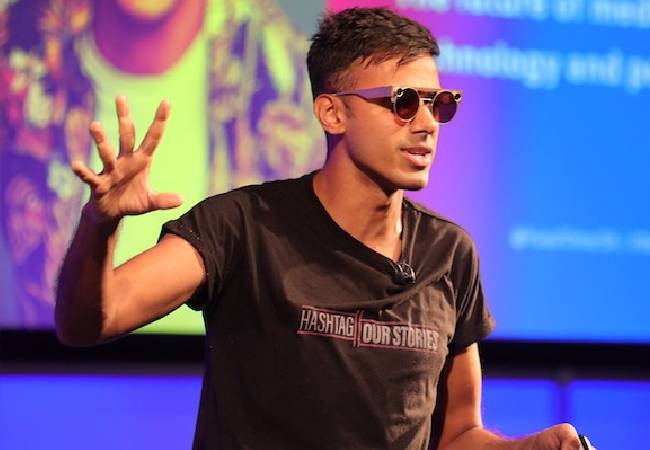
London: Award-winning journalist Yusuf Omar has embarked on a humanitarian flotilla carrying essential supplies to Gaza, describing it as a “last resort” after months of global protests and appeals against Israel’s ongoing war on Palestinians.
In a video message recorded before boarding the vessel, Omar was seen speaking to his toddler child, explaining why he had chosen to risk his life to deliver food, water, and medicine to the besieged territory.
“Daddy’s gonna go to Gaza this week, okay? Because millions of people around the world are protesting for a free Palestine, because we are done with the genocide, because we are tired of a 77-year occupation and apartheid struggle,” Omar told his child. He added that after exhausting all other means — from social media campaigns to global demonstrations — direct action was the only way left to highlight the plight of Gazans.
Omar stressed that the mission was born out of deep frustration and urgency. “What else is there left to do but to get on this boat here to Gaza? I know the risks. I have two children. I want to be able to tell them that we did everything in our power to try and bring attention to this,” he said.
He emphasised that the suffering of children in Gaza should concern the entire world. “The way the children of Gaza are suffering today, children around the world could be impacted tomorrow. Violence denies basic human rights and global solidarity. We have to do more,” he remarked.
The journalist also said he hoped his action would inspire young people worldwide to stand in solidarity. “If I can get on that boat here, if I can inspire young people around the world to do the same, just imagine what would happen. What would Israel do? How would they act? How would they behave?” he questioned.
The flotilla, loaded with humanitarian aid, is part of a wider international effort to break the blockade of Gaza, where millions face severe shortages of food, clean water, and medical supplies amid the ongoing war.
Omar, who has reported from conflict zones in the past, acknowledged the personal danger of the mission but maintained that silence was no longer an option. “We have tried everything else. This is all that is left,” he said.
View this post on Instagram
Let the Truth be known. If you read VB and like VB, please be a VB Supporter and Help us deliver the Truth to one and all.
Two held for 'firing' at BJP leader's house in Bengal

Kolkata (PTI): A day before the counting of votes for the West Bengal assembly elections, two persons were arrested on Sunday for allegedly being involved in a firing incident outside the residence of a BJP leader in North 24 Parganas district, police said.
BJP leader Kundan Singh lodged a police complaint, alleging that a few gunmen fired at his house in the Noapara constituency around Saturday midnight.
Based on the CCTV footage, the two accused were apprehended, a senior officer said.
BJP's Noapara candidate Arjun Singh, in a post on social media, claimed that around 12.05 am, two armed miscreants arrived on a motorcycle at the residence of Kundan Singh, a BJP functionary and secretary of the Barrackpore organisational district, with an "intent to kill him".
According to the BJP leader, the accused are residents of Garulia and are known criminals.
Their names as offenders had been submitted to the Election Commission, he said.
The police officer did not specify whether the two arrested persons were the same individuals named by Arjun Singh.
According to the complaint, one round of firing took place outside Kundan Singh's house, triggering panic in the area.
The BJP candidate also questioned the role of the police, claiming that one of the accused had been detained by the police on the polling day but was later released in the evening.
The Noapara assembly seat went to the polls on April 29.
Several BJP leaders alleged that attempts were being made to create an atmosphere of fear ahead of the counting and weaken the organisation of the opposition parties.
The counting of votes will take place on May 4. Polling for the West Bengal assembly elections was held on April 23 and April 29.
The BJP urged the Election Commission to intervene immediately to ensure peaceful counting.
TMC candidate Somnath Shyam rubbished Arjun Singh’s allegation, claiming that the BJP nominee had orchestrated the firing incident to divert attention from imminent defeat.
“Arjun Singh knows all the gangsters in the Barrackpore belt. Everyone knows about his links with the underworld. Let the police investigate the incident,” Shyam said.