Death toll from western China earthquake rises to 93
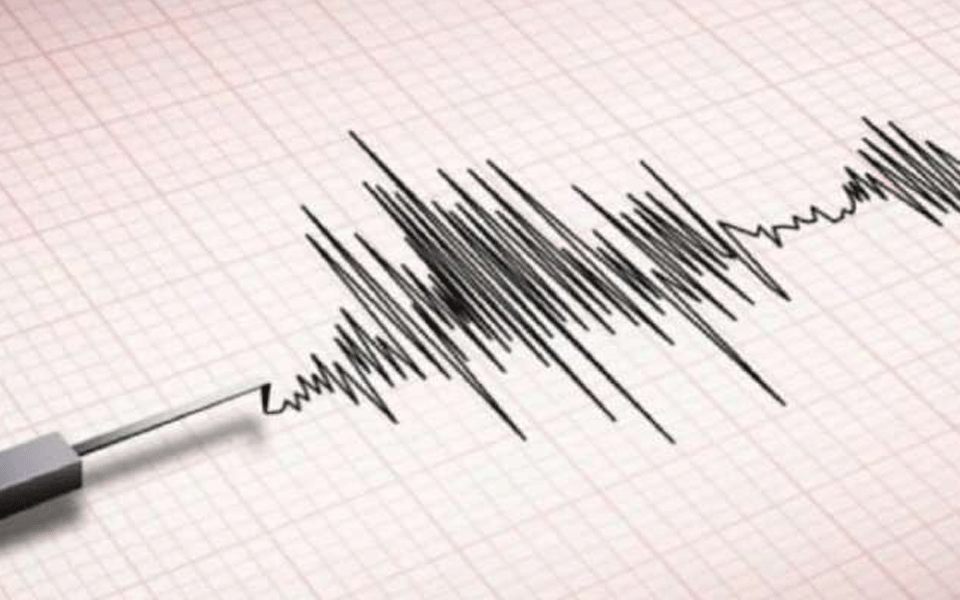
Beijing (AP): The death toll from a major earthquake in western China rose to 93 as the search for survivors continued, authorities said.
A magnitude 6.8 quake hit Sichuan province last week, with much of the damage concentrated in Ganze Tibetan Autonomous Region in the province.
Another 25 people remain missing as of Sunday evening, rescuers said, according to state broadcaster CCTV. The search for survivors and recovery of bodies were complicated by heavy rains and the risks of landslides, which forced some residents to move to temporary shelters.
The earthquake also affected Chengdu, the provincial capital, where residents were under strict zero-COVID controls, meaning they were not allowed to leave their buildings. Footage online showed residents banging at metal gates at the front of apartment complexes as they sought to leave their buildings.
Tens of millions remain under China's extensive zero-COVID controls. Chengdu's local government announced that a few districts where there had been no new COVID19 cases will be allowed to reopen Monday. However, much of its 21 million residents remain under lockdown. The city reported just 143 cases of coronavirus infection Monday, more than half of which were people who did not have symptoms.
China has stuck to its massive system of lockdowns and mass testing even as the rest of the world has loosened restrictions. The country's approach has minimized deaths, but has kept millions of people locked in their homes for weeks or even months at a time.
Let the Truth be known. If you read VB and like VB, please be a VB Supporter and Help us deliver the Truth to one and all.
Bengaluru airport introduces AI-based system to enhance safety at vehicle-aircraft intersections
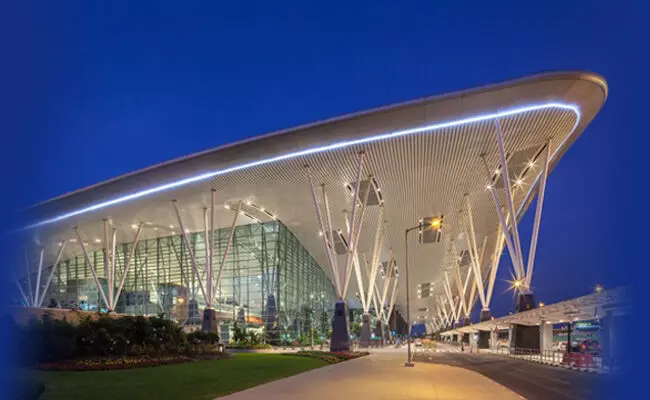
Bengaluru: Bangalore International Airport Limited (BIAL) has introduced an integrated smart airside safety system at Kempegowda International Airport to improve operational safety at key intersection zones.
According to The Hindu, the system has been designed to enhance safety at Cross Service Roads (CSRs), where aircraft and ground vehicle movements intersect.
According to BIAL, the system integrates AI-based computer vision, automation, and centralised monitoring to manage right-of-way movements and reduce the risk of human error.
“CRSs are among the most sensitive areas within airport operations, requiring precise and seamless coordination between aircraft and ground vehicles. Traditionally, right of way protection at these intersections relied on manual or semi-manual inset light activation, creating dependencies on human intervention, increasing the risk of delays and limiting operational visibility,” TH quoted BIAL as saying.
The new system uses real-time detection of vehicle movement, risk assessment, and automated signalling. AI-enabled cameras identify potential conflicts and trigger automated inset light signals to ensure aircraft priority. Normal operations resume once the area is confirmed clear.
“Based on these detections, the system triggers automated inset light activation to protect aircraft right‑of‑way and restores normal signalling once the intersection is confirmed clear. A centralised monitoring and analytics platform digitally logs all events, strengthening governance, compliance, and operational control,” BIAL said.
By embedding technology into operations, the system creates a data-driven separation layer between aircraft and ground vehicles, significantly reducing human error, especially during night and low-visibility conditions.
“Precision-led signal activation improves traffic flow, minimises unnecessary stoppage and enhances turnaround efficiency. It also establishes a scalable foundation for predictive safety analytics, enabling trend analysis, peak-hour optimisation, compliance mapping and risk forecasting to support continuous improvement and stronger airside governance,” BIAL said.