Death toll in Russian missile strike in central Ukraine reaches 18
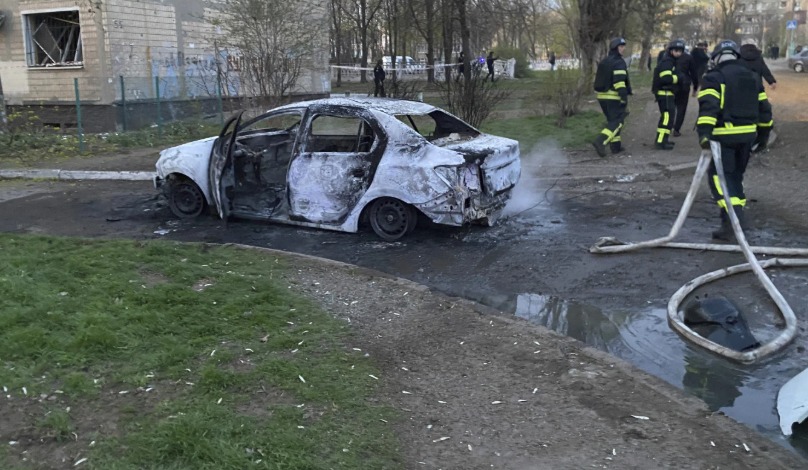
Kyiv (AP): The death toll from a Russian missile strike in the central Ukrainian city of Kryvyi Rih has risen to 18, including nine children, regional governor Serhii Lysak said Saturday.
A further 61 people were injured in Friday's attack, ranging from a 3-month-old baby to elderly residents. Forty remain hospitalized, including two children in critical condition and 17 in serious condition.
“There can never be forgiveness for this,” said Oleksandr Vilkul, head of the city's defense council. “Eternal memory to the victims.”
Kryvyi Rih is the hometown of Ukrainian President Volodymyr Zelenskyy.
“The missile struck an area right next to residential buildings — hitting a playground and ordinary streets,” Zelenskyy wrote on Telegram.
Local authorities said the strike damaged about 20 apartment buildings, more than 30 vehicles, an educational building and a restaurant.
The Russian Defence Ministry claimed Friday that it had carried out a high-precision missile strike with a high explosive warhead on a restaurant where a meeting with unit commanders and Western instructors was taking place.
Russian military claimed that the strike killed 85 military personnel and foreign officers and destroyed 20 vehicles. The military's claims could not be independently verified. The Ukrainian General Staff rejected the claims.
A later drone strike on Kryvyi Rih killed one woman and wounded seven other people.
Zelenskyy blamed the daily strikes on Russia's unwillingness to end the war: “Every missile, every drone strike proves Russia wants only war," he said, urging Ukraine's allies to increase pressure on Moscow and bolster Ukraine's air defences.
“The United States, Europe, and the rest of the world have enough power to make Russia abandon terror and war,” he said.
Russian forces launched 92 drones into Ukraine overnight, with 51 shot down by air defences, the Ukrainian air force wrote on social media Saturday. A further 31 decoy drones also failed to reach their targets, it said.
Elsewhere, one person died Saturday in the Russian-occupied town of Horlivka in Ukraine's Donetsk region due to shelling, Moscow-installed Gov. Denis Pushilin said. Security officials told Russian state news channels that they had destroyed 28 Ukrainian drones over the Donetsk region overnight, marking the first time that the occupied territory had been targeted by such long-range strikes.
Let the Truth be known. If you read VB and like VB, please be a VB Supporter and Help us deliver the Truth to one and all.
Maharashtra sets up state vaccination task force to strengthen immunisation programme
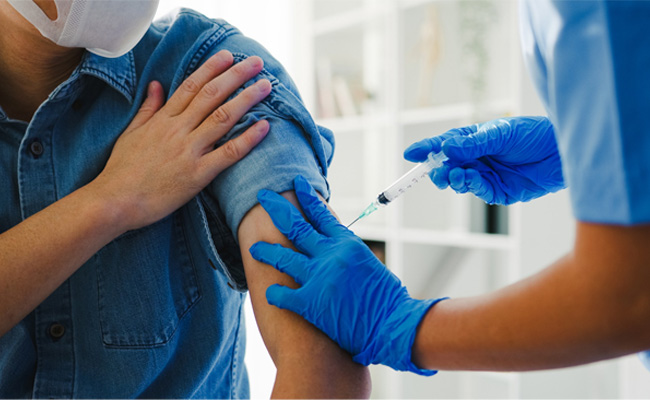
Mumbai (PTI): The Maharashtra government has set up a State Vaccination Task Force to strengthen the regular immunisation programme and review the progress of related campaigns, a health department official said on Monday.
The State Vaccination Task Force will comprise at least 29 members and will be headed by the administrative head of the health department, he informed.
The government has also constituted separate district-level and municipal vaccination task forces to improve implementation and address challenges at the grassroots level, he said.
Municipal task forces, chaired by respective civic commissioners, have been constituted in view of the vast urban population in Maharashtra and the role of civic bodies in implementing different health programmes.
The district-level task forces will function under the chairmanship of collectors.
"Complete immunisation of children at the appropriate age is an extremely simple, cost-effective and highly effective measure to reduce child mortality and the prevalence of diseases among kids. Immunisation is a powerful tool for reducing illness in children," maintained the official.
To ensure full vaccination of all children, the state government implements various campaigns from time to time as per the central government guidelines, he pointed out.
"Active participation and cooperation of other relevant government departments are essential (in making these campaigns successful)," according to the official.
The state-level body will review the regular immunisation programme, associated campaigns and vaccine-preventable diseases in detail. It will also conduct focused assessments of high-risk districts and municipal corporations, including vacancies at district, municipal and sub-district levels, availability of cold chain equipment, resource gaps and training requirements, he noted.
The state task force will review allocation and utilisation of funds for immunisation and ensure timely action by officers concerned based on reports from district and municipal task forces and state-level monitoring mechanisms, the official said.
It will also ensure active coordination and participation of other government departments in immunisation drives, while district and municipal task forces will carry out similar functions at their respective levels, the official added.