Delta variant is dangerous, continues to evolve and mutate: WHO chief
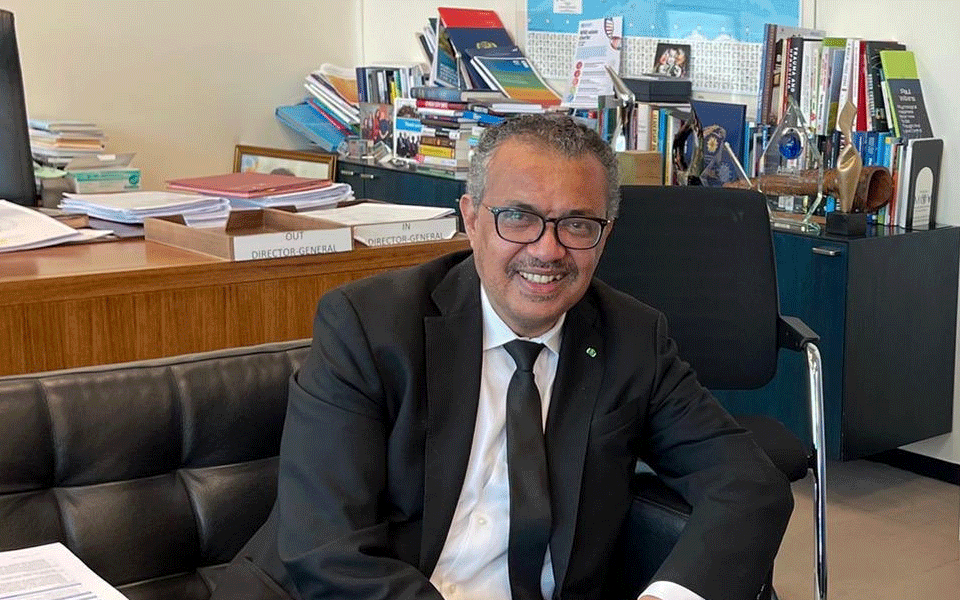
United Nations/Geneva: The world is in a very "dangerous period" of the COVID-19 pandemic compounded by more transmissible variants like Delta, which is continuing to evolve and mutate, World Health Organization Director-General Tedros Adhanom Ghebreyesus has warned.
He said in countries with low vaccination coverage, terrible scenes of hospitals overflowing are again becoming the norm.
Compounded by more transmissible variants, like Delta, which is quickly becoming the dominant strain in many countries, we are in a very dangerous period of this pandemic, Ghebreyesus said at a press briefing on Friday.
But no country is out of the woods yet. The Delta variant is dangerous and is continuing to evolve and mutate, which requires constant evaluation and careful adjustment of the public health response, he said.
Noting that the Delta variant has been detected in at least 98 countries and is spreading quickly in countries with low and high vaccination coverage, he said there are essentially two ways for countries to push back against new surges.
Public health and social measures like strong surveillance, strategic testing, early case detection, isolation and clinical care remain critical, he said, adding that masking, physical distance, avoiding crowded places and keeping indoor areas well ventilated are the basis for the response.
Ghebreyesus underscored that the world must equitably share protective gear, oxygen, tests, treatments and vaccines and stressed that he has urged leaders across the world to work together to ensure that by this time next year, 70 per cent of all people in every country are vaccinated.
"This is the best way to slow the pandemic, save lives, drive a truly global economic recovery and along the way prevent further dangerous variants from getting the upper hand. By the end of this September, we're calling on leaders to vaccinate at least 10 per cent of people in all countries, he said.
As new manufacturing hubs including for mRNA vaccines are being developed, the WHO chief said this could be accelerated by companies openly sharing technology and know-how.
In particular, I urge those companies BioNTech, Pfizer and Moderna to share their know-how so that we can speed up the development of new production. The sooner we start building more vaccine hubs and upping global vaccine capacity, the sooner we can diminish deadly surges, he said.
The Delta variant, first detected in India, is now being reported in nearly 100 countries, which is likely an underestimate and the highly transmissible strain is expected to rapidly outcompete other variants and become dominant globally over the coming months, WHO had said this week.
The COVID-19 Weekly Epidemiological Update published by WHO said that as of June 29, 2021, 96 countries have reported cases of the Delta variant, though this is likely an underestimate as sequencing capacities needed to identify variants are limited. A number of these countries are attributing surges in infections and hospitalizations to this variant.
It said given the increase in transmissibility, the Delta variant is expected to rapidly outcompete other variants and become the dominant variant over the coming months.
WHO noted that the tools that exist today to combat the coronavirus including individual, community level-public health and social measures, infection prevention and control measures, that have been used since the beginning of the pandemic remain effective against current variants of concern, including the Delta variant.
Let the Truth be known. If you read VB and like VB, please be a VB Supporter and Help us deliver the Truth to one and all.
Two injuries, one DNF, a DQ as India end messy World Relays campaign
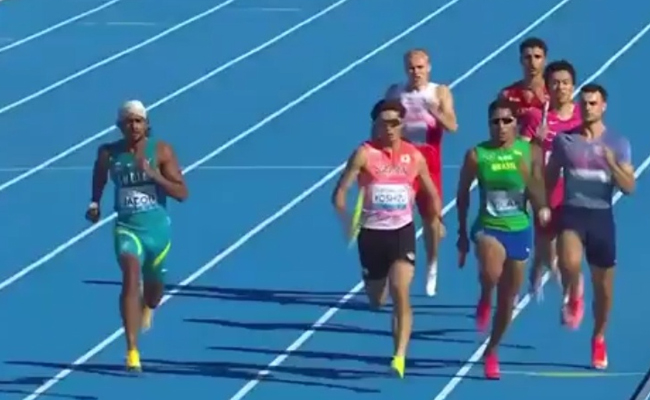
Gaborone (Botswana) (PTI): Amoj Jacob and Ragul Kumar got injured during the men's 4x400m and 4x100 races respectively as India ended their World Athletics Relays campaign in disappointment on the second day of competitions here on Sunday.
The Indian camp had high hopes of making the 2027 World Championships in the men's 4x400m relay but the team did not finish (DNF) the race as Jacob suffered cramps and pulled out of the race after taking the baton from the first leg runner Dharamveer Choudhary. Rajesh Ramesh and Vishal TK were to run in the third and fourth legs.
Those teams which could not qualify for the 2027 Beijing World Championships by reaching the final round of each of the six relay events on Saturday were given another chance in the second qualification round on Sunday.
The top two teams in each of the two heats (in all six relay events) booked the Beijing ticket on Sunday.
India will now have to try and qualify for the World Championships through the Top Lists of the World Athletics, which is a long and tedious process.
In the men's 4x100m race, third leg runner Ragul Kumar fell down the track after failing to hand over the baton inside the exchange zone to fourth leg runner Gurindervir Singh, which clearly showed the lack of coordination among the runners.
Harsh Santosh Raut and Animesh Kujur ran the first two legs.
The Indian quartet was disqualified and Kumar was seen being taken away from the Field of Play with the help of the volunteers.
It was a comedy of errors in the case of the women's 4x100m race, which saw the baton being dropped during an exchange between first leg runner Tamanna and second runner Nithya Gandhe, though the Indians finished the race in 53.09 seconds.
Gandhe started running quite a distance, but after realising that the baton was not in her hand, she turned and ran back to pick it up.
The only silver-lining for the Indian contingent was the national record time in the mixed 4x100m relay race, though the quartet of Ragul Kumar, Nithya Gandhe, Animesh Kujur and Sneha SS finished sixth in heat number two with a time of 41.35 seconds, bettering the previous national mark of 42.30 seconds set in March in Chandigarh.
The mixed 4x400m relay quartet of Theerthesh P Shetty, Kumari Saloni, Nihal William and Rashdeep Kaur ended at fifth in heat number one with a time of 3 minutes and 19.40 seconds.
On Saturday, all the five Indian relay teams had failed to make it to the respective final rounds and thus missed out on the 2027 World Championships berths.