DNC all set to script history; Indian-origin Senator Kamala Harris to break another glass ceiling
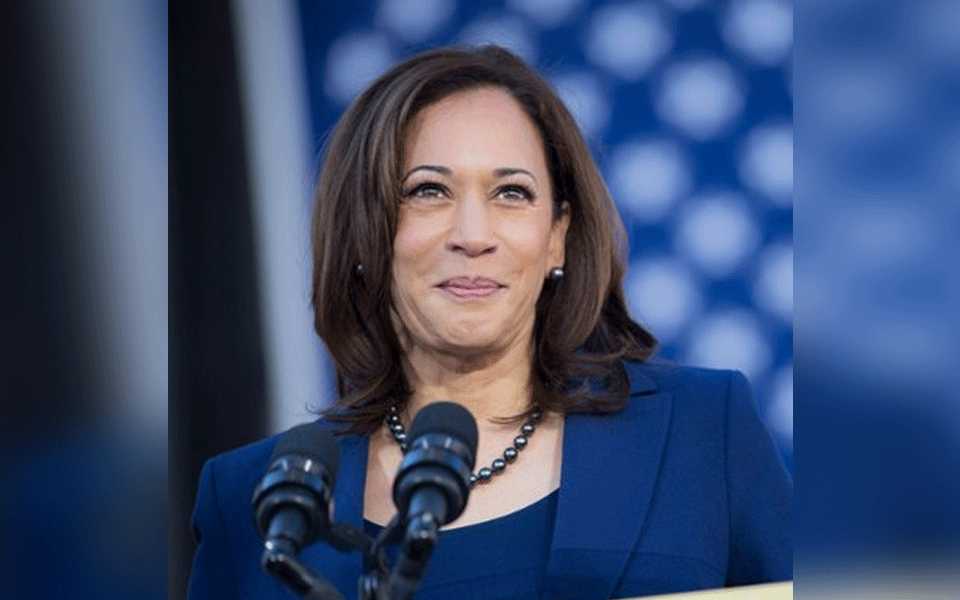
Washington: The Democratic National Convention that begins on Monday is all set to script history by nominating Senator Kamala Harris as the first-ever Black as well as the first-ever American of Indian and African descent as a vice presidential candidate by a major political party.
With the nomination, 55-year-old Harris, who has many firsts to a trailblazing career starting with an attorney from California, would break another glass ceiling in US politics.
Born to a Jamaican father and an Indian mother, Harris was also the district attorney for San Francisco -- the first woman and first African-American and Indian-origin to be elected to the position. She is one of only three Asian Americans in the Senate and she is the first Indian-American ever to serve in the chamber.
She would have several firsts in her role as vice president also: the first woman, the first African-American woman, the first Indian-American and the first Asian-American.
Last week, former US vice president Joe Biden, 77, scripted history by selecting Harris as his running mate. Biden would be formally nominated by the Democratic Party as its presidential candidate at its once-in-four-year convention on August 20.
The four-day Democratic National Convention (DNC) begins on August 17. Harris would deliver her acceptance speech on August 19.
The convention, which was initially scheduled to be held in Wisconsin is now being held almost virtually with neither Biden nor Harris being present at the original convention venue, so would be a majority of the delegates due to the social distancing measures under implementation because of the raging coronavirus pandemic.
The party has lined up its top leaders to address the delegates and hundreds and thousands of party supporters across the country, albeit virtually, during the four nights.
Prominent among them include former president Barack Obama, former first lady Michelle Obama, former secretary of State and 2016 Democratic presidential nominee Hillary Clinton, former president Bill Clinton and House of Representatives Speaker Nancy Pelosi.
According to the DNC leaders, the final night of the convention would have speakers giving an insight into Biden's leadership and character. "Biden will speak about his vision for uniting America to move us forward out of constant chaos and crisis, and for delivering on that promise for all," it said.
"America is not going back to where it was before Donald Trump's mismanagement of the pandemic and subsequent economic crisis, because for too many people, that wasn't good enough. As he leads us out of crisis, Joe Biden will help build back better," the convention said in a statement.
"He will have a historic partner in these efforts: the first female vice president. On Wednesday, you will hear from the Vice-Presidential nominee and many others who are committed to working alongside Joe Biden to achieve his goals to form a more perfect union," it said.
According to Joe Solmonese, CEO of the 2020 Democratic National Convention, amidst all of the chaos and crises the US is facing, Democrats are focused on finding new and innovative ways to engage more Americans than ever before to mobilise the nation to defeat Trump in November 3 polls.
On each of the four days, the convention would begin and conclude with a prayer by different faith leaders. The list released on Sunday did not include any representation from Hindus and Sikhs religious groups.
In addition to political speeches and prayers, the convention will also feature musical performances from some of the most popular artists in the nation.
Prominent among those are Leon Bridges, The Chicks, Common, Billie Eilish, Jennifer Hudson, John Legend, Billy Porter, Maggie Rogers, Prince Royce and Stephen Stills.
"It will truly be a convention across America, and these incredible artists will help us tell the story of where we are as a country today under Donald Trump's failed leadership, and the promise of what we can and should be with Joe Biden as president," said Stephanie Cutter, 2020 DNC Programme Executive.
Let the Truth be known. If you read VB and like VB, please be a VB Supporter and Help us deliver the Truth to one and all.
India should create strategic buffers to navigate 'most difficult' energy shock: CEA Nageswaran
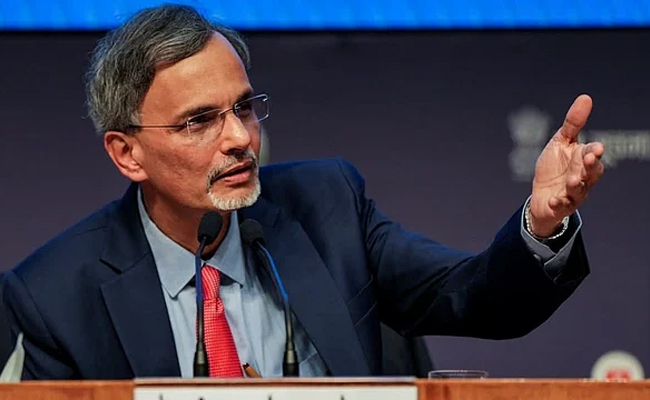
New Delhi (PTI): Chief Economic Advisor V Anantha Nageswaran on Saturday said India needs to create strategic buffers in the face of the "most difficult" energy shock that the country is facing amid the West Asia crisis.
Nageswaran also said the rising prices of fertiliser and petroleum products globally due to the crisis will make it challenging to achieve the 4.3 per cent fiscal deficit target for the current fiscal, while below normal monsoon and pass-through of higher energy prices could lead to "potential inflation spike".
He also said India has employment challenge emanating from AI, and there is a need to ensure that IT sector becomes more competitive and not lose jobs to AI, and instead create jobs that use AI within the IT sector or in other services.
Speaking at the ICPP Growth Conference organised by the Ashoka University, Nageswaran said the current account deficit (CAD) in the current fiscal could rise to over 2 per cent of GDP, from less than 1 per cent in FY'26.
"The ... priority for us is to create strategic buffers. This energy shock is the most difficult one compared to any other previous energy shock in terms of energy lost as a percentage of total global energy supply, not just oil, including gas.
"And we also need to use this occasion to think about other areas where we are vulnerable in terms of import dependence, nickel, tin, and copper. We need to build strategic buffers if we have to make a shot at manufacturing and becoming indispensable," Nageswaran said.
Since the beginning of the war in West Asia on February 28, crude oil prices soared to a four-year high of USD 126 per barrel on Thursday, from about USD 73 level before the war.
Stating that geopolitics will compel policymakers to be nimble and flexible and shed old model of thinking, Nageswaran said India is better prepared than many other countries to deal with the crisis because of the fiscal leeway that the country has due to lowering of fiscal deficit ratio to 4.4 per cent of GDP in FY'26.
Nageswaran said the West Asia conflict is more of a price shock than supply shock for India as the government is managing the supply side deftly.
"This particular conflict, which is going to be on a low simmer or a high flame situation, whatever it is, it is going to be there with us in some form or the other because the military conflict may be over, but the strategic conflict is well and truly alive. It will be so for some time," Nageswaran said.
He said the conflict has four channels of shock: price and supply shock, trade impact, sticky logistics costs and remittance shock.
India imports 60 per cent of its LPG usage and of that, 90 per cent flows through the now closed Strait of Hormuz.
Nageswaran said the pass-through of high global energy prices would have to be a "balancing act". He said some pass-through is already happening in commercial LPG, and the levy of export duty on diesel and ATF.
The government has cut excise duty on petrol and diesel to shield customers from the impact of the rise in petroleum prices. "We are coming around to arriving at a certain modus vivendi with respect to burden-sharing between the fiscal policy side, inflation, households and the oil marketing companies. So it has to be a balancing act," Nageswaran said.