Donald Trump refuses to sign COVID-19 relief bill, seeks USD 2,000 stimulus payment
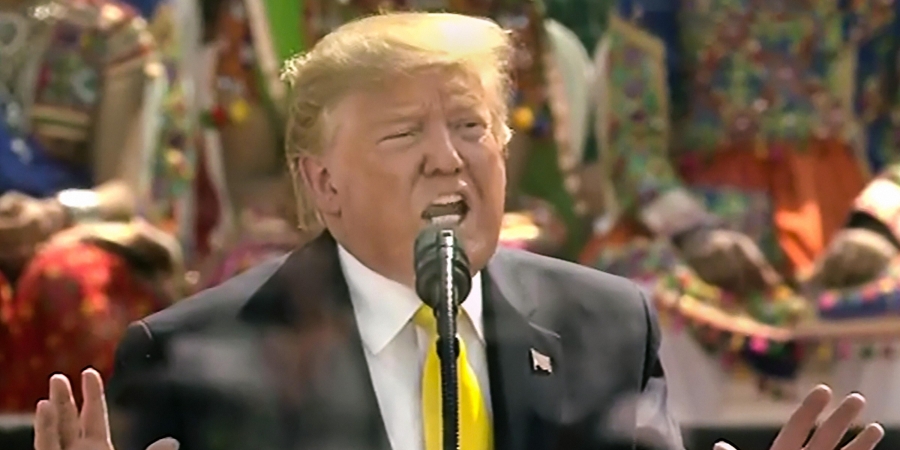
Washington, Dec 23: US President Donald Trump has refused to sign the COVID-19 relief bill, saying the USD 600 stimulus payment to most Americans was not enough as he asked Congress to increase the amount to USD 2,000.
Trump, in a video posted on Twitter on Tuesday night, said that the bill delivered too much money to foreign countries, but not enough to Americans.
A few months ago, Congress started negotiations on a new package to get urgently needed help to the American people. It's taken forever. However, the bill they are now planning to send back to my desk is much different than anticipated. It really is a disgrace, he said.
Treasury Secretary Steven Mnuchin was part of the negotiations.
Despite all of this wasteful spending and much more, the USD 900 billion package provides hardworking taxpayers with only USD 600 each in relief payments, and not enough money is given to small businesses and in particular restaurants whose owners have suffered so grievously," said the president in his video.
"I am asking Congress to amend this bill and increase the ridiculously low USD 600 dollars to USD 2,000, or USD 4,000 for a couple," he said.
Congress passed the USD 900 billion pandemic relief bill on Monday night to provide cash to businesses and individuals, and resources for vaccination amidst the raging COVID-19 pandemic. The bill went to President Trump for his signature.
However, Trump said: "I am also asking Congress to immediately get rid of the wasteful and unnecessary items in this legislation, and to send me a suitable bill, or else the next administration will have to deliver a COVID relief package. And maybe that administration will be me, and we will get it done".
Trump's proposal was immediately supported by House of Representatives Speaker Nancy Pelosi.
Republicans repeatedly refused to say what amount the President wanted for direct checks. At last, the President has agreed to $2,000 Democrats are ready to bring this to the Floor this week by unanimous consent. Let's do it! Pelosi said in a tweet soon thereafter.
Congressman Brendan Boyle, who had initially moved a legislation for USD 2,000 cheque, welcomed the demand of President Trump.
I am the co-sponsor of legislation for USD 2,000 stimulus cheques. So, I welcome the sudden support of Trump, he said in a tweet.
With so many Americans suffering, Congress had one job. To help Americans and small businesses get through this crisis, not help every other country and every other pork project out there. Just once, don't spend for the sake of spending. Know your priorities, Indian-American Republican politician Nikki Haley said.
Indian-American Congresswoman Pramila Jayapal has also been seeking an increase in stimulus cheques.
One USD 600 check isn't enough. A weekly USD 300 of enhanced unemployment assistance isn't enough. We're putting money in people's pockets, but in a crisis of this scale, people need and deserve so much more. I'll keep fighting to deliver that, she said in a tweet on Monday.
Let the Truth be known. If you read VB and like VB, please be a VB Supporter and Help us deliver the Truth to one and all.
Fire breaks out in residential building in east Delhi, nine killed
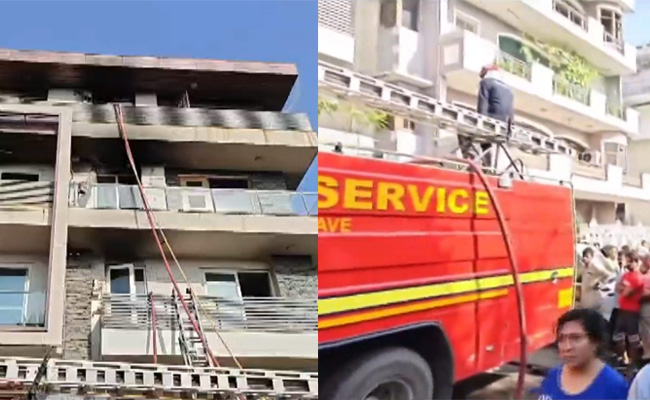
New Delhi (PTI): At least nine people were killed after a fire broke out in a residential building in east Delhi's Vivek Vihar early Sunday, officials said.
The incident was reported around 3.48 am at a four-storey building in Vivek Vihar Phase-I, following which police, fire and disaster management teams rushed to the spot.
According to the police, the blaze engulfed flats on the second, third and fourth floors of the building, prompting a large-scale rescue operation.
The cause of the fire is yet to be ascertained.
"Around 10 to 15 people were rescued from the premises during the firefighting operation. Two of them, who sustained minor injuries, were shifted to the Guru Teg Bahadur Hospital," a senior police officer said.
A total of 12 fire tenders were pressed into service to douse the flames, while teams from the Delhi Disaster Management Authority (DDMA), traffic police and local police assisted in the rescue and evacuation efforts.
Police said the fire was brought under control after several hours.
The identities of the deceased are yet to be ascertained, and efforts are underway to determine the cause of the fire, police said.
Further investigation and proceedings are underway.