Donald Trump’s younger brother Robert Trump dies at 71
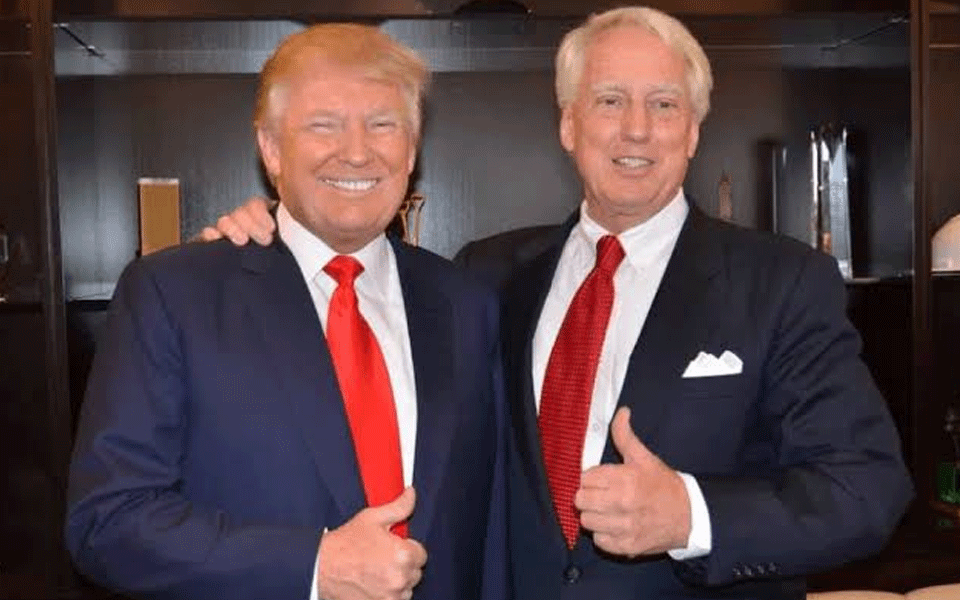
New York: President Donald Trump's younger brother, Robert Trump, a businessman known for an even keel that seemed almost incompatible with the family name, died Saturday night after being hospitalised in New York, the president said in a statement. He was 71.
The president visited his brother at a New York City hospital on Friday after White House officials said he had become seriously ill.
It is with heavy heart I share that my wonderful brother, Robert, peacefully passed away tonight," Donald Trump said in a statement. He was not just my brother, he was my best friend. He will be greatly missed, but we will meet again. His memory will live on in my heart forever. Robert, I love you. Rest in peace.
The youngest of the Trump siblings remained close to the 74-year-old president and, as recently as June, filed a lawsuit on behalf of the Trump family that unsuccessfully sought to stop publication of a tell-all book by the president's niece, Mary.
Robert Trump had reportedly been hospitalised in the intensive care unit for several days that same month.
Both longtime businessmen, Robert and Donald had strikingly different personalities. Donald Trump once described his younger brother as much quieter and easygoing than I am, and "the only guy in my life whom I ever call 'honey.' Robert Trump began his career on Wall Street working in corporate finance but later joined the family business, managing real estate holdings as a top executive in the Trump Organization.
When he worked in the Trump Organization, he was known as the nice Trump," Gwenda Blair, a Trump family biographer, told The Associated Press. Robert was the one people would try to get to intervene if there was a problem. Robert Stewart Trump was born in 1948, the youngest of New York City real estate developer Fred Trump's five children.
The president, two years older than Robert, admittedly bullied his brother in their younger years, even as he praised his loyalty and laid-back demeanor.
I think it must be hard to have me for a brother but he's never said anything about it and we're very close," Donald Trump wrote in his 1987 bestseller The Art of the Deal.
Robert gets along with almost everyone," he added, "which is great for me since I sometimes have to be the bad guy. In the 1980s, Donald Trump tapped Robert Trump to oversee an Atlantic City casino project, calling him the perfect fit for the job. When it cannibalised his other casinos, though, he pointed the finger of blame at Robert, said Blair, author of "The Trumps: Three Generations that Built an Empire."
When the slot machines jammed the opening weekend at the Taj Mahal, he very specifically and furiously denounced Robert, and Robert walked out and never worked for his brother again, Blair said.
A Boston University graduate, Robert Trump later managed the Brooklyn portion of father Fred Trump's real estate empire, which was eventually sold.
Once a regular boldface name in Manhattan's social pages, Robert Trump had kept a lower profile in recent years. He was not a newsmaker, Blair said.
Before divorcing his first wife, Blaine Trump, more than a decade ago, Robert Trump had been active on Manhattan's Upper East Side charity circuit.
He avoided the limelight during his elder brother's presidency, having retired to the Hudson Valley. But he described himself as a big supporter of the White House run in a 2016 interview with the New York Post.
I support Donald one thousand percent, Robert Trump said. In early March of 2020, he married his longtime girlfriend, Ann Marie Pallan.
The eldest Trump sibling and Mary's father, Fred Trump Jr., struggled with alcoholism and died in 1981 at the age of 43. The president's surviving siblings include Elizabeth Trump Grau and Maryanne Trump Barry, a retired federal appeals judge.
Authors Michael Kranish and Marc Fisher described Robert Trump as soft spoken but cerebral in Trump Revealed: The Definitive Biography of the 45th President : He lacked Donald's charismatic showmanship, and he was happy to leave the bravado to his brother, but he could show flashes of Trump temper."
Let the Truth be known. If you read VB and like VB, please be a VB Supporter and Help us deliver the Truth to one and all.
India should create strategic buffers to navigate 'most difficult' energy shock: CEA Nageswaran
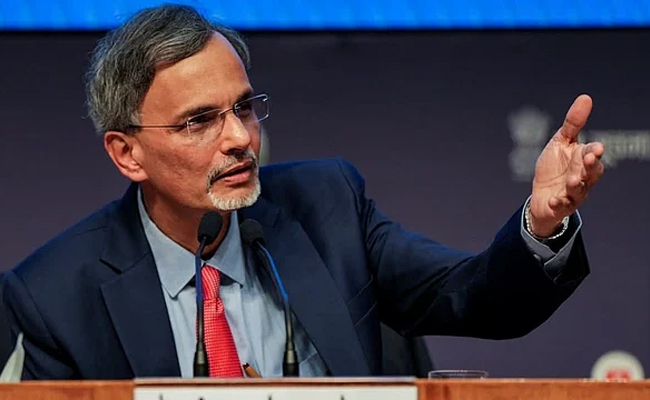
New Delhi (PTI): Chief Economic Advisor V Anantha Nageswaran on Saturday said India needs to create strategic buffers in the face of the "most difficult" energy shock that the country is facing amid the West Asia crisis.
Nageswaran also said the rising prices of fertiliser and petroleum products globally due to the crisis will make it challenging to achieve the 4.3 per cent fiscal deficit target for the current fiscal, while below normal monsoon and pass-through of higher energy prices could lead to "potential inflation spike".
He also said India has employment challenge emanating from AI, and there is a need to ensure that IT sector becomes more competitive and not lose jobs to AI, and instead create jobs that use AI within the IT sector or in other services.
Speaking at the ICPP Growth Conference organised by the Ashoka University, Nageswaran said the current account deficit (CAD) in the current fiscal could rise to over 2 per cent of GDP, from less than 1 per cent in FY'26.
"The ... priority for us is to create strategic buffers. This energy shock is the most difficult one compared to any other previous energy shock in terms of energy lost as a percentage of total global energy supply, not just oil, including gas.
"And we also need to use this occasion to think about other areas where we are vulnerable in terms of import dependence, nickel, tin, and copper. We need to build strategic buffers if we have to make a shot at manufacturing and becoming indispensable," Nageswaran said.
Since the beginning of the war in West Asia on February 28, crude oil prices soared to a four-year high of USD 126 per barrel on Thursday, from about USD 73 level before the war.
Stating that geopolitics will compel policymakers to be nimble and flexible and shed old model of thinking, Nageswaran said India is better prepared than many other countries to deal with the crisis because of the fiscal leeway that the country has due to lowering of fiscal deficit ratio to 4.4 per cent of GDP in FY'26.
Nageswaran said the West Asia conflict is more of a price shock than supply shock for India as the government is managing the supply side deftly.
"This particular conflict, which is going to be on a low simmer or a high flame situation, whatever it is, it is going to be there with us in some form or the other because the military conflict may be over, but the strategic conflict is well and truly alive. It will be so for some time," Nageswaran said.
He said the conflict has four channels of shock: price and supply shock, trade impact, sticky logistics costs and remittance shock.
India imports 60 per cent of its LPG usage and of that, 90 per cent flows through the now closed Strait of Hormuz.
Nageswaran said the pass-through of high global energy prices would have to be a "balancing act". He said some pass-through is already happening in commercial LPG, and the levy of export duty on diesel and ATF.
The government has cut excise duty on petrol and diesel to shield customers from the impact of the rise in petroleum prices. "We are coming around to arriving at a certain modus vivendi with respect to burden-sharing between the fiscal policy side, inflation, households and the oil marketing companies. So it has to be a balancing act," Nageswaran said.