“Don't use onion in food”, Bangladesh PM told her cook post export ban
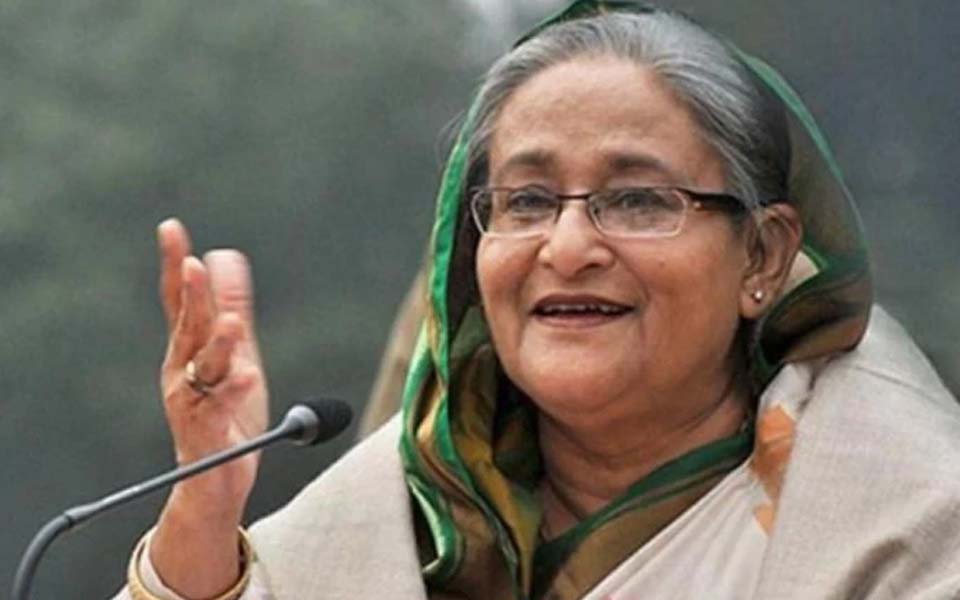
New Delhi, Oct 4: India's onion export ban seems to have impacted kitchen of Bangladesh Prime Minister Sheikh Hasina, as she has urged in lighter vein to provide prior information about such decisions.
The Bangladeshi prime minister said that India's sudden decision to stop onion exports has lead to a bit of difficulty for her countrymen.
"I don't know why you stopped onion (exports). So what I did was, I told my cook to not to use onion in food Prior notice of such decisions would help. Suddenly, you stopped and it became a difficulty for us. In future, if you are taking such a decision, prior information would help," she said in a lighter vein.
She was addressing India-Bangladesh Business Forum here, which was organised by industry chambers, including CII and Assocham. Commerce and industry Minister Piyush Goyal was also present at the event.
Last Sunday, India banned exports of onion to increase availability of the commodity in the domestic market and contain spiralling prices. The Centre has also imposed stock limits on both retail and wholsesale traders for onion.
Further talking to enhancing trade and investments between the two countries, she said huge potential exists in Bangladesh for Indian business community in different sectors.
She said that Bangladesh has the most liberal investment policy in South Asia, and it includes protection of foreign investment by law; generous tax holiday; concessionary duty on import of machinery; unrestricted exit policy; full repatriation of dividend and capital on exit, to name a few.
"We are in the process of establishing 100 Special Economic Zones. About a dozen of them are ready with four allotments to three countries. Bangladesh has offered three zones for Indian investors at Mongla, Bheramara and Mirsarai. Substantial investment from Indian investors in these three Indian Economic Zones in Bangladesh would help broaden our exportable base.
"We also want to see trade and investment together where Indian big investors can set up industries in Bangladesh and export the products to the north-eastern states of India and to South-east Asian countries taking advantage of the improved connectivity between us," Hasina said.
The prime minister said that strategic location of Bangladesh provides tremendous potential for being the economic hub of the region.
With India on the west, China on the north and Southeast Asia on the east, Bangladesh is in the middle of a combined market of 4 billion people, she said, adding the volume of bilateral trade has steadily grown during the past years.
"The balance of trade, however, is still largely in India's favour. The volume of trade between two countries is nearly USD 10 billion. In 2018, Bangladesh was India's eighth largest export destination with USD 8.8 billion export and our export to India also crossed USD 1 billion mark for the first time last year. So, the progress is visible, but there is lot of scope for further deepening our relations in the area of trade and investment," she said.
Goyal said that India businesses should grab opportunities in the neighbouring country.
"There are so many areas where businesses of both the countries can increase cooperation. Grab the opportunity that Bangladesh offers," he said.
Further, he said that lot of potential exists in railways also and India is ready to share its expertise in the development of this sector in Bangladesh.
India is looking to increase the frequency of three trains between the two countries, he added.
Bandhan Express, which runs between Kolkata and Khulna once a week, would be increased to twice a week and later four days a week. Similarly, frequency of Maitree express, which runs between Kolkata and Dhaka, would be increased to five day a week from the current four day a week and "my effort will be to make it daily," he said.
"We are looking at making entire railways between the countries a seamless movement for goods and people," he added.
Commenting on the economic relations between the two countries, SAARC Chamber of Commerce & Industry (SCCI) Vikramjit Singh Sahney said that both the countries have huge potential to increase trade and investments.
He said that the line of credit extended by India to Bangladesh should include fertiliser plants also and "there is a need to open more check posts and skill training centres to enhance capacity building".
Let the Truth be known. If you read VB and like VB, please be a VB Supporter and Help us deliver the Truth to one and all.
AIITA welcomes Karnataka’s ban on obscene songs in school events
Bhatkal: The Karnataka unit of the All India Ideal Teachers Association (AIITA) has welcomed the Karnataka government’s decision to strictly ban school children from dancing to obscene songs during educational and cultural programmes in government, aided, and private schools across the state.
AIITA Karnataka State President M. R. Manvi congratulated the government for taking what he termed an important step to preserve the sanctity of education.
“Such decisions to safeguard the dignity of school children and uphold the values of education are the need of the hour. This rule should not be limited to government schools alone but must be strictly implemented in all private educational institutions as well,” he said.
He further urged the government to address other concerns within school programmes.
“The government should not only prohibit obscene dances in the name of school anniversaries, but also ensure that plays and dialogues that incite religious hatred are avoided. Schools should be centres of harmony, not platforms for spreading hatred,” he added.
According to a recent circular issued by the Department of School Education and Literacy, obscene dances are adversely affecting the mental health and moral values of students.
In this regard, schools have been advised to use songs that promote nationalism, positive thinking, the greatness of Kannada culture, and value-based traditions instead of inappropriate content during programmes.
The circular also emphasises that students should be dressed in decent attire.
AIITA also backed the department’s warning that disciplinary action would be taken against head teachers if such guidelines are violated. The association has further demanded that district Deputy Directors of Public Instruction strictly monitor the implementation of these rules.