EAM Jaishankar and Pak PM Sharif shake hands at SCO reception
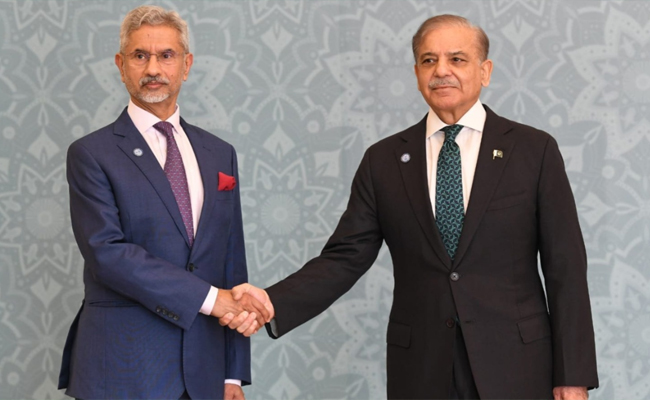
Islamabad (PTI): External Affairs Minister S Jaishankar on Tuesday exchanged pleasantries with Pakistan Prime Minister Shehbaz Sharif, hours after landing in the Pakistani capital in the first such visit from India in nearly a decade that came amid frosty ties between the two neighbours.
The brief exchange and handshake between Jaishankar and Sharif took place at a banquet dinner hosted by the Pakistani prime minister at his residence in honour of the delegates attending a summit of the Shanghai Cooperation Organisation (SCO).
However, there was no indication of any thaw in the strained ties between the two sides.
Interestingly, Indian classical dance form 'Bharatanatyam' was among the performances presented at the reception during the dinner reception, people familiar with the matter said.
The Pakistan prime minister greeted all the leaders of the delegations of the SCO member nations at the banquet reception. Sharif and the leaders of the SCO delegations had dinner at a large table.
It is understood that Jaishankar also exchanged pleasantries with Pakistan foreign minister Ishaq Dar at the reception.
Pakistan is hosting the SCO meeting under tight security and the capital city has almost been under lockdown. The main conclave will be held on Wednesday.
Earlier, Jaishankar's aircraft landed at the Nur Khan airbase on the outskirts of the Pakistani capital city at around 3:30 pm (local time) and he was greeted by senior Pakistani officials.
It is the first time in nearly nine years that India's foreign minister travelled to Pakistan even as the ties between the two neighbours remained tense over the Kashmir issue and cross-border terrorism emanating from Pakistan.
The external affairs minister will lead the Indian delegation at the SCO Council of Heads of Government (CHG) summit on Wednesday.
"Landed in Islamabad to take part in SCO Council of Heads of Government Meeting," Jaishankar posted on 'X' along with photographs of children and officials welcoming him with flowers at the airport.
The last Indian Foreign Minister to visit Pakistan was Sushma Swaraj. She had travelled to Islamabad to attend the 'Heart of Asia' conference on Afghanistan that was held on December 8 to 9 in 2015.
Jaishankar, who was then India's foreign secretary was part of Swaraj's delegation.
During the visit, Swaraj had held talks with her then counterpart Sartaj Aziz.
Following the Swaraj-Aziz talks, a joint statement was released in which both sides announced their decision to start a Comprehensive Bilateral Dialogue.
Little over two weeks after Swaraj's trip, Prime Minister Narendra Modi sprang a surprise with a 150-minute visit to Lahore on way back home from Kabul.
Modi visited the ancestral home of his then Pakistani counterpart Nawaz Sharif and had talks to open ways for peace.
However, a series of terror attacks on India by Pakistan-based terrorists significantly strained the ties subsequently.
Before Jaishankar left for Pakistan, India on Tuesday said it remains actively engaged in various mechanisms of the SCO.
"The SCO CHG meeting is held annually and focuses on the trade and economic agenda of the Organisation," the Ministry of External Affairs (MEA) said.
"External Affairs Minister S Jaishankar will represent India at the meeting. India remains actively engaged in the SCO format, including various mechanisms and initiatives within the SCO framework," it said in a brief statement in New Delhi.
Both sides have already ruled out any bilateral talks between Jaishankar and Dar on the sidelines of the SCO summit.
In his recent address at an event, Jaishankar said "like with any neighbour, India would certainly like to have good relations with Pakistan."
"But that cannot happen by overlooking cross-border terrorism and indulging in wishful thinking."
The decision to send the senior minister is seen as a display of India's commitment to the SCO.
The ties between India and Pakistan came under severe strain after India's warplanes pounded a Jaish-e-Mohammed terrorist training camp in Balakot in Pakistan in February 2019 in response to the Pulwama terror attack.
The relations further deteriorated after India on August 5, 2019 announced the withdrawal of special powers of Jammu and Kashmir and the bifurcation of the state into two union territories.
Pakistan downgraded diplomatic ties with India after New Delhi abrogated Article 370.
India has been maintaining that it desires normal neighbourly relations with Pakistan while insisting that the onus is on Islamabad to create an environment free of terror and hostility for such engagement.
Pakistan's then foreign minister Bilawal Bhutto Zardari visited India in May 2023 to attend an in-person meeting of the foreign ministers of SCO nations in Goa.
It was the first visit of a Pakistani foreign minister to India in almost 12 years.
Let the Truth be known. If you read VB and like VB, please be a VB Supporter and Help us deliver the Truth to one and all.
CM Siddaramaiah alleges ‘criminal conspiracy’ in Sringeri recount, vows legal action
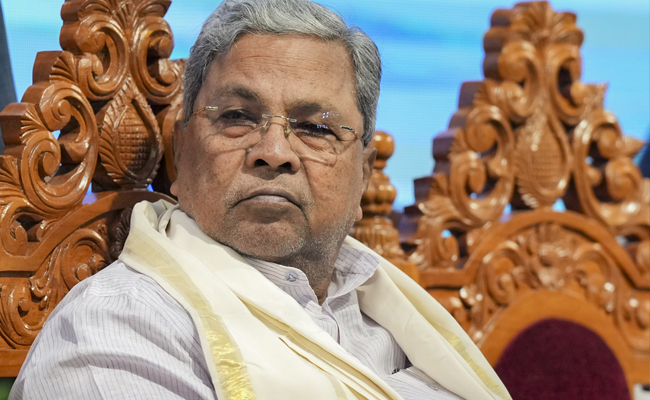
Bengaluru (PTI): Alleging a “criminal conspiracy” by BJP candidate D N Jeevaraj in the Sringeri Assembly poll recounting, Karnataka CM Siddaramaiah on Tuesday said the outcome was manipulated after valid postal ballot votes in favour of Congress leader T D Raje Gowda were tampered with during the recounting process.
Following a Karnataka High Court order on an election petition filed by Jeevaraj, challenging Raje Gowda’s election, the reverification and recounting were conducted on Saturday.
After the reverification and recount of postal ballots for the Sringeri Assembly constituency, votes polled in favour of Raje Gowda were reduced by 255, the returning officer said.
A report on the matter has been submitted to the Election Commission of India for further action, the officer added.
Congress leader Raje Gowda had won the 2023 Assembly polls from Sringeri by 201 votes, defeating his nearest rival Jeevaraj.
Addressing a press conference in Bengaluru, Siddaramaiah said the High Court had directed the recounting of postal ballots and that irregularities were noticed during the exercise conducted on May 2.
“This is a clear case of criminal conspiracy,” Siddaramaiah said, alleging that valid votes cast in favour of Raje Gowda were altered after being accepted by counting agents of all parties, including Congress, BJP, and JD(S).
He claimed that during the recounting of postal ballots, 255 votes were initially accepted as valid by all agents but were later tampered with by subordinate officials.
“There is a second mark on the votes polled in favour of Raje Gowda. They had accepted these as valid votes. Subsequently, another mark was made by officials. This is a clear case of criminal conspiracy,” he said.
When asked who was behind the alleged conspiracy, the CM replied, “It was hatched by Jeevaraj and others. It is planned.”
Siddaramaiah further alleged that the returning officer acted improperly by declaring the result despite the presence of an Election Commission observer during the recounting.
“Immediately after the counting, the returning officer announced the result. He should not have done so; this is against the law,” he said.
He pointed out that Raje Gowda had originally won by 201 votes, but after the recounting, the BJP candidate was declared the winner by 52 votes.
“The BJP has committed a criminal act of conspiracy. This is not vote chori but vote dacoity,” he alleged.
The CM said a police complaint had already been filed by Raje Gowda’s election agent, Sudhir Kumar, and emphasised the need for electoral integrity.
“We want transparency and free and fair elections. That is what our Constitution mandates,” he added.
Stating that the government would pursue legal remedies, Siddaramaiah said, “We are preparing an appeal challenging the returning officer’s announcement in a court of law.”
Responding to a separate query on elections in other states, the CM said there appeared to be an anti-incumbency factor in West Bengal, while results in Tamil Nadu were “surprising,” adding that Vijay’s party was emerging as the largest there.
Following the victory of party candidates in Bagalkote and Davanagere South, Siddaramaiah expressed confidence about future electoral prospects in Karnataka.
“Even in 2028, we will win the Assembly elections. We will come back,” the CM said.
Siddaramaiah added that he would order a forensic examination into the alleged tampering of postal ballots.