Earthquake kills 65, triggers landslides in southwest China
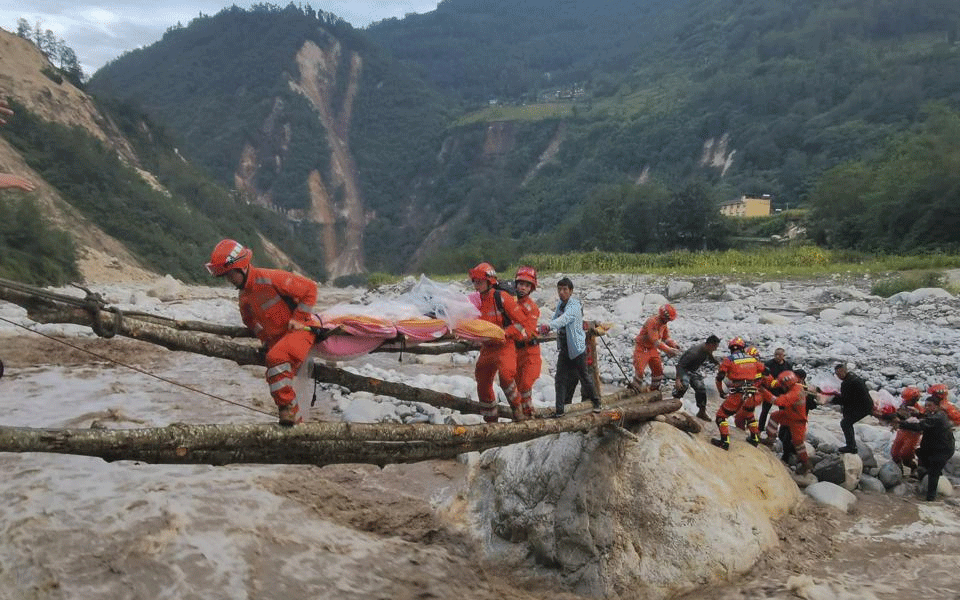
Beijing (AP): The powerful earthquake that set off landslides and shook buildings in southwestern China killed at least 65 people and injured hundreds, state media said Tuesday.
At least 16 other people are missing a day after the 6.8 magnitude earthquake struck a mountainous area in Luding county in Sichuan province, which sits on the edge of the Tibetan Plateau where tectonic plates meet and is hit regularly by quakes. The temblor shook buildings in the provincial capital of Chengdu, whose 21 million residents are already under a COVID-19 lockdown.
Power was knocked out and buildings damaged in the historic town of Moxi in the Tibetan autonomous prefecture of Garze, where 37 people were killed. Tents were erected for more than 50,000 people being moved from homes made unsafe by the quake, the official Xinhua News Agency reported.
State broadcaster CCTV showed rescue crews pulling a woman who appeared uninjured from a collapsed home in Moxi, where many of the buildings are constructed from a mix of wood and brick. Around 150 people were reported with varying degrees of injuries.
Another 28 people were killed in neighbouring Shimian county on the outskirts of the city of Ya'an. Another 248 people were reported as injured, mainly in Moxi, and another 12 people were reported missing.
Three of the dead were workers at the Hailuogou Scenic Area, a glacier and forest nature reserve.
Along with the deaths, authorities reported stones and soil falling from mountainsides, causing damage to homes and power interruptions, CCTV said. One landslide blocked a rural highway, leaving it strewn with rocks, the Ministry of Emergency Management said.
Buildings shook in Chengdu, 200 kilometers (125 miles) from the epicenter.
The earthquake and lockdown follow a heat wave and drought that led to water shortages and power cuts due to Sichuan's reliance on hydropower. That comes on top of the latest major lockdown under China's strict zero-COVID policy.
China's deadliest earthquake in recent years was a 7.9 magnitude quake in 2008 that killed nearly 90,000 people in Sichuan. The temblor devastated towns, schools and rural communities outside Chengdu, leading to a years-long effort to rebuild with more resistant materials. (AP)
Let the Truth be known. If you read VB and like VB, please be a VB Supporter and Help us deliver the Truth to one and all.
Bengaluru airport introduces AI-based system to enhance safety at vehicle-aircraft intersections
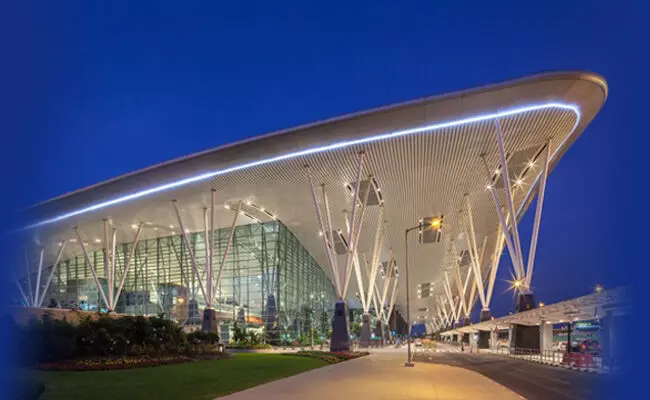
Bengaluru: Bangalore International Airport Limited (BIAL) has introduced an integrated smart airside safety system at Kempegowda International Airport to improve operational safety at key intersection zones.
According to The Hindu, the system has been designed to enhance safety at Cross Service Roads (CSRs), where aircraft and ground vehicle movements intersect.
According to BIAL, the system integrates AI-based computer vision, automation, and centralised monitoring to manage right-of-way movements and reduce the risk of human error.
“CRSs are among the most sensitive areas within airport operations, requiring precise and seamless coordination between aircraft and ground vehicles. Traditionally, right of way protection at these intersections relied on manual or semi-manual inset light activation, creating dependencies on human intervention, increasing the risk of delays and limiting operational visibility,” TH quoted BIAL as saying.
The new system uses real-time detection of vehicle movement, risk assessment, and automated signalling. AI-enabled cameras identify potential conflicts and trigger automated inset light signals to ensure aircraft priority. Normal operations resume once the area is confirmed clear.
“Based on these detections, the system triggers automated inset light activation to protect aircraft right‑of‑way and restores normal signalling once the intersection is confirmed clear. A centralised monitoring and analytics platform digitally logs all events, strengthening governance, compliance, and operational control,” BIAL said.
By embedding technology into operations, the system creates a data-driven separation layer between aircraft and ground vehicles, significantly reducing human error, especially during night and low-visibility conditions.
“Precision-led signal activation improves traffic flow, minimises unnecessary stoppage and enhances turnaround efficiency. It also establishes a scalable foundation for predictive safety analytics, enabling trend analysis, peak-hour optimisation, compliance mapping and risk forecasting to support continuous improvement and stronger airside governance,” BIAL said.