Egypt says at least 11 killed in train crash north of Cairo, nearly 100 injured
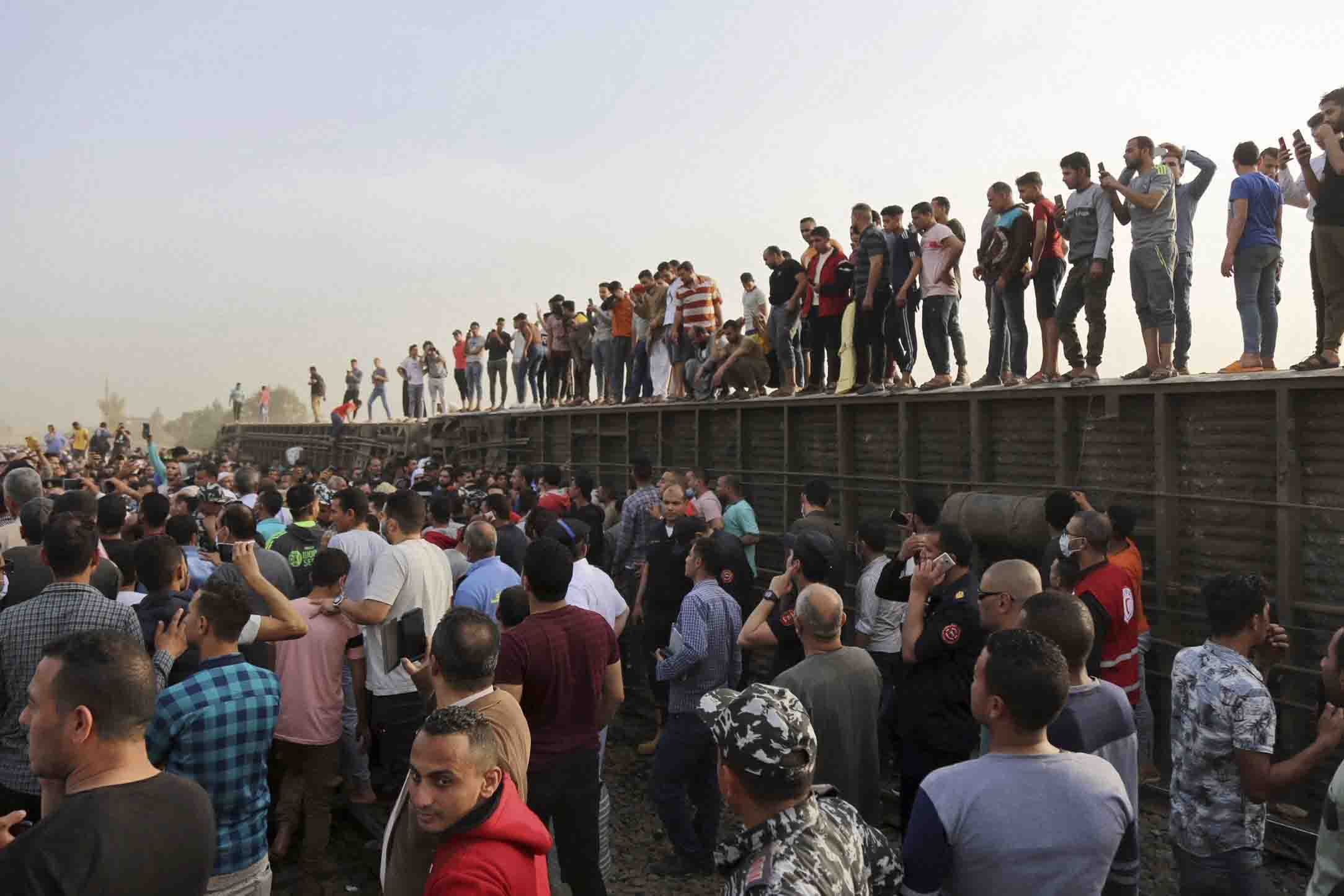
Cairo, Apr 19: A passenger train derailed Sunday north of Cairo, killing at least 11 people, Egyptian authorities said. It was the latest of several rail accidents to hit the country in recent years.
Four train wagons ran off the railway at the city of Banha in Qalyubia province, just outside Cairo, the railway authority said in a statement. Videos on social media showed wagons overturned and passengers escaping to safety along the railway.
The train was travelling to the Nile Delta city of Mansoura from the Egyptian capital, the statement said.
The Health Ministry said in a statement that besides the dead, at least 98 people were injured, with most of them suffering from broken bones, cuts and bruises.
At least 60 ambulances were sent to the scene and the injured were taken to nearby hospitals, the ministry added.
Salvage teams could be seen searching for survivors and removing the derailed wagons. It was not immediately clear what caused the train to derail. Prosecutors said they were investigating the causes of the crash.
The state-run Ahram daily reported that authorities have detained at least 10 railway officials, including the train driver and his assistant, pending an investigation into the crash.
Last week, at least 15 people were injured when train carriages derailed in the Nile Delta province of Sharqia.
Sunday's train accident came three weeks after two passenger trains collided in the province of Sohag, killing at least 18 people and injuring 200 others, including children.
Prosecutors said they found that gross negligence by railway employees was behind the deadly March 25 crash, which caused public outcry across the country.
Train wrecks and mishaps are common in Egypt, where the railway system has a history of badly maintained equipment and mismanagement. The government says it has launched a broad renovation and modernization initiative.
President Abdel Fattah el-Sissi said in March 2018 that the government needs about 250 billion Egyptian pounds, or USD 14.1 billion, to overhaul the run-down rail system.
Hundreds of train accidents are reported every year. In February 2019 an unmanned locomotive slammed into a barrier inside Cairo's main Ramses railway station, causing a huge explosion and a fire that killed at least 25 people. That crash prompted the then-transportation minister to resign.
In August 2017, two passenger trains collided just outside the Mediterranean port city of Alexandria, killing 43 people. In 2016, at least 51 people were killed when two commuter trains collided near Cairo.
Egypt's deadliest train crash was in 2002, when over 300 people were killed after a fire broke out in an overnight train traveling from Cairo to southern Egypt.
#Egypt: Several injured as a train derailed near Tukh city, north of #Cairo. #egypttraincrash pic.twitter.com/pMOf4i5ZtM
— Asian OSINT (@AsianOSINT) April 18, 2021
Let the Truth be known. If you read VB and like VB, please be a VB Supporter and Help us deliver the Truth to one and all.
Double-decker electric bus gutted in fire at Kurla BEST depot
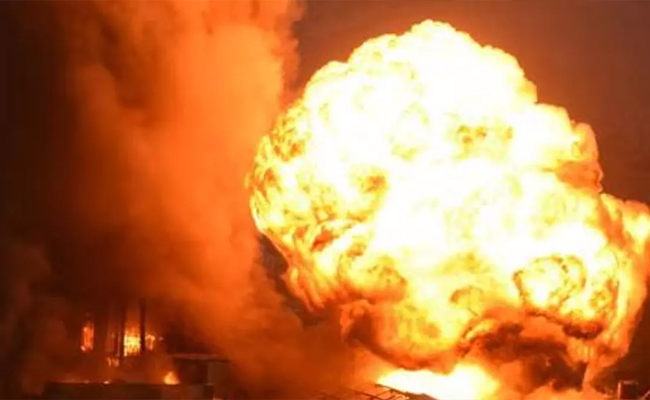
Mumbai (PTI): An empty double-decker electric bus was gutted in a fire during servicing at a BEST depot in Mumbai's Kurla area on Sunday, officials said, adding that nobody was injured.
The blaze broke out inside the Kurla BEST bus depot near Kanakia Building at 4.14 pm, according to preliminary information from the Mumbai Fire Brigade.
The parked bus was unoccupied at the time of the incident.
Fire brigade personnel rushed to the spot and brought the blaze under control. The exact cause of the fire was yet to be ascertained, they said.
No injuries were reported in the incident, officials added.
The Brihanmumbai Electricity Supply and Transport (BEST) Undertaking has hired 50 electric double-decker buses from Switch Mobility in its fleet of around 2,700 buses.