Elon Musk warns Republicans against standing in Trump's way — or his
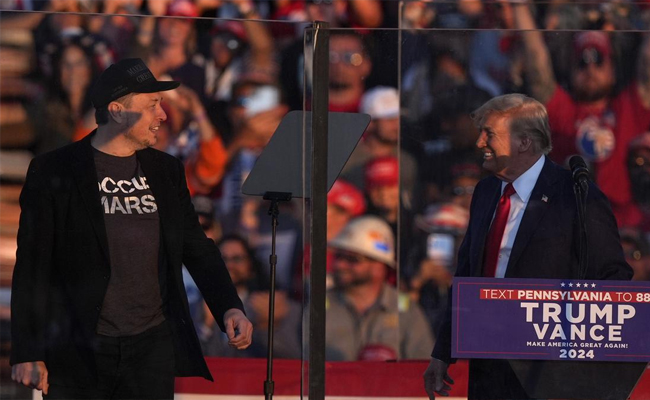
Des Moines (US) (AP): A week after President-elect Donald Trump's victory, Elon Musk said his political action committee would “play a significant role in primaries.”
The following week, the billionaire responded to a report that he might fund challengers to GOP House members who don't support Trump's nominees. “How else? There is no other way,” Musk wrote on X, which he rebranded after purchasing Twitter and moving to boost conservative voices, including his own.
And during his recent visit to Capitol Hill, Musk and entrepreneur Vivek Ramaswamy delivered a warning to Republicans who don't go along with their plans to slash spending as part of Trump's proposed Department of Government Efficiency.
“Elon and Vivek talked about having a naughty list and a nice list for members of Congress and senators and how we vote and how we're spending the American people's money," said Rep. Marjorie Taylor Greene, R-Ga.
Trump's second term comes with the specter of the world's richest man serving as his political enforcer. Within Trump's team, there is a feeling that Musk not only supports Trump's agenda and Cabinet appointments, but is intent on seeing them through to the point of pressuring Republicans who may be less devout.
One Trump adviser, speaking on condition of anonymity to discuss internal political dynamics, noted Musk had come to enjoy his role on the campaign and that he clearly had the resources to stay involved.
The adviser and others noted that Musk's role is still taking shape. And Musk, once a supporter of President Barack Obama before moving to the right in recent years, is famously mercurial.
“I think he was really important for this election. Purchasing Twitter, truly making it a free speech platform, I think, was integral to this election, to the win that Donald Trump had,” said departing Republican National Committee co-chair Lara Trump, the president-elect's daughter-in-law. “But I don't know that ultimately he wants to be in politics. I think he considers himself to be someone on the outside.”
During the presidential campaign, Musk contributed roughly $200 million to America PAC, a super PAC aimed at reaching Trump voters online and in person in the seven most competitive states, which Trump swept. He also invested $20 million in a group called RBG PAC, which ran ads arguing Trump would not sign a national abortion ban even as the former president nominated three of the justices who overturned a federally guaranteed right to the procedure.
Musk's donation to RBG PAC — a name that invokes the initials of former Supreme Court Justice Ruth Bader Ginsburg, a champion of abortion rights — wasn't revealed until post-election campaign filings were made public Thursday.
Musk has said he hopes to keep America PAC funded and operating. Beyond that, he has used his X megaphone to suggest he is at least open to challenging less exuberant Trump supporters in Congress.
Another key Trump campaign ally has been more aggressive online. Conservative activist Charlie Kirk, whose group Turning Point Action also worked to turn out voters for Trump, named Republican senators he wants to target.
“This is not a joke, everybody. The funding is already being put together. Donors are calling like crazy. Primaries are going to be launched," Kirk said on his podcast, singling out Sens. Joni Ernst of Iowa, Jim Risch of Idaho, Mike Rounds of South Dakota and Thom Tillis of North Carolina as potential targets. All four Republican senators' seats are up in 2026.
For now, Musk has been enjoying the glow of his latest conquest, joining Trump for high-level meetings and galas at the soon-to-be president's Mar-a-Lago resort home in Palm Beach, Florida. The incoming administration is seeded with Musk allies, including venture capitalist and former PayPal executive David Sacks serving as the “White House AI & Crypto Czar” and Jared Isaacman, a tech billionaire who bought a series of spaceflights from Musk's SpaceX, named to lead NASA.
Musk could help reinforce Trump's agenda immediately, some GOP strategists said, by using America PAC to pressure key Republicans. Likewise, Musk could begin targeting moderate Democrats in pivotal states and districts this spring, urging them to break with their party on key issues, Republican strategist Chris Pack said.
“Instead of using his influence to twist GOP arms when you have majorities in both houses, he could start going after Democrats who vote against Trump's agenda in states where the election was a referendum for Trump,” said Pack, former communications director for the National Republican Senatorial Committee. “Otherwise, if you pressure Republicans with a primary, you can end up with a Republican who can't win, and then a Democrat in that seat.”
Let the Truth be known. If you read VB and like VB, please be a VB Supporter and Help us deliver the Truth to one and all.
EC role, Hindu vote consolidation among factors for BJP win in Bengal polls: J-K CM Omar
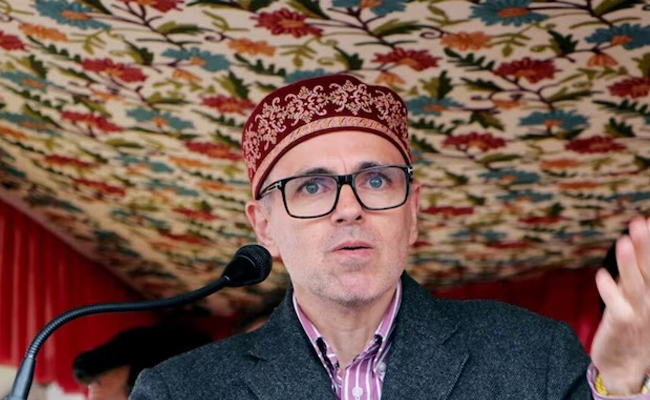
Srinagar (PTI): Jammu and Kashmir Chief Minister Omar Abdullah on Tuesday attributed the BJP's West Bengal win to a "significant role" played by the Election Commission (EC), alongside a consolidation of Hindu votes and a fractured minority mandate.
Abdullah also said the INDIA bloc needs to define its role in the political landscape of the country and make it clear whether the opposition alliance was limited to the parliamentary elections or extended to the state elections as well.
Talking to PTI Videos, Abdullah hinted that the EC has compromised its neutrality by conducting the Special Intensive Revision (SIR) in West Bengal and linked it to the BJP's gains in the state, claiming large-scale deletion of legitimate voters.
On the performance of the BJP in the just concluded assembly elections, Abdullah said the saffron party has almost nothing to show in southern states.
"So then you look at West Bengal and Assam. Yes, the BJP improved its tally in Assam. There are various reasons for that. You know as well as I do, what those are. West Bengal, I think we need to look at the results very carefully," he said.
"The easiest explanation for the West Bengal result is the serious curtailing of voter list," Abdullah said.
"Voters found their names deleted. People who served in uniform and fought for this country on the borders, who were considered Indian citizens all their lives, were suddenly held to a higher standard and not allowed to vote. Something is not right," he said.
While alleging that the EC played a "significant part" in the results, the chief minister admitted the outcome was multifaceted and noted a consolidation of over 60 per cent of the Hindu vote towards the BJP and a "significant fracture" in the minority vote, particularly in seats where Muslims constitute over 50 per cent of the population.
"There is no doubt that the role of the Election Commission played a significant part in the results but we will also have to look at the other factors," he said.
He said the results of West Bengal cannot be compared to those in other states. "The situation was unique to West Bengal. The SIR that was done, the way in which the voter lists were changed, the sort of minute scrutiny that the Election Commission subjected West Bengal to, the role of the central investigative agencies.
"All of these are situations that at least in recent electoral history of India are unique to West Bengal. So to suggest that we can learn lessons from West Bengal and implement them in other parts of the country, I think would not be correct," he said.
Abdullah had recently said that if the West Bengal results throw a surprise, the role of EC will come under scrutiny.
However, during Tuesday's interview, the chief minister said he still maintains that electronic voting machines (EVMs) do not lead to vote theft.
"What we saw in West Bengal...I know there are a lot of people who believe that the EVMs themselves are flawed. I am not a proponent of that conspiracy theory.
"But I do believe that the Election Commission has done itself no favours in the way in which it has gone about both the process of delimitation and the process of finalisation of electoral rolls," he said and cited the example of delimitation exercise in Jammu and Kashmir or Assam.
"These are clear examples of how the process was done to benefit one party or in the case of Jammu and Kashmir, one party and its allies. And the results speak for themselves. You created seven new seats in Jammu and Kashmir and out of those six seats were won by the BJP. You redrew assembly constituencies to benefit one particular party or its allies. And the same is true for West Bengal as well," he said.
Referring to the INIDA bloc, he said the election results were no new message for the alliance.
"We need to decide what the INDIA bloc is for. Is it only for Parliament or for state elections as well?" he asked.
"What happened in West Bengal is unfortunate. The Congress and TMC fought against each other. Now the Congress agrees with Mamata Banerjee that 100 seats were stolen, but the fact is they fought each other," he said.
Despite the friction, Abdullah reaffirmed the "pre-eminent position" of the Congress within the opposition alliance, dismissing the idea of any other party assuming the mantle.
"The Congress is the only party other than the BJP with a pan-India presence. All of us acknowledge this," he stated.
"To suggest someone else can assume a leadership role would be incorrect. Kharge Sahib is the president of the Congress, and by virtue of that, he assumes leadership of the INDIA bloc meetings. That is the way it should be," the chief minister said.
Abdullah said any 'Common Minimum Programme' would depend on whether the opposition alliance decides to fight state assembly elections collectively, noting that he would share his specific views with the bloc internally rather than through the media.