Ensuing election blunder, Canadian PM Justin Trudeau has 12 days left to reclaim his career
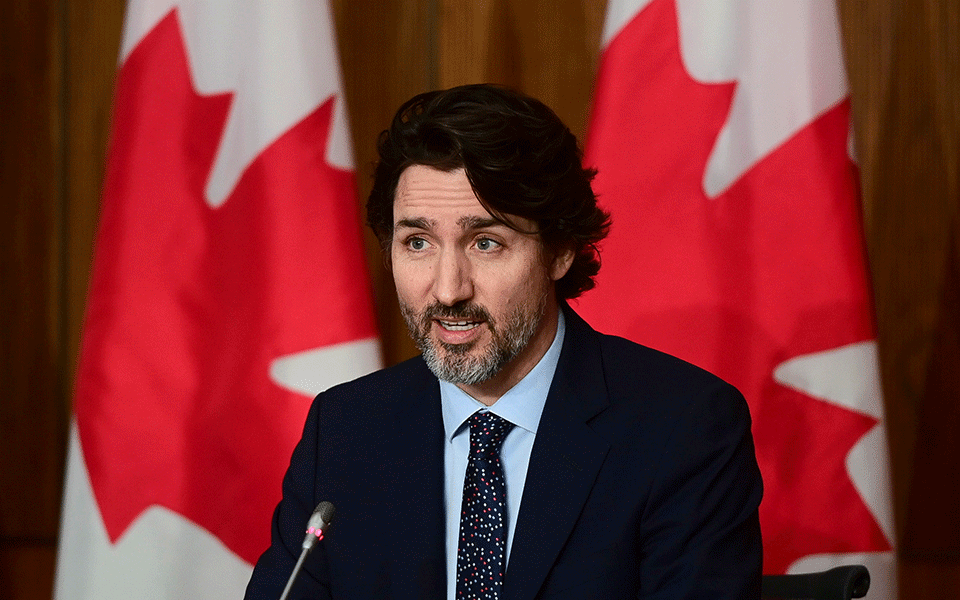
Canadian Prime Minister, Justin Trudeau called a snap election for Sept. 20, intending to earn his Liberal Party the ruling majority. Until last month, Justin Trudeau was sure of winning the election due to his successful vaccination strategy, which earned him very grateful Canadian voters.
His main opponent, Conservative Leader Erin O'Toole, was non-existent for the Canadians until Trudeau called a snap election which resulted in his numbers plummeting instantly. With barely 12 days left to go, he will probably end up with a debilitated minority government or may go as far as to face a crushing defeat.
"The Liberals likely called the election thinking that they would be able to run on their pandemic record, bask in a vaccination halo and get ahead of the post-stimulus economic adjustment," said Nik Nanos, an Ottawa-based pollster at Nanos Research Group. He further added, "That's out the door now." reported NDTV.
Trudeau’s possible downfall may be due to several factors, reckon analysts. The mood of the electorate, one of the reasons voters feel taken advantage of by a politician who has turned a health crisis into a power grab. In one poll, 60% of the population agreed not to have an election.
Some point to tactical factors, On day one Trudeau, was very vague while conveying his message about his vision for the country and the reason for the vote.
In the meantime, O'Toole's Conservatives took another direction focused on the economy and eliminated its traditional ideological baggage.
Following the incident, the liberals focused on issues such as abortion, private health care, anti-vaxxers and gun control, hoping to paint the conservatives as decremental.
"I don't understand how they could have been so tone-deaf about the mood of the Canadian public, about peoples' total preoccupation with Covid and some kind of return to normal," said Peter Donolo, a vice chairman at Hill+Knowlton Canada who was communications chief to former Liberal Prime Minister Jean Chretien, according to NDTV.
Let the Truth be known. If you read VB and like VB, please be a VB Supporter and Help us deliver the Truth to one and all.
Karnataka by-polls: Cong ahead in Bagalkot, BJP leads in Davanagere South
_vb_21.jpeg)
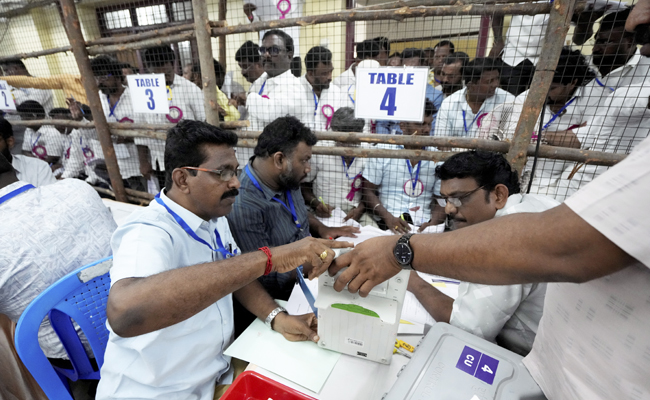
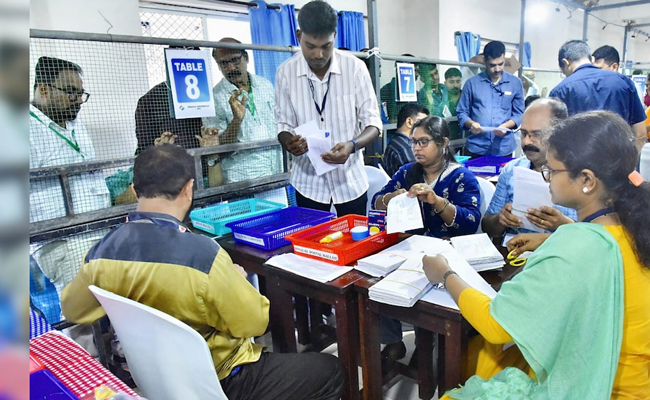
Bengaluru (PTI): Trends show Congress and BJP have maintained leads respectively in Karnataka's Bagalkot and Davanagere South Assembly seats, where counting of votes is underway on Monday, for the bypolls held for two seats on April 9.
The polls were necessitated by the deaths of senior Congress MLAs H Y Meti (Bagalkot) and Shamanur Shivashankarappa (Davanagere South).
According to the Election Commission, Congress party's Umesh Meti was ahead of BJP's Veerabhadrayya Charantimath by a margin of 9,969 votes in Bagalkot.
In Davanagere South, BJP's Srinivas T Dasakariyappa was leading over Congress party's Samarth Mallikarjun by a margin of 8,539 votes.
Nine and 25 candidates were in the fray, respectively in the Bagalkot and Davanagere South Assembly segments.