EU on cusp of historic trade deal with India: Ursula von der Leyen
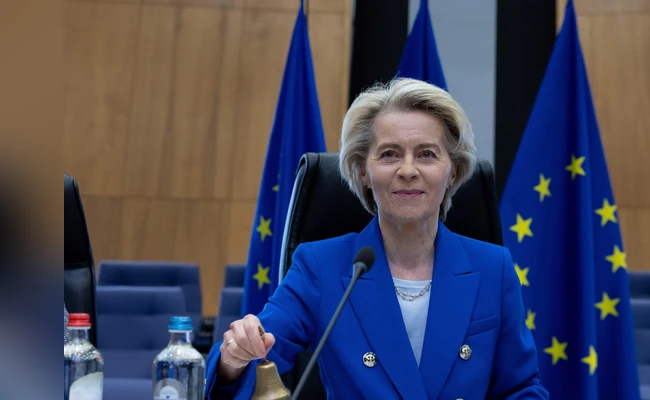
Davos (PTI): The European Union is on the cusp of signing a historic trade agreement with India that is being called 'the mother of all deals', European Commission President Ursula von der Leyen announced on Tuesday, asserting it will create a market for 2 billion people or about one-fourth of the global GDP.
In a special address here at the World Economic Forum Annual Meeting, she said the real would crucially provide a first-mover advantage for Europe with one of the world's fastest-growing and most dynamic continents.
"Right after Davos, I will travel to India. There is still work to do. But we are on the cusp of a historic trade agreement. Some call it the mother of all deals," she said.
"Europe wants to do business with the growth centres of today and the economic powerhouses of this century.
"From Latin America to the Indo-Pacific and far beyond, Europe will always choose the world. And the world is ready to choose Europe," she said.
President of the European Council, Antonio Costa and von der Leyen will be in India from January 25 to 27 to grace the Republic Day celebrations as chief guests and hold summit talks with Prime Minister Narendra Modi.
The two sides are set to announce the conclusion of negotiations on the much-awaited free trade agreement at the India-EU summit on January 27.
European Commission President said the EU is also working on a new free trade agreement with Australia.
"We are also advancing with the Philippines, Thailand, Malaysia, the UAE – and more," she added.
She also said Europe will always stand with Ukraine until there is a just and lasting peace.
The European Union is India's biggest trade partner, with bilateral trade in goods recording USD 135 billion in the financial year 2023-24. The free trade agreement is expected to significantly enhance trade ties.
The proposed agreement is expected to bring a qualitative change in deepening the overall bilateral ties in a range of sectors, as well as at a time when the world is witnessing trade disruptions in view of Washington's tariff policy.
Besides firming up the free trade agreement, the two sides are likely to unveil a defence framework pact and a strategic agenda at the summit.
India and the European Union have been strategic partners since 2004.
The ambitious FTA is being firmed up at a time amid increasing concerns over Washington's trade and tariff policies, which have impacted both India and the 27-nation EU.
India and the EU are also expected to unveil a joint comprehensive strategic vision that will govern their relationship for the period 2026-2030.
The EU and India had first launched negotiations for the free trade agreement in 2007, before the talks were suspended in 2013 due to a gap in ambition. The negotiations. The negotiations were relaunched in June 2022.
The proposed Security and Defence Partnership (SDP) will facilitate deeper defence and security cooperation between the two sides.
The SDP will bring interoperability in the defence domain, and it will open up avenues for Indian firms to participate in the EU's SAFE (Security Action for Europe) programme. The SAFE is the EU's Euro 150 billion financial instrument designed to provide financial support to member states to speed up defence readiness.
At the summit, India and the EU are also set to launch the negotiations for a Security of Information Agreement (SOIA). The SOIA is expected to boost industrial defence cooperation between the two sides.
Let the Truth be known. If you read VB and like VB, please be a VB Supporter and Help us deliver the Truth to one and all.
CPI(M) rebel Kunhikrishnan hopes for 5,000-vote win in Payyanur
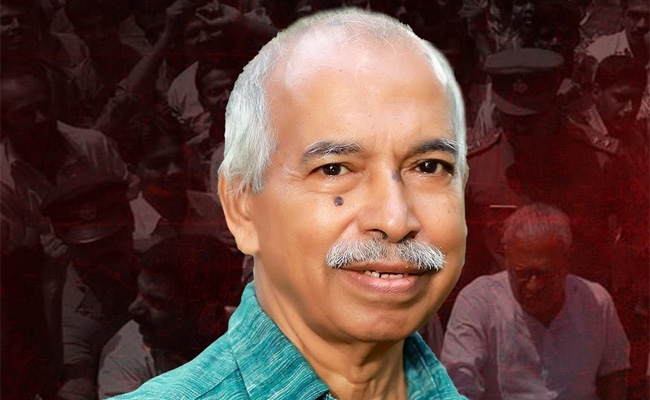
Kannur (Kerala) (PTI): CPI(M) rebel candidate V Kunhikrishnan, who contested as a UDF-backed Independent from Payyanur here, on Saturday said he was hoping to win the Assembly election by a margin of 5,000 votes.
Kunhikrishnan was expelled from the CPI(M) earlier this year after raising allegations of corruption in the party’s martyrs’ fund against sitting MLA T I Madhusoodanan.
Speaking to a TV channel, Kunhikrishnan said he had announced his candidature as a mark of protest and not with expectations of victory.
However, he said the situation had changed drastically, with a strong undercurrent within CPI(M) votes favouring him.
"The undercurrent in CPI(M) votes cannot be measured. Now people are giving a response indicating victory with a margin of at least 5,000 votes," he said.
Payyanur is considered a CPI(M) stronghold, and a defeat for Madhusoodanan there would be a major setback for the party.
On political violence in Payyanur, Kunhikrishnan said he had been facing it since filing his nomination.
"The people leading this violence should think about how long they can continue it. It is the police which has to take the initiative to stop this violence as part of maintaining law and order. But the police are not intervening at the required level," he said.
Regarding his political future, Kunhikrishnan said efforts were underway to strengthen Left groups, and discussions were being held across Kerala in that regard.
"After discussing with others, a decision will be taken," he said.
Kunhikrishnan is among six former CPI(M) leaders who either exited the party or were suspended before contesting for the UDF in the April 9 Assembly elections.
Elections to the 140-seat Kerala Assembly were held on April 9, and the counting of votes will be held on May 4.