‘Every single day’ we keep an eye on what's happening between Pakistan and India: Rubio
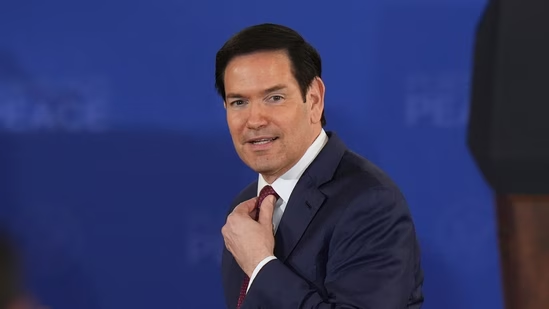
New York/Washington (PTI): The US keeps “an eye” on what’s happening between India and Pakistan “every single day” as ceasefires can fall apart very quickly, Secretary of State Marco Rubio said.
“…the only way to have a ceasefire is for both sides to agree to stop firing at one another. And the Russians just haven't agreed to that. Beyond that, I would say that one of the complications about ceasefires is they have to be maintained, which is very difficult. I mean, every single day we keep an eye on what's happening between Pakistan and India, what's happening between Cambodia and Thailand,” Rubio said.
“Ceasefires can fall apart very quickly, especially after a three-and-a-half-year war (in Ukraine) like what we're facing now, but I don't think anyone disagrees that the ideal here, what we're aiming for is not some permanent ceasefire. What we're aiming for here is a peace deal so there's not a war now and there's not a war in the future,” Rubio said in an interview to NBC News Meet The Press.
In a separate interview with Fox Business, Rubio again mentioned the recent conflict between India and Pakistan that President Donald Trump has repeatedly claimed he solved.
“And I think we are very fortunate and blessed and should be thankful to have a President who has made peace and the achievement of peace a priority of his administration. We’ve seen it in Cambodia and Thailand. We’ve seen it in India-Pakistan. We’ve seen it in Rwanda and the DRC. And we’re going to continue to pursue any opportunities we can find to bring about peace in the world,” Rubio said.
Since May 10, when Trump announced on social media that India and Pakistan had agreed to a “full and immediate” ceasefire after a “long night” of talks mediated by Washington, he has repeated his claim about 40 times that he “helped settle” the tensions between India and Pakistan and that he told the nuclear-armed South Asian neighbours that America will do a “lot of trade” with them if they stopped the conflict.
Prime Minister Narendra Modi has said in Parliament that no leader of any country asked India to stop Operation Sindoor. External Affairs Minister S Jaishankar has categorically said there was no third-party intervention in bringing about a ceasefire with Pakistan during Operation Sindoor, asserting that the halting of the military action was also not linked to trade as claimed by Trump.
On the day of his summit meeting with Russian President Vladimir Putin Friday, Trump repeated multiple times within hours his claim that he stopped the war between India and Pakistan, as well as spoke about Delhi’s purchases of Russian oil.
“Look at India. Take a look at India and Pakistan. They were shooting down airplanes already, and that would have been maybe nuclear. I would have said it was going to go nuclear, and I was able to get it done. Number one is lives, and number two is everything else. Wars are very bad and if you can avoid them, and I seem to have an ability to end them, to get people together, I use the power of the United States,” Trump had said.
Let the Truth be known. If you read VB and like VB, please be a VB Supporter and Help us deliver the Truth to one and all.
Tumakuru: Dalit family allegedly prevented from entering temple; accused arrested
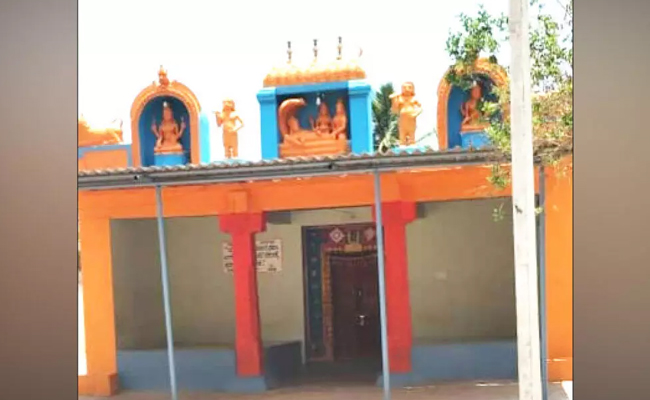
Tumakuru: Police in Turuvekere have arrested a 65-year-old man for allegedly obstructing a Dalit family from entering a temple and making caste-based remarks, officials said on Saturday.
The accused, identified as Rajanna, has been booked under provisions of the Scheduled Castes and Scheduled Tribes (Prevention of Atrocities) Act based on a complaint filed by Rangaramu T. of Thuyalahalli village.
According to the FIR, the incident took place on April 18 around 5:30 pm when Rangaramu T. and his family visited the Sri Ranganathaswamy temple in Mallur village to offer prayers. It states that the accused allegedly objected to their entry and made remarks referring to caste hierarchy and questioning their presence inside the temple premises.
The FIR further states that the accused made additional remarks asserting that such entry into the temple was not permitted and asked the family to leave. It also mentions that the complainant was subjected to mental harassment through these statements.
Following the complaint, DySP Om Prakash Gowda along with revenue officials and police visited the spot and conducted an inspection.
Further investigation is underway.