Israel elections: Early vote counting trend shows former PM Netanyahu in lead

Jerusalem (PTI): With almost 62 per cent of the votes tallied, former Israeli Prime Minister Benjamin Netanyahu led right-wing bloc on Wednesday looks comfortably close to winning a majority in the 120-member Parliament.
Israelis voted on Tuesday for an unprecedented fifth time in four years to break the political impasse that has paralysed the country.
The Central Elections Committee by 7 am counted 3,020,710 votes.
Based on the current count, the right-wing bloc would pick up 69 seats in the Knesset, though this number will almost definitely change as more ballots are processed.
The left-wing Meretz party is currently hovering on the edge of the 3.25% vote, the threshold as per Israeli election laws to get a Knesset entry.
The Islamist Ra'am party, which supported the last government and is projected to win four seats in exit polls, is also under the electoral threshold at 2.47% as per the current count.
The opposition Arab Balad party is also just under the threshold with 2.75% of total votes.
If Ra'am, Balad or Meretz fail to win Knesset representation, it will further boost Netanyahu's prospects.
The ongoing count is not representative of the overall vote since ballots come in from different areas of the country at different times, and the percentages allotted to each party will likely shift as the tally continues.
Exit polls have predicted 62 seats for Netanyahu's bloc, enough to secure a majority and form a coalition in Knesset.
Israel has been locked in an unprecedented period of political stalemate since 2019, when 73-year-old Netanyahu, the country's longest-serving leader was charged with bribery, fraud and breach of trust.
About 6.78 million Israeli citizens were eligible to elect their 25th Knesset. Some 210,720 new voters were able to vote for the first time, accounting for about four to five seats, adding an interesting dimension to the polls.
The prospect of the next government seems to be largely hinged on two factors - the level of right-wing polarisation, not necessarily in favour of veteran politician Netanyahu but for him to lead the coalition, and the extent of voter apathy, surprisingly, in the Arab sector.
Netanyahu, the longest-serving prime minister and among one of the most polarising ones whose leadership plagued by charges of graft has been at the centre of current instability, is facing a battle of political survival.
Let the Truth be known. If you read VB and like VB, please be a VB Supporter and Help us deliver the Truth to one and all.
CM Siddaramaiah alleges ‘criminal conspiracy’ in Sringeri recount, vows legal action
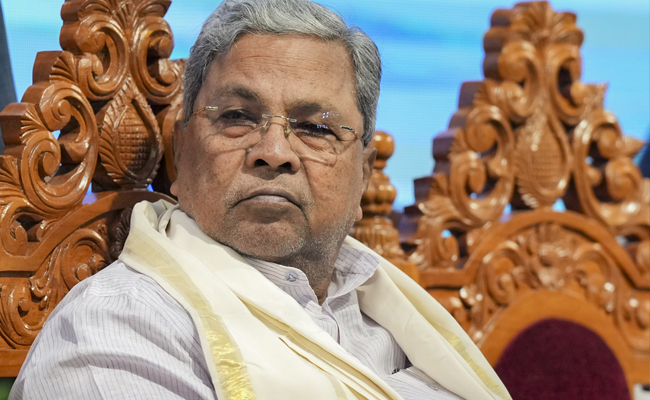
Bengaluru (PTI): Alleging a “criminal conspiracy” by BJP candidate D N Jeevaraj in the Sringeri Assembly poll recounting, Karnataka CM Siddaramaiah on Tuesday said the outcome was manipulated after valid postal ballot votes in favour of Congress leader T D Raje Gowda were tampered with during the recounting process.
Following a Karnataka High Court order on an election petition filed by Jeevaraj, challenging Raje Gowda’s election, the reverification and recounting were conducted on Saturday.
After the reverification and recount of postal ballots for the Sringeri Assembly constituency, votes polled in favour of Raje Gowda were reduced by 255, the returning officer said.
A report on the matter has been submitted to the Election Commission of India for further action, the officer added.
Congress leader Raje Gowda had won the 2023 Assembly polls from Sringeri by 201 votes, defeating his nearest rival Jeevaraj.
Addressing a press conference in Bengaluru, Siddaramaiah said the High Court had directed the recounting of postal ballots and that irregularities were noticed during the exercise conducted on May 2.
“This is a clear case of criminal conspiracy,” Siddaramaiah said, alleging that valid votes cast in favour of Raje Gowda were altered after being accepted by counting agents of all parties, including Congress, BJP, and JD(S).
He claimed that during the recounting of postal ballots, 255 votes were initially accepted as valid by all agents but were later tampered with by subordinate officials.
“There is a second mark on the votes polled in favour of Raje Gowda. They had accepted these as valid votes. Subsequently, another mark was made by officials. This is a clear case of criminal conspiracy,” he said.
When asked who was behind the alleged conspiracy, the CM replied, “It was hatched by Jeevaraj and others. It is planned.”
Siddaramaiah further alleged that the returning officer acted improperly by declaring the result despite the presence of an Election Commission observer during the recounting.
“Immediately after the counting, the returning officer announced the result. He should not have done so; this is against the law,” he said.
He pointed out that Raje Gowda had originally won by 201 votes, but after the recounting, the BJP candidate was declared the winner by 52 votes.
“The BJP has committed a criminal act of conspiracy. This is not vote chori but vote dacoity,” he alleged.
The CM said a police complaint had already been filed by Raje Gowda’s election agent, Sudhir Kumar, and emphasised the need for electoral integrity.
“We want transparency and free and fair elections. That is what our Constitution mandates,” he added.
Stating that the government would pursue legal remedies, Siddaramaiah said, “We are preparing an appeal challenging the returning officer’s announcement in a court of law.”
Responding to a separate query on elections in other states, the CM said there appeared to be an anti-incumbency factor in West Bengal, while results in Tamil Nadu were “surprising,” adding that Vijay’s party was emerging as the largest there.
Following the victory of party candidates in Bagalkote and Davanagere South, Siddaramaiah expressed confidence about future electoral prospects in Karnataka.
“Even in 2028, we will win the Assembly elections. We will come back,” the CM said.
Siddaramaiah added that he would order a forensic examination into the alleged tampering of postal ballots.