Facebook CEO refuses to face-off with British parliamentarians
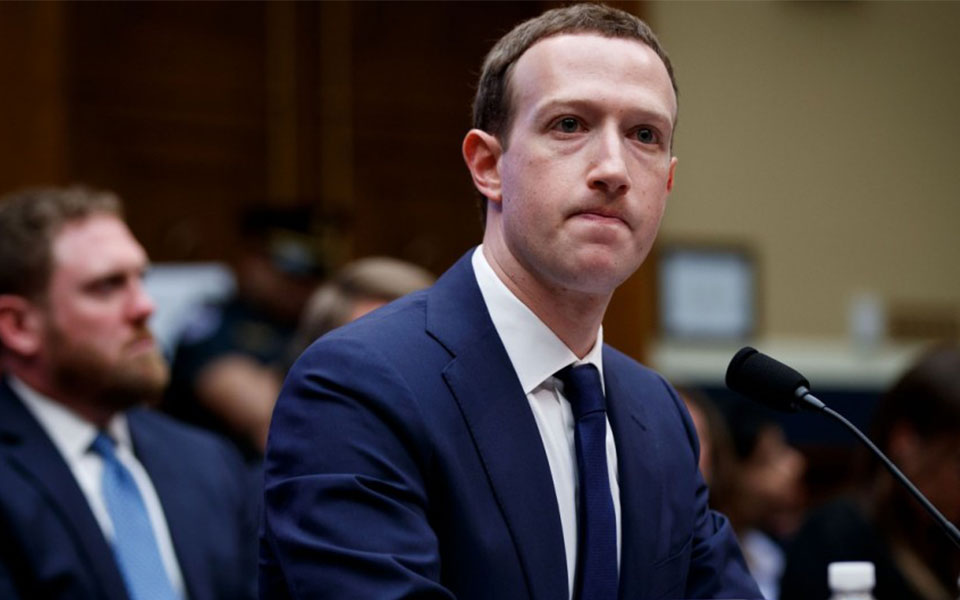
London, May 16: Facebook CEO Mark Zuckerberg has no plans as of now to face members of a British parliamentary committee probing the misuse of the firm's data its practice of collecting user information, the media reported.
In a letter to the Digital, Culture, Media and Sport Committee, Rebecca Stimson, Facebook's Head of Public Policy in the UK, said that "Zuckerberg has no plans to meet with the committee or travel to the UK at the present time", theregister.co.uk reported on Tuesday.
The committee had expressed dissatisfaction with Facebook's response to various points it raised including on Cambridge Analytica, dark ads, Facebook Connect, the amount spent by Russia on UK ads on the platform, data collection across the web and budgets for investigations.
Stimson's letter, however, did not dampen the desire of the committee to hear from Zuckerberg directly.
"Although Facebook says Zuckerberg has no plans to travel to the UK, we would also be open to taking his evidence by video link, if that would be the only way to do this during the period of our inquiry," said Chair of the Committee Damian Collins in response to Stimson's letter.
"For too long these companies have gone unchallenged in their business practices, and only under public pressure from this Committee and others have they begun to fully cooperate with our requests," Collins added.
The committee issued Facebook 39 questions it said the firm's Chief technology Officer Mike Schroepfer had failed to answer in his evidence to the parliamentarians.
The committee said Facebook's latest responses to these questions do not fully answer each point with sufficient detail or data evidence.
The committee said it plans to write again to address significant gaps in Facebook's answers in the coming days.
"It is disappointing that a company with the resources of Facebook chooses not to provide a sufficient level of detail and transparency on various points including on Cambridge Analytica, dark ads, Facebook Connect, the amount spent by Russia on UK ads on the platform, data collection across the web, budgets for investigations, and that shows general discrepancies between Schroepfer and Zuckerberg's respective testimonies," Collins said.
"Given that these were follow up questions to questions Schroepfer previously failed to answer, we expected both detail and data, and in a number of cases got excuses," Collins added.
Let the Truth be known. If you read VB and like VB, please be a VB Supporter and Help us deliver the Truth to one and all.
Nation's willpower as important as military strength for ensuring security, says NSA Doval
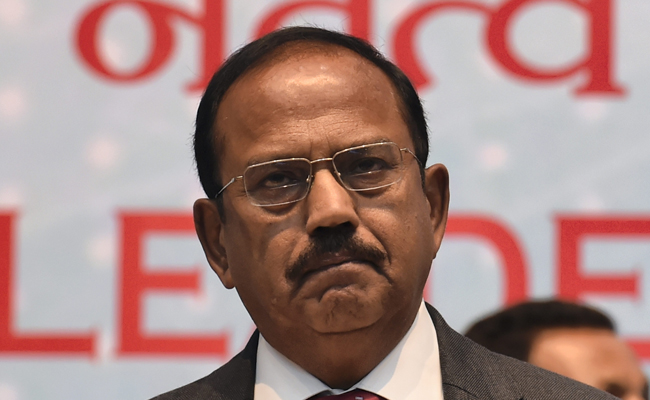
Gandhinagar (PTI): National Security Advisor (NSA) Ajit Doval on Tuesday described national security as a complex and multifaceted phenomenon, and stressed that the biggest mistake in assessing a nation's strength is ignoring the willpower of its people.
While factors such as military strength are critical, inherent strength of people often proves decisive in security matters, he insisted.
Addressing students at the fifth convocation ceremony of the Rashtriya Raksha University (RRU) in
Gandhinagar in the presence of President Droupadi Murmu, Doval emphasised that national security is a collective responsibility shared by the entire nation.
"National security is a vast, complex, and multifaceted phenomenon. It comprises numerous components: a nation's military might, technological prowess, natural resources, diplomatic strength, and human capital," he said in his address to students passing-out of the government-run university, which has been designated as an institution of national importance.
However, what often happens and where errors most frequently occur when assessing this comprehensive national power is in the evaluation of the nation's willpower and the inherent strength of its people, said the NSA.
Explaining this, Doval cited global examples and said, "If Russia (then USSR) withdrew from Afghanistan (in 1988-89), or if the United States was compelled to withdraw from Vietnam (in 1970s) or if the US failed to achieve its objectives in Afghanistan - it was not for a lack of technology or military strength.
"Rather, the decisive factor was the spirit and commitment of the local people, what we refer to as nation's willpower."
He stressed that the sole objective of warfare is to break the morale of one's adversary, thereby compelling them to accept a treaty on your terms.
The NSA said the role of citizens is crucial in building this strength.
"In the cultivation of this willpower, the role of general public is of paramount importance, specifically the degree of awareness regarding their own security," he opined.
Doval noted India is witnessing a shift in this regard.
"Today, after a long time in our history, we are witnessing a new awakening. (That) national security is a collective responsibility shared by the entire nation. It is not the sole responsibility of the armed forces, police, or intelligence agencies -- it is the combined strength of all of you that ultimately constitutes our national morale," he told the gathering.
Highlighting the role of professionals in security ecosystem, including those in academia, research and operations, he said their knowledge, technical expertise and awareness significantly influence outcomes.
The NSA stressed the importance of character and discipline in the field, saying "mental power" and the ability to work as a team are essential qualities for excelling.
Calling commitment the "third indispensable element," Doval said the field of national security demands the highest level of dedication.
In a message to youngsters wishing to join the security domain, the NSA asserted, "This is a game in which there are no silver medals. You are either victorious, or you are vanquished. If you win, you make history; but if you lose, you become history. Your very existence will be at stake."
During the convocation ceremony, Doval was conferred an honorary Doctor of Philosophy (PhD) degree by President Murmu in recognition of his contributions to national security.
"With the utmost humility, I accept the Honorary Doctorate degree conferred upon me here today. I am deeply grateful for this honour," the NSA added.