Facebook parent Meta slashes another 10,000 jobs

New York, Mar 14: Facebook parent Meta is slashing another 10,000 jobs and will not fill 5,000 open positions as the social media pioneer cuts costs.
The company said Tuesday it will reduce the size of its recruiting team and make further cuts in its tech groups in late April, and then its business groups in late May.
"This will be tough and there's no way around that," said CEO Mark Zuckerberg.
"It will mean saying goodbye to talented and passionate colleagues who have been part of our success."
The Menlo Park, California, company has invested billions of dollars to realign its focus on the metaverse.
In February it posted lower fourth-quarter profit and revenue, hurt by a downturn in the online advertising market and competition from rivals such as TikTok.
The company announced 11,000 job cuts in November.
"As I've talked about efficiency this year, I've said that part of our work will involve removing jobs -- and that will be in service of both building a leaner, more technical company and improving our business performance to enable our long term vision," said Zuckerberg.
In premarket trading, Meta shares rose 3.7%.
Let the Truth be known. If you read VB and like VB, please be a VB Supporter and Help us deliver the Truth to one and all.
Allahabad HC orders probe into 'reinstatement' of teacher in UP's Barabanki
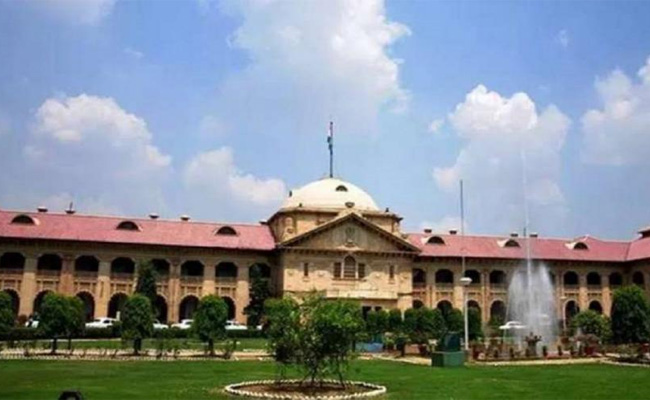
Lucknow (PTI): The Lucknow Bench of the Allahabad High Court on Friday ordered a probe by the special task force (STF) into alleged irregularities in the rejoining of a teacher at City Intermediate College in Barabanki, observing that the reinstatement appeared to be prima facie illegal.
The court also directed the recovery of the salary paid to the teacher during the disputed period.
A bench of Justice Rajeev Singh passed the order on a petition filed by the college management committee. The court expressed doubts over the roles of the District Inspector of Schools (DIOS), Barabanki, the college principal and the teacher concerned and hence, directed a detailed inquiry into the matter.
Taking note of alleged manipulation of records and misleading submissions, the court ordered the immediate transfer of the Barabanki DIOS to ensure a fair probe. It also directed the initiation of disciplinary proceedings against the then joint director of education of the Ayodhya division.
In its order, the court found that the teacher, Abhay Kumar, was initially appointed as an assistant teacher in 2018 but joined an Eklavya Model Residential School in Chhattisgarh as a lecturer in June 2024 without obtaining permission from the management. His subsequent request to retain the lien was rejected.
Despite this, he was allowed to rejoin the Barabanki College in September 2025 on the directions of the joint director of education and the DIOS, and was even paid the salary for October 2025. The court termed the rejoining "wholly illegal" and lacking any legal basis.
The bench also expressed concern over lapses in communication within the education department and directed the Uttar Pradesh chief secretary to ensure that official orders are communicated through email and WhatsApp as well, to prevent disputes.
The matter is next listed for hearing on May 28 when a compliance report is sought.