Facebook, Twitter shares drop as European giant pulls ads

San Francisco: Shares of Facebook and Twitter dropped sharply Friday after the the giant company behind brands such as Ben & Jerry's ice cream and Dove soap said it will halt U.S. advertising on Facebook, Twitter and Instagram through at least the end of the year.
That European consumer-product maker, Unilever, said it took the move to protest the amount of hate speech online. Unilever said the polarized atmosphere in the United States ahead of November's presidential election placed responsibility on brands to act.
Shares of both Facebook and Twitter fell roughly 7% following Unilever's announcement.
The company, which is based in the Netherlands and Britain, joins a raft of other advertisers pulling back from online platforms. Facebook in particular has been the target of an escalating movement to withhold advertising dollars to pressure it to do more to prevent racist and violent content from being shared on its platform.
We have decided that starting now through at least the end of the year, we will not run brand advertising in social media newsfeed platforms Facebook, Instagram and Twitter in the U.S.," Unilever said. Continuing to advertise on these platforms at this time would not add value to people and society. Facebook did not immediately respond to a request for comment. On Thursday, Verizon joined others in the Facebook boycott.
Sarah Personette, vice president of global client solutions at Twitter, said the company's mission is to serve the public conversation and ensure Twitter is a place where people can make human connections, seek and receive authentic and credible information, and express themselves freely and safely.
She added that Twitter is "respectful of our partners' decisions and will continue to work and communicate closely with them during this time.
Let the Truth be known. If you read VB and like VB, please be a VB Supporter and Help us deliver the Truth to one and all.
Anbumani asks PM Modi to ban sale of cigarettes for those born after 2009
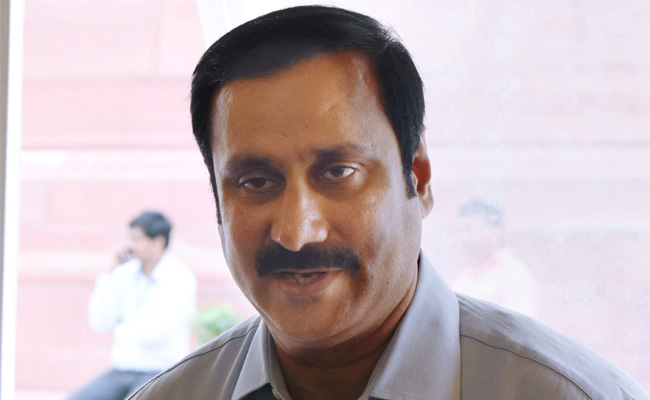
Chennai (PTI): PMK leader Anbumani Ramadoss on Saturday urged Prime Minister Narendra Modi to take legislative measures to prohibit smoking and the sale of cigarettes to individuals born on or after January 1, 2009, thereby creating a smoke-free generation.
Anbumani, former Union minister for health and family welfare, said, "Once implemented, it (ban on cigarettes) will ensure that future generations are legally prevented from ever accessing tobacco products", he said in a letter to Modi.
"I write to you with a deep sense of urgency and responsibility, drawing your kind attention to a critical public health issue that continues to endanger the lives of millions of Indians, particularly among the younger generation who are affected by cigarette smoking", he claimed.
Stating that India unfortunately bears a disproportionately high burden of tobacco-related morbidity and mortality, he said, adding that, according to global health estimates, nearly 267 million Indians, approximately one in five citizens, use tobacco.
"Each year, tobacco consumption directly accounts for over 1.35 million deaths, while exposure to second-hand smoke contributes to a total of approximately 2.3 million deaths annually", he said, adding, "these figures are alarming and reflect a public health crisis of immense magnitude".
He pointed out that Scientific evidence unequivocally establishes tobacco use as a leading cause of cancer and numerous non-communicable diseases, including cardiovascular ailments, chronic respiratory diseases such as COPD, and multiple forms of malignancies. "In India alone, tobacco is responsible for nearly 40–50 per cent of all cancer cases, with over 4.7 lakh deaths annually attributed to tobacco-induced cancers", he added.
"In this context, I strongly urge the Union government to consider enacting a transformative law similar to that of the United Kingdom, that permanently prohibits the sale and consumption of tobacco products for individuals born on or after a specified year (such as 2009). Such a generational ban would mark a decisive step towards eliminating tobacco use in India over time", he said.