Federal immigration officers shoot and wound 2 people in Portland, Oregon, authorities say
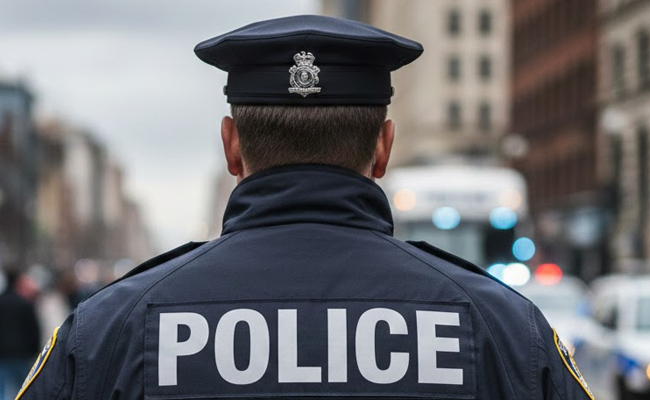
Portland (AP): Federal immigration officers shot and wounded two people in a vehicle outside a hospital in Portland, Oregon, on Thursday, a day after an officer shot and killed a driver in Minnesota, authorities said.
The Department of Homeland Security described the vehicle's passenger as “a Venezuelan illegal alien affiliated with the transnational Tren de Aragua prostitution ring” who had been involved in a recent shooting in Portland.
When agents identified themselves to the occupants during a “targeted vehicle stop” Thursday afternoon, the driver tried to run them over, the department said in a written statement.
“Fearing for his life and safety, an agent fired a defensive shot,” the statement said. “The driver drove off with the passenger, fleeing the scene.”
There was no immediate independent corroboration of that account or of any gang affiliation of the vehicle's occupants. During prior shootings involving agents involved in President Donald Trump's surge of immigration enforcement in US cities, including Wednesday's shooting by an Immigration and Customs Enforcement officer in Minneapolis, video evidence cast doubt on the administration's descriptions of what prompted the shootings.
Trump and his allies have consistently blamed Tren de Aragua for being at the root of the violence and illicit drug dealing that plague some US cities.
The shooting escalates tensions in an city that has long had a contentious relationship with President Donald Trump, including Trump's recent, failed effort to deploy National Guard troops in the city.
Trump's decision to send militarised personnel into US cities to conduct immigration enforcement drew long-running nightly protests outside the ICE building in Portland.
According to the the Portland Police bureau, officers initially responded to a report of a shooting outside Adventist Health hospital at about 2:18 pm Thursday.
A few minutes later, police received information that a man who had been shot was asking for help in a residential area a couple of miles away. Officers then responded there and found a man and a woman with gunshot wounds. Officers determined they were injured in the shooting with federal agents, police said.
Their conditions were not immediately known. Portland police said officers applied a tourniquet to one of the wounded. Council President Elana Pirtle-Guiney said during a Portland city council meeting that "as far as we know both of these individuals are still alive and we are hoping for more positive updates throughout the afternoon.”
At a news conference Thursday night, Portland Police Chief Bob Day said the FBI was leading the investigation and that he had no details about the events that led to the shooting.
Portland Mayor Keith Wilson and the city council called on US Immigration and Customs Enforcement to end all operations in Oregon's largest city until a full investigation is completed.
“We stand united as elected officials in saying that we cannot sit by while constitutional protections erode and bloodshed mounts,” a joint statement said. “Portland is not a training ground' for militarized agents, and the full force' threatened by the administration has deadly consequences.”
Wilson also suggested at a news conference that he didn't necessarily believe the federal government's account of the shooting: “There was a time we could take them at their word. That time is long past.”
Democratic State Sen. Kayse Jama, who lives near the shooting scene, said Oregon is a welcoming state — but he told federal agents to leave.
“You are not welcome,” Jama said. "You need to get the hell out of Oregon.”
The city officials said “federal militarization undermines effective, community-based public safety, and it runs counter to the values that define our region. We'll use every legal and legislative tool available to protect our residents' civil and human rights.”
They urged residents to show up with “calm and purpose during this difficult time.”
“We respond with clarity, unity, and a commitment to justice,” the statement said. “We must stand together to protect Portland.”
US Sen. Jeff Merkley, an Oregon Democrat, urged any protesters to remain peaceful.
“Trump wants to generate riots,” he said in a post on the X social media platform. “Don't take the bait.”
Let the Truth be known. If you read VB and like VB, please be a VB Supporter and Help us deliver the Truth to one and all.
Remarks against St Francis Xavier: Right-wing speaker Gautam Khattar gets bail

Panaji (PTI): A court in Goa on Saturday granted bail to right-wing speaker Gautam Khattar, who was arrested after he allegedly made derogatory comments against St Francis Xavier.
Judicial Magistrate First Class, Vasco, granted regular bail to Khattar, currently admitted to Goa Medical College and Hospital at Bambolim for treatment of chest pain after he was shifted from the District Hospital in Mapusa two days back.
A row erupted after a video of remarks by Khattar, the founder of Sanatan Mahasangh, at an event on April 18 in the presence of Swami Brahmeshanand, State Transport Minister Mauvin Godinho and BJP MLAs Sankulp Amonkar and Daji (Krishna) Salkar, went viral.
St Francis Xavier is revered as the patron saint of Goa.
The controversial remarks led to the Vasco Police registering an FIR against Khattar on charges of hurting religious sentiments and creating enmity between groups.
He was detained in Kullu, Himachal Pradesh, by local police. His custody was later handed over to the Goa Crime Branch, according to officials.