Firing continues: Ex-FBI deputy chief McCabe fired jsut before two days of retirement
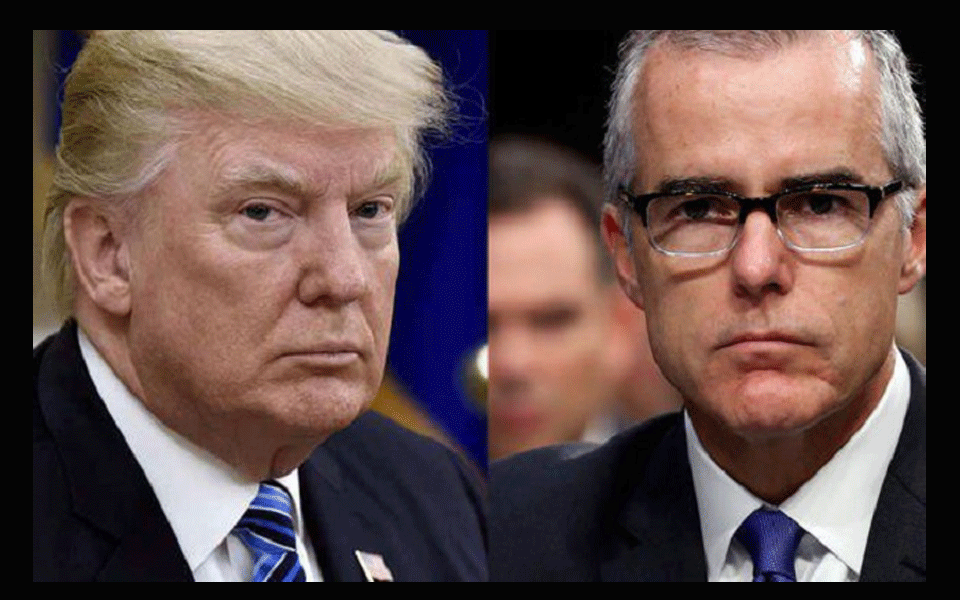
Washington: US Attorney General Jeff Sessions has fired former FBI Deputy Director Andrew McCabe, less than two days before his retirement, ending the career of an official who had risen to serve as second-in-command at the bureau, the media reported.
McCabe had more recently been regularly taunted by President Donald Trump and besieged by accusations that he had misled internal investigators at the Justice Department, reports CNN.
In a blistering statement after the announcement late Friday night, McCabe said his firing is part of a larger effort to discredit the Federal Bureau of Investigation and Special Counsel Robert Mueller's investigation into alleged Russian interference in the 2016 presidential election.
"This attack on my credibility is one part of a larger effort not just to slander me personally, but to taint the FBI, law enforcement, and intelligence professionals more generally.
"It is part of this administration's ongoing war on the FBI and the efforts of the Special Counsel investigation, which continue to this day. Their persistence in this campaign only highlights the importance of the Special Counsel's work," McCabe said in the statement.
He was expected to retire on Sunday, on his 50th birthday, when he would have become eligible to receive early retirement benefits.
Let the Truth be known. If you read VB and like VB, please be a VB Supporter and Help us deliver the Truth to one and all.
Thumbay University Hospital inaugurates Institute of Neurosciences in Ajman
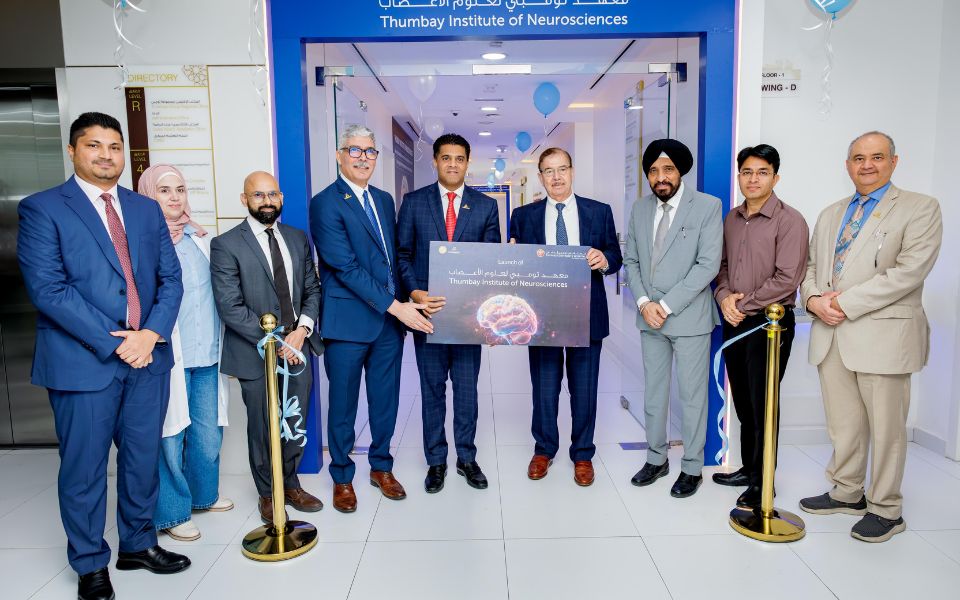
Ajman: Thumbay University Hospital has inaugurated the Thumbay Institute of Neurosciences, a specialised centre for the diagnosis, treatment, and management of disorders related to the brain, spine, and nervous system.
The inauguration was presided over by Dr. Thumbay Moideen, Founder and President of Thumbay Group, in the presence of senior healthcare officials and representatives from the group. Dr. Abdul Karim Msaddi, Consultant Chief Neurosurgeon and Chairman of the ArabSpine Course Diploma and Dubai International Spine Conference, attended the event as the chief guest.
According to the hospital administration, the institute will function with a multidisciplinary team comprising neurosurgeons, neurologists, interventional radiologists, neurotechnicians, and rehabilitation specialists. Neurology services will address conditions such as stroke, epilepsy, Parkinson’s disease, multiple sclerosis, Alzheimer’s disease, migraines, neuropathy, vertigo, and sleep disorders. Diagnostic support includes electroencephalography (EEG), electromyography (EMG), nerve conduction studies, and neuroimaging.
The institute will also provide surgical interventions for brain, spine, and nerve-related conditions, including brain tumours, vascular abnormalities, traumatic brain injuries, spinal disorders, and paediatric neurological cases. Procedures such as cranioplasty, hydrocephalus management, and spinal fixation will be carried out using microsurgical and minimally invasive techniques, supported by neuronavigation systems and intraoperative neuro-monitoring.
Rehabilitation services at the institute include technology-assisted therapies such as robotic rehabilitation, transcranial magnetic stimulation, hyperbaric oxygen therapy, gait and motion analysis, EMG-based functional assessments, and exoskeleton-assisted rehabilitation.
Hospital authorities stated that the institute will follow a structured care model in which neurologists manage non-surgical cases and neurosurgeons undertake surgical interventions when required.
.jpeg)