First COVID-19 case may have emerged in China in October 2019: Study
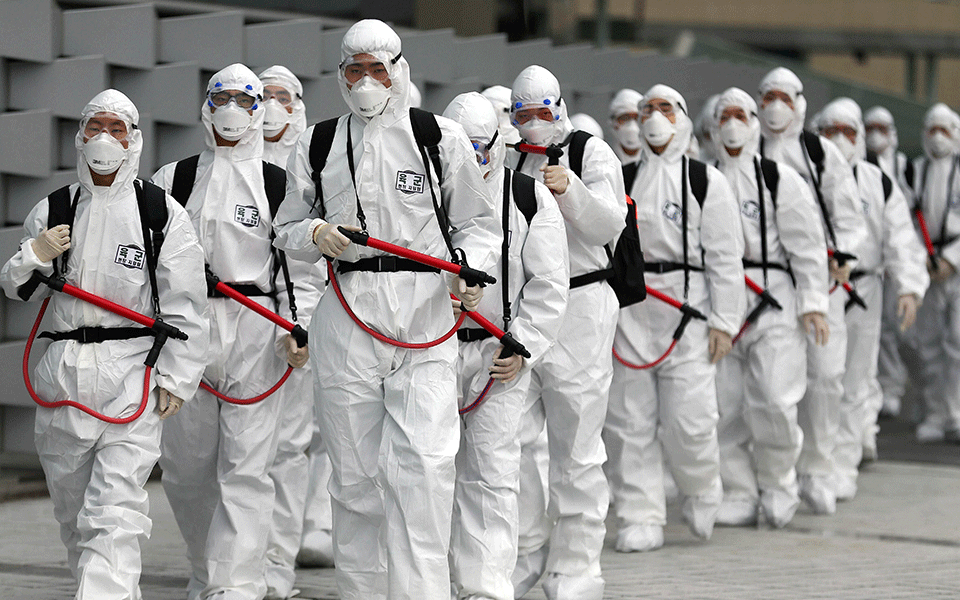
London: The SARS-CoV-2 virus, that causes COVID-19, may have started spreading in China as early as October 2019, two months before the first case was identified in Wuhan, according to a modelling study.
The research, published in the journal PLOS Pathogens on Thursday, suggests that the first case of COVID-19 arose between early October and mid-November, 2019 in China, with the most likely date of origin being November 17.
The origins of the ongoing COVID-19 pandemic remain unclear. The first officially identified case occurred in early December 2019.
However, mounting evidence suggests that the original case may have emerged even earlier.
David Roberts from the University of Kent, UK, and colleagues repurposed a mathematical model originally developed to determine the date of extinction of a species, based on recorded sightings of the species.
They reversed the method to determine the date when COVID-19 most likely originated, according to when some of the earliest known cases occurred in 203 countries.
"This novel application within the field of epidemiology offers a new opportunity to understand the emergence and spread of diseases as it only requires a small amount of data," Roberts said.
The analysis suggests that the first case occurred in China between early October and mid-November of 2019.
The first case most likely arose on November 17, and the disease spread globally by January 2020, according to the researchers.
The findings support growing evidence that the pandemic arose sooner and grew more rapidly than officially accepted, they said.
The analysis also identified when COVID-19 is likely to have spread to the first five countries outside of China, as well as other continents.
The results suggest that the virus spread beyond China by January 2020 with the estimated first case being in Japan on January 3, 2020, and followed by Thailand on January 7, 2020.
The third earliest origination date, outside of China, suggests that the virus had left eastern Asia and arrived in Europe, with an estimated first case on January 12, 2020, in Spain.
The virus appears to have continued spreading to other countries in eastern Asia with the fourth earliest origination date outside of China being in South Korea on January 14, 2020, the researchers said.
Following the spread to Europe, the virus appears to have spread to North America with an estimated first case being in the US on January 16, 2020, making the US the fifth country, they said.
The researchers noted that their novel method could be applied to better understand the spread of other infectious diseases in the future.
Better knowledge of the origins of COVID-19 could improve understanding of its continued spread, they added.
Let the Truth be known. If you read VB and like VB, please be a VB Supporter and Help us deliver the Truth to one and all.
Two injuries, one DNF, a DQ as India end messy World Relays campaign
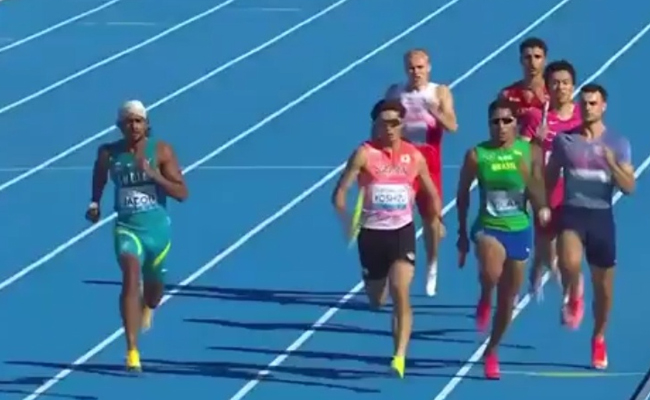
Gaborone (Botswana) (PTI): Amoj Jacob and Ragul Kumar got injured during the men's 4x400m and 4x100 races respectively as India ended their World Athletics Relays campaign in disappointment on the second day of competitions here on Sunday.
The Indian camp had high hopes of making the 2027 World Championships in the men's 4x400m relay but the team did not finish (DNF) the race as Jacob suffered cramps and pulled out of the race after taking the baton from the first leg runner Dharamveer Choudhary. Rajesh Ramesh and Vishal TK were to run in the third and fourth legs.
Those teams which could not qualify for the 2027 Beijing World Championships by reaching the final round of each of the six relay events on Saturday were given another chance in the second qualification round on Sunday.
The top two teams in each of the two heats (in all six relay events) booked the Beijing ticket on Sunday.
India will now have to try and qualify for the World Championships through the Top Lists of the World Athletics, which is a long and tedious process.
In the men's 4x100m race, third leg runner Ragul Kumar fell down the track after failing to hand over the baton inside the exchange zone to fourth leg runner Gurindervir Singh, which clearly showed the lack of coordination among the runners.
Harsh Santosh Raut and Animesh Kujur ran the first two legs.
The Indian quartet was disqualified and Kumar was seen being taken away from the Field of Play with the help of the volunteers.
It was a comedy of errors in the case of the women's 4x100m race, which saw the baton being dropped during an exchange between first leg runner Tamanna and second runner Nithya Gandhe, though the Indians finished the race in 53.09 seconds.
Gandhe started running quite a distance, but after realising that the baton was not in her hand, she turned and ran back to pick it up.
The only silver-lining for the Indian contingent was the national record time in the mixed 4x100m relay race, though the quartet of Ragul Kumar, Nithya Gandhe, Animesh Kujur and Sneha SS finished sixth in heat number two with a time of 41.35 seconds, bettering the previous national mark of 42.30 seconds set in March in Chandigarh.
The mixed 4x400m relay quartet of Theerthesh P Shetty, Kumari Saloni, Nihal William and Rashdeep Kaur ended at fifth in heat number one with a time of 3 minutes and 19.40 seconds.
On Saturday, all the five Indian relay teams had failed to make it to the respective final rounds and thus missed out on the 2027 World Championships berths.