Florida Guv Ron DeSantis falls behind two Indian-Americans in New Hampshire GOP poll
Washington (PTI): Florida Governor Ron DeSantis, once considered a chief rival of former president Donald Trump, has fallen behind two Indian-American presidential candidates in the latest GOP polls in the crucial early primary state of New Hampshire, a CNN survey showed.
According to the CNN/University of New Hampshire poll, Trump continues to be the first choice of 39 per cent of likely GOP primary voters in the first-in-the-nation primary state.
"That lags a bit behind his performance nationally, where Republican primary polling routinely finds Trump with majority support," the news channel reported.
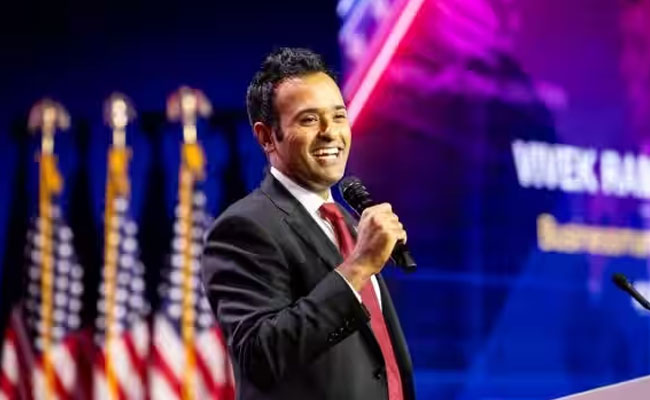
Surprising is the continued sliding down of DeSantis. He has fallen behind two Indian-American candidates -- entrepreneur Vivek Ramaswamy and former South Carolina governor Nikki Haley. While Ramaswamy's popularity continues to rise, Haley is fast catching up.
Ramaswamy now is next to Trump with 13 per cent support, closely followed by Haley at 12 per cent and former New Jersey governor Chris Christie at 11 per cent, CNN reported.
"DeSantis' decline stems from a sharp drop-off among moderates, from 26 per cent backing him in July to 6 per cent now. He fell a smaller 8 points among conservatives," the opinion poll said.
According to the CNN poll, Ramaswamy's increase is concentrated more among those who are not registered Republicans (up 16 points since July with that group while holding relatively steady among registered Republicans) and among younger likely voters (he's up 28 points among those younger than 35 and 11 points among those in the 35-49 age group while holding about even among those aged 50 or above).
Haley's increase is a bit larger among those with more formal education (up 11 points among those who have completed some postgraduate work and 15 points among other college graduates) and among moderates (she gained 18 points with the group) while her support among conservatives is roughly even with July, the poll showed.
The Trump campaign cheered the poll results saying that "Ron DeSantis has plummeted to the fifth place in the Granite State".
Let the Truth be known. If you read VB and like VB, please be a VB Supporter and Help us deliver the Truth to one and all.
Udupi: Two men from Belthangady awarded life imprisonment for attempt to murder a woman in 2022
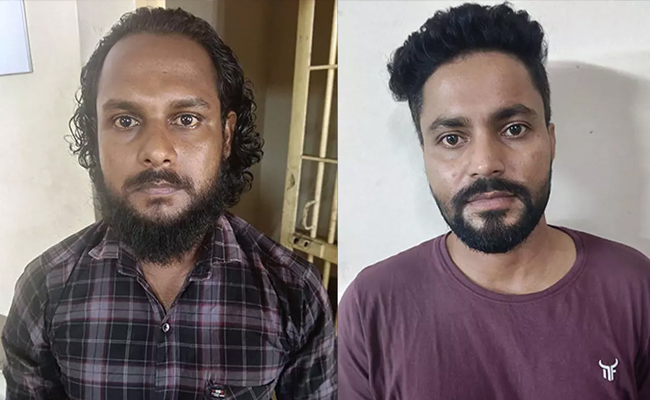
Udupi: Two men from Belthangady have been sentenced to life imprisonment by a court in Udupi for attempting to murder a woman in Manchikumeri in 2022.
The sentenced men, Mithun and Nagesh Poojary, are learned to have attempted to murder Sumathi, wife of Ramanath Rai, a resident of Manchikumeri, who had a Nandini Milk Parlour at Tiger Circle, Manipal.
On February 18, 2022, Sumathi was reportedly alone at home when, at around 7 pm, Mithun, learned to be her nephew, and his friend Poojary came to the house. As Sumathi opened the door, the duo barged in and tried to strangulate her with an intention of murdering her. Sumathi reportedly lost consciousness under the attack.
The men packed her body in a sack and were then putting the sack into a suitcase to carry the body out, when they noticed that Rai and neighbours had arrived. They are learned to have opened the door when Rai knocked the door and then tried to escape. They were, however, caught by the neighbours and handed over to the police.
Further, Sumathi was found by the group in an unconscious state inside the suitcase in the house. She was rushed to the Manipal Hospital and learned to have recovered after a week of medical treatment.
A case had been registered at the Manipal Police Station.
The Udupi Principal District and Sessions Court judge Kiran S Gangannavar, who heard the case, has declared both Mithun and Poojary guilty in the case. He has awarded them life imprisonment, fined them Rs 20,000 each and, under Column 325, sentenced them to rigorous imprisonment of 5 years and fined them Rs 5,000 each.
Judge Gangannavar has directed that, of the fine, Rs 45,000 be handed to the attack victim Sumathi as relief.
Jayarama Shetty represented the government as Public Prosecutor.