Former Maldives president makes comeback with landslide win
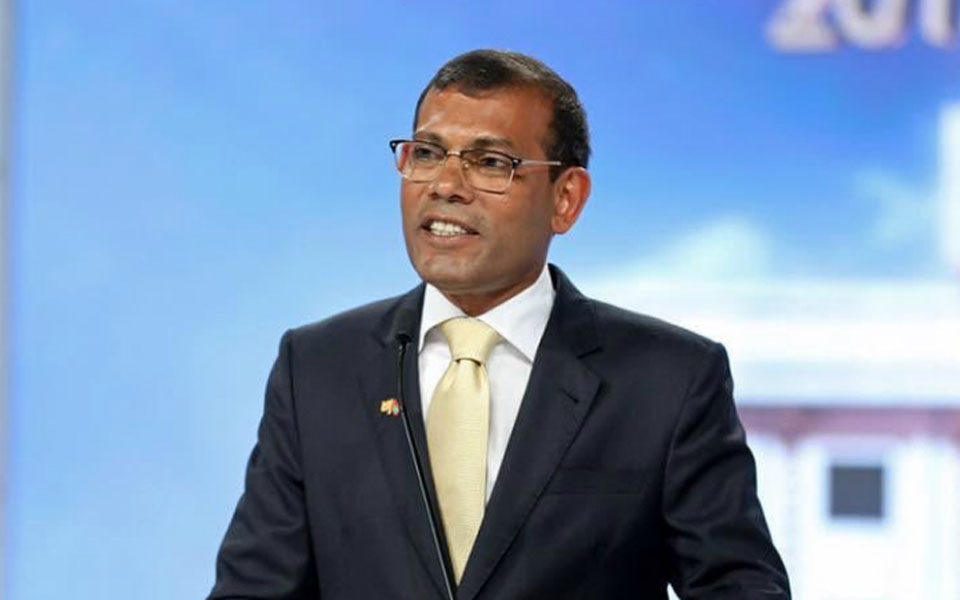
Male: The exiled former leader of the Maldives has led his party to a landslide victory only five months after returning to the country, preliminary results showed Sunday.
Ex-president Mohamed Nasheed, 51, was set for a dramatic return to the top of the national parliament, with his Maldivian Democratic Party headed for a two-thirds majority in the 87-member assembly.
Saturday's poll was the first test of public opinion since autocratic former president and Nasheed's arch-rival Abdulla Yameen was forced to stand down after his five-year term, facing charges of money laundering and embezzlement.
Nasheed returned to the country after his former deputy President Ibrahim Mohamed Solih won an unexpected victory in September presidential elections for the MDP. Yameen had barred Nasheed from contesting.
Preliminary results from Saturday's election showed the MDP winning 50 out of the 87 seats, while private media reports projected the party eventually getting up to 68 seats.
"The Maldives is about to welcome a new dawn, a golden yellow dawn," Nasheed told his supporters in Male on Saturday. Yellow is the colour of his party.
Election officials estimated the final turnout to be between 70 and 80 percent, down from the 89 percent recorded at the September presidential election which unexpectedly toppled Yameen.
Nasheed, now set to take over the leadership of the legislature, has promised to turn the country into a parliamentary democracy by scrapping the executive presidential system adopted under political reforms in 2008.
President Solih said in a statement that the MDP had "secured a huge majority in Majlis (parliament)".
"While we celebrate, we must also not forget the immense challenges that lie ahead of us," he said.
Solih campaigned for the MDP asking voters to return a parliament that could work with him to deliver on his election promises in September to investigate corruption under Yameen.
While Yameen was not a candidate, his Progressive Party of Maldives was seen as the main challenger to the MDP -- but ended up with a poor showing, and is projected to get only four seats.
Nasheed was jailed for 13 years on a controversial terrorism charge when Yameen was in power. However, the conviction was overturned last year after the presidency changed.
Election commissioner Ahmed Shareef told reporters there had been no complaints of irregularities in the runup to the vote, during balloting or at the count.
The Maldives was on the verge of being slapped with Western-led sanctions before Solih won the presidential election on a pledge to end corruption in the country best known for its luxury tourism.
Let the Truth be known. If you read VB and like VB, please be a VB Supporter and Help us deliver the Truth to one and all.
Women journalists face doubling of online abuse since 2020, AI intensifies harassment: report
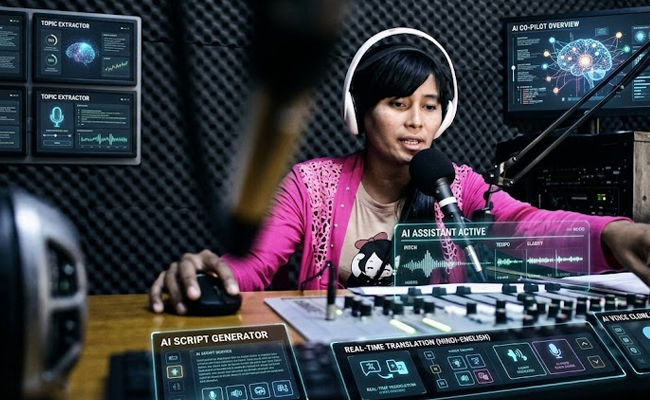
New Delhi: Incidents of online violence against women journalists have doubled since 2020, with growing use of artificial intelligence intensifying the scale and impact of abuse, according to a new report released ahead of World Press Freedom Day.
The study is titled “Tipping point: Online violence impacts, manifestations and redress in the AI age.” It is published by UN Women and its partners and highlights how digital harassment has become more invasive and technologically sophisticated.
The study is based on a 2025 global survey covering 641 respondents across 119 countries. The report found that women journalists and media workers are increasingly resorting to self-censorship due to online abuse. Around 45 per cent said they avoid expressing themselves on social media, which is a sharp rise from 2020. Nearly 22 per cent reported limiting their professional work for similar reasons.
The findings also indicate that 12 per cent of respondents have experienced non-consensual sharing of personal images, including intimate content, and six per cent reported being targeted by AI-generated “deepfakes.” One in three said they had received unsolicited sexual advances online.
The report highlights the psychological toll of such harassment, noting that nearly a quarter of women journalists surveyed had been diagnosed with anxiety or depression, while about 13 per cent reported post-traumatic stress disorder.
An environmental journalist from India, quoted in the report, described how coordinated online attacks and misinformation campaigns had led to fear and withdrawal from investigative reporting, and the repercussions extending to family members.
However, as the abuse has increased, so too has the number of women journalists reporting such incidents. The percentage of women journalists approaching law enforcement agencies has doubled from 11 per cent to 22 per cent in 2025 compared with 2020. The report also shows an increase in legal action against perpetrators, technology platforms, and employers.
However, the report points to significant gaps in legal protection. It presents data that fewer than 40 per cent of countries have laws addressing cyber harassment or stalking. Kalliopi Mingerou, who leads efforts to end violence against women at UN Women, said emerging technologies are amplifying existing threats. “AI is making abuse easier and more damaging,” she said, warning that the trend risks undermining democratic participation and hard-won rights.
The report can be accessed at https://www.unwomen.org/en/digital-library/publications/2026/04/tipping-point-online-violence-impacts-manifestations-and-redress-in-the-ai-age