Former Pak PM Imran Khan, wife sentenced to seven years sentence each in un-Islamic marriage case
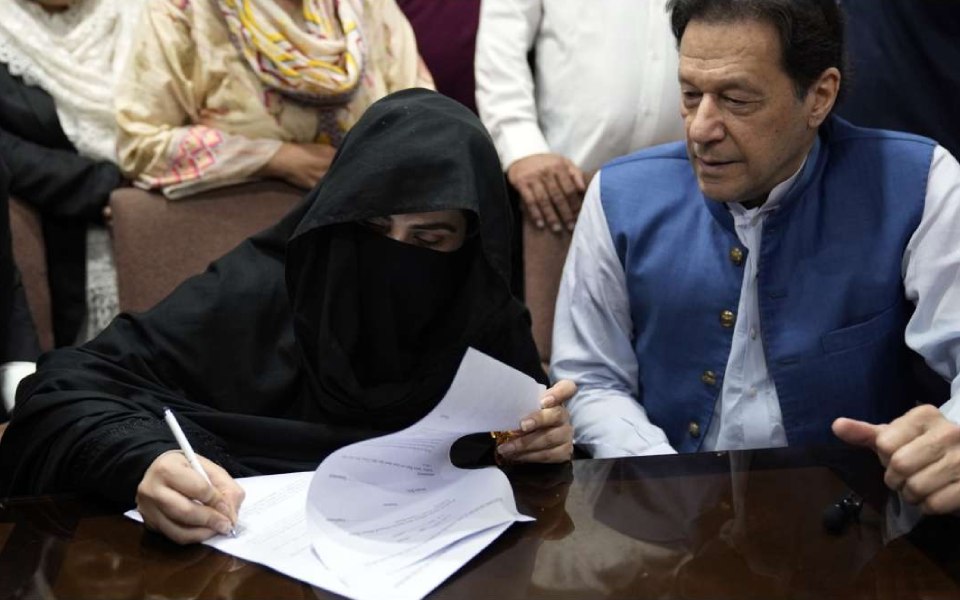
Islamabad, Feb 3: A Pakistan court on Saturday sentenced jailed former prime minister Imran Khan and his wife Bushra Bibi to seven years imprisonment in the 'un-Islamic nikah' case.
Bibi's first husband, Khawar Maneka, had filed the case, alleging that she violated the Islamic practice of observing the mandatory pause or Iddat between two marriages.
Maneka also accused his ex-wife and Khan, the founder of the Pakistan Tehreek-e-Insaaf (PTI) party, of being in an adulterous relationship before marriage, a crime punishable by death by stoning.
The trial court concluded the hearing on Friday night after a marathon 14-hour-long hearing at the Adiala jail.
Let the Truth be known. If you read VB and like VB, please be a VB Supporter and Help us deliver the Truth to one and all.
Caste census will form basis for future policy decision, says CM Siddaramaiah
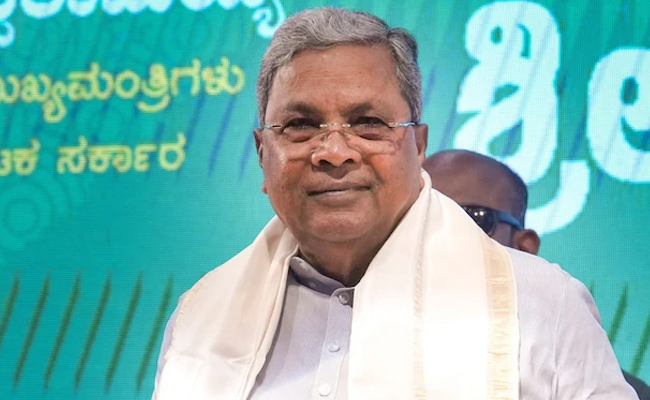
Mysuru (Karnataka) (PTI): Karnataka Chief Minister Siddaramaiah on Wednesday said that the ongoing caste census would form the basis for future policy decisions, asserting that the exercise was crucial to advancing social justice in the state.
Addressing a gathering at the Siddarameshwara Jayanti celebrations here, he said caste enumeration was being carried out for the first time since 1931 and would be followed by deliberations once the report is submitted.
"At present, a caste census (Jaati Sameekshe) is underway. After the report comes, we will discuss it and take necessary decisions," Siddaramaiah said.
He underlined the government’s commitment to equality, stating, "We are committed to social justice. No one should face injustice. Even if not 100 per cent, we will strive to ensure 99 per cent justice."
Referring to measures aimed at addressing intra-caste disparities, the chief minister said the government had already implemented internal reservation based on revised classifications.
"We have gone beyond the Nagamohan Das report and implemented internal reservation… now it has been revised to 5.25 per cent, 5.25 per cent, and 4.5 per cent. This has been approved by the Cabinet," he said.
Siddaramaiah said the broader objective was to ensure equitable distribution of resources and opportunities, while reiterating that policy interventions would be guided by constitutional principles.
"Our objective is equal share and equal life for all," he said.
He also emphasised the role of education in eliminating inequalities, particularly among marginalised communities, and said empowerment was essential to dismantle entrenched caste hierarchies.
"Only when people gain such empowerment can caste divisions be eradicated. Education is essential for this," he added.
The CM said the government would examine demands raised by various communities and take decisions based on feasibility, while ensuring that benefits reached all sections without discrimination.