Former Pentagon official Michael Rubin condemns Pakistan Army Chief Asim Munir’s nuclear threat
calls for diplomatic measures
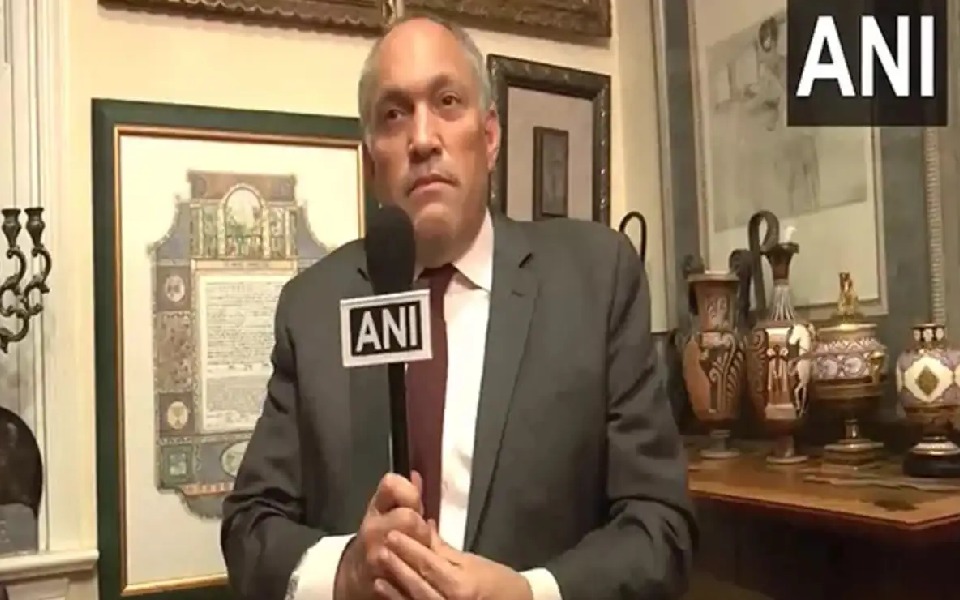
WASHINGTON: Former Pentagon official Michael Rubin has strongly condemned Pakistan Army chief General Asim Munir’s recent nuclear threat during his visit to the United States, drawing sharp comparisons to terrorist Osama bin Laden. In an interview with ANI, Rubin described Munir’s rhetoric as reminiscent of the language once used by bin Laden, stating, “Asim Munir is Osama bin Laden in a suit.”
Rubin called for the US government to declare General Munir persona non grata, emphasizing that Pakistan’s nuclear threats made on American soil are “completely unacceptable.” He questioned Pakistan’s capacity to fulfill the responsibilities of a sovereign state, suggesting it may be time to reconsider its international standing.
Referring to Munir’s address at an event in Tampa, Florida, where the general reportedly declared, “We are a nuclear nation. If we think we are going down, we’ll take half the world down with us,” Rubin expressed disappointment that US military officials did not walk out of meetings with the Pakistan army chief, stating, “The fact that US Generals did not walk out of any meeting with Asim Munir should be a cause for resignation.”
Rubin further argued that Pakistan should lose its status as a major non-NATO ally, calling instead for the country to be designated a state sponsor of terrorism and removed from the US Central Command’s list of partners. He insisted that no Pakistani official, including Munir, should be granted American visas until Pakistan provides a satisfactory explanation and apology for the threats.
India criticising Munir’s remarks, described them as “nuclear sabre-rattling” and expressed serious concerns about the integrity of Pakistan’s nuclear command and control. The Ministry of External Affairs (MEA) pointed to Pakistan’s military establishment’s connections with terrorist groups as a key factor undermining trust. The MEA called it “regrettable” that such threatening comments were made from the soil of a friendly third country.
India however reaffirmed its position and declared that it will not yield to nuclear blackmail and will continue to take all necessary steps to protect its national security.
Let the Truth be known. If you read VB and like VB, please be a VB Supporter and Help us deliver the Truth to one and all.
Akash Singh says signature celebration fuels motivation, reinforces dominance
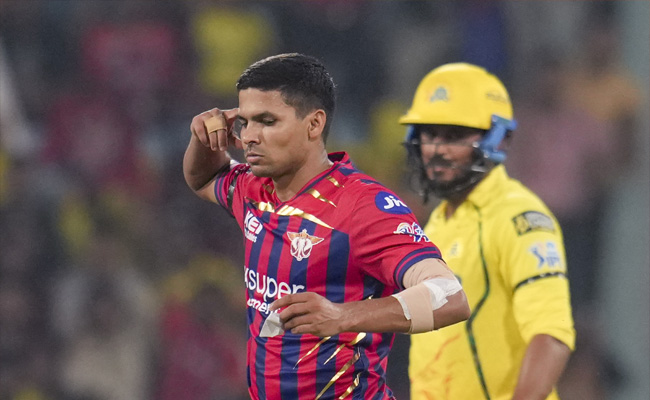
Lucknow (PTI): Pacer Akash Singh caught the eye with his unique celebration during Lucknow Super Giants' win over Chennai Super Kings, pulling out a piece of paper from his pocket after a wicket, a gesture he said was aimed at "motivating" himself and "asserting dominance" over batters.
The left-arm pacer pulled out a scrappy piece of paper after each of the three wickets he took in LSG seven-wicket win over CSK, with the message reading: "Akki on fire -- Akash knows how to take wickets in T20 cricket.
The 24-year-old, who began his IPL journey with Rajasthan Royals and was part of Chennai Super Kings’ title-winning campaign in 2023 before moving to Lucknow Super Giants, registered his best IPL figures with 3 for 26 on Friday.
"'Akki knows how to take wickets in T20 cricket', right?" Akash said when asked about the message on the piece of paper, adding that it serves as a source of motivation and helps him focus on dominating batters and delivering stronger performances for the team.
"Different things motivate different people. Some days I show the paper, some days I don't, but it reflects my mindset on that particular day. When you carry a piece of paper with something written on it, you manifest things and the most important part is when those manifestations actually materialise," he added.
Akash, who hails from Bharatpur in Rajasthan, said the strong backing from the Lucknow Super Giants support staff over the last two years had played a huge role in his growth as a cricketer.
"I've been with LSG for two years and the most important thing has been the backing from the coaches, even when I'm not in the playing XI. This year we have Bharat Arun sir, last year Zaheer sir was there...Tom Moody. The way they guide us, prepare us and keep us ready for opportunities is very important when there are 25 players in the squad," he said.
"When you are not playing, you naturally seek backing and every player wants to make the most of the opportunities he gets. The support from the captain also matters a lot and with Rishabh bhaiya backing you, the confidence grows and you are able to perform better," Akash said, referring to Rishabh Pant.
Akash said Pant had asked him to trust his strengths ahead of the clash against CSK.
"He told me that the new ball is my strength and that I can swing it both ways. So I just tried to make the best use of my skills. The wicket also had good bounce, so I focused on using the bouncer effectively,” added Akash.
On his success against CSK, Akash said his experience of playing in the IPL since 2020, including a stint with CSK, helped him understand the opposition batters better, while backing his own strengths with the ball also played a key role in his impressive spell.
"Obviously, when you play in the IPL and have shared the dressing room with some players, you understand their strengths and weaknesses. My focus was first to back my own strengths, then exploit their weaknesses and also make the best use of what the wicket was offering," Akash said.
Akash said he had sensed over the last two-three games that an opportunity could come his way after being repeatedly told to "be ready", though he admitted he was unfortunate not to get a chance earlier.
"Two days before the match, during practice, I was told to be ready," he said.
Clarifying that he had not been carrying the piece of paper in anticipation, Akash said he often notes down thoughts that could help improve his game..
"Whenever I’m alone or about to sleep, any thought that comes to my mind which can help my cricket, I write it down. The other night I got this thought and jotted it down on paper," he added.