Fr. Swamy's death will 'remain a stain' on India's human rights record: UN expert
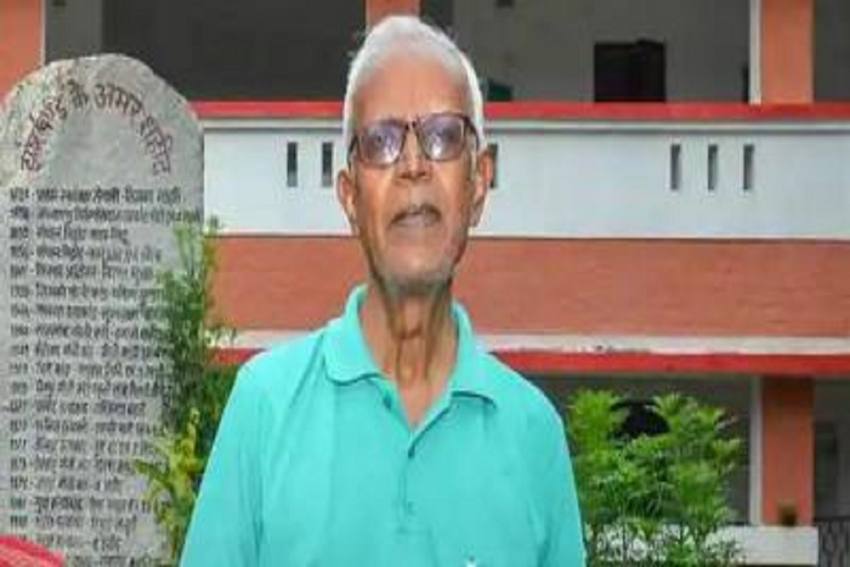
United Nations/Geneva: A UN human rights expert has said that she is devastated to hear about the demise of Jesuit priest Stan Swamy in custody, saying there is no reason for a human rights defender to be denied his rights and that his death will forever remain a stain on India's human rights record.
Swamy, 84, who was arrested last year under the Unlawful Activities (Prevention) Act (UAPA) in connection with the Elgar Parishad-Maoist links case, died at a Mumbai hospital on July 5.
In a statement issued on Thursday, UN Special Rapporteur Mary Lawlor said Father Swamy's case should remind all states that human rights defenders and all those detained without sufficient legal basis, should be released.
Lawlor said the death in custody of Catholic priest Swamy, a renowned human rights and social justice advocate for over four decades, will forever remain a stain on India's human rights record.
"There is no excuse, ever, for a human rights defender to be smeared as a terrorist, and no reason they should ever die the way Father Swamy died, accused and detained, and denied his rights, she said.
India has rejected international criticism over the handling of Swamy's case.
The Ministry of External Affairs has said the concerned authorities act against violations of law and do not restrain the legitimate exercise of rights.
It said India remains committed to the promotion and protection of the human rights of all its citizens and that the country's democratic polity is complemented by an independent judiciary and a range of national and state-level human rights commissions.
"Swamy was arrested and detained by the National Investigation Agency following due process under the law. Because of the specific nature of charges against him, his bail applications were rejected by the courts. Authorities in India act against violations of law and not against legitimate exercise of rights. All such actions are strictly in accordance with the law, the MEA said in a statement in New Delhi soon after Swamy's death.
It said Swamy was receiving all possible medical attention at a private hospital where he was admitted since May 28. His health and medical treatment were being closely monitored by the courts. He passed away on July 5 following medical complications.
Lawlor said Swamy was jailed last October on fabricated terrorism charges and had been subjected to harassment and repeated interrogations.
I was devastated to hear that Father Stan, a Jesuit priest who had dedicated much of his life to defending the rights of indigenous peoples and the Adivasi minority, died in custody on July 5, despite many requests for his release as his health deteriorated in prison, she said.
She added that in early November 2020, UN experts joined her in raising his case with the Indian authorities, reminding them of their international human rights obligations. I now ask again why he wasn't released, and why he had to die in custody? she said.
Lawlor added that Swamy had been working for decades to protect the rights of Adivasi minority indigenous peoples and the Dalit minority, in particular violations involving forced displacement and illegal land acquisitions.
We know that defenders working on environmental, land or indigenous people's rights are among the most vulnerable to being targeted, said Lawlor.
Lawlor's call has been endorsed by Special Rapporteur on minority issues Fernand de Varennes, Special Rapporteur on the right to physical and mental health Tlaleng Mofokeng.
Lawlor of Ireland is the Special Rapporteur on the situation of human rights defenders. She is currently an Adjunct Professor of Business and Human Rights in Trinity College Dublin. She was previously Director of the Irish Office of Amnesty International from 1988 to 2000.
Special Rapporteurs are part of what is known as the Special Procedures of the Human Rights Council. Special Procedures, the largest body of independent experts in the UN Human Rights system, is the general name of the Council's independent fact-finding and monitoring mechanisms that address either specific country situations or thematic issues in all parts of the world.
Let the Truth be known. If you read VB and like VB, please be a VB Supporter and Help us deliver the Truth to one and all.
Two injuries, one DNF, a DQ as India end messy World Relays campaign
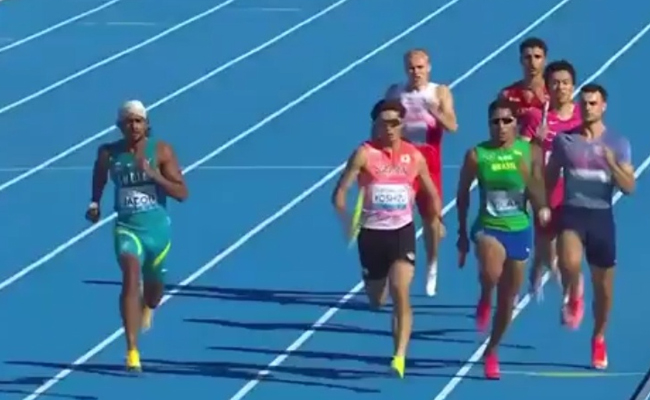
Gaborone (Botswana) (PTI): Amoj Jacob and Ragul Kumar got injured during the men's 4x400m and 4x100 races respectively as India ended their World Athletics Relays campaign in disappointment on the second day of competitions here on Sunday.
The Indian camp had high hopes of making the 2027 World Championships in the men's 4x400m relay but the team did not finish (DNF) the race as Jacob suffered cramps and pulled out of the race after taking the baton from the first leg runner Dharamveer Choudhary. Rajesh Ramesh and Vishal TK were to run in the third and fourth legs.
Those teams which could not qualify for the 2027 Beijing World Championships by reaching the final round of each of the six relay events on Saturday were given another chance in the second qualification round on Sunday.
The top two teams in each of the two heats (in all six relay events) booked the Beijing ticket on Sunday.
India will now have to try and qualify for the World Championships through the Top Lists of the World Athletics, which is a long and tedious process.
In the men's 4x100m race, third leg runner Ragul Kumar fell down the track after failing to hand over the baton inside the exchange zone to fourth leg runner Gurindervir Singh, which clearly showed the lack of coordination among the runners.
Harsh Santosh Raut and Animesh Kujur ran the first two legs.
The Indian quartet was disqualified and Kumar was seen being taken away from the Field of Play with the help of the volunteers.
It was a comedy of errors in the case of the women's 4x100m race, which saw the baton being dropped during an exchange between first leg runner Tamanna and second runner Nithya Gandhe, though the Indians finished the race in 53.09 seconds.
Gandhe started running quite a distance, but after realising that the baton was not in her hand, she turned and ran back to pick it up.
The only silver-lining for the Indian contingent was the national record time in the mixed 4x100m relay race, though the quartet of Ragul Kumar, Nithya Gandhe, Animesh Kujur and Sneha SS finished sixth in heat number two with a time of 41.35 seconds, bettering the previous national mark of 42.30 seconds set in March in Chandigarh.
The mixed 4x400m relay quartet of Theerthesh P Shetty, Kumari Saloni, Nihal William and Rashdeep Kaur ended at fifth in heat number one with a time of 3 minutes and 19.40 seconds.
On Saturday, all the five Indian relay teams had failed to make it to the respective final rounds and thus missed out on the 2027 World Championships berths.