France is bitten by a fear of bedbugs as it prepares to host Summer Olympics
France PM to hold emergency meeting
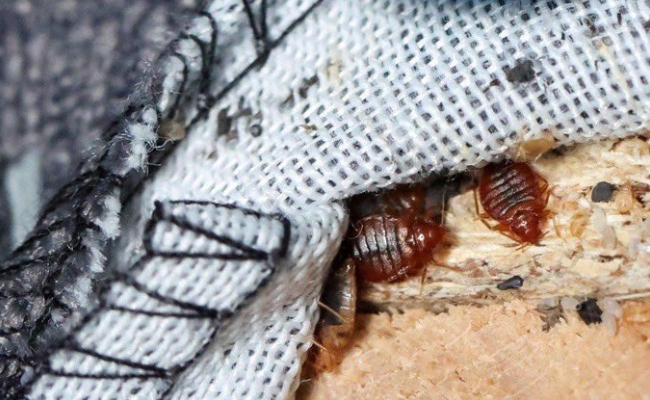
Paris (AP): They creep, they crawl, they feast on your blood as you sleep. They may travel in your clothes or backpacks to find another person worth dining on on the subway, or at the cinema. Bedbugs go where you go, and they have become a nightmare haunting France for weeks.
The government has been forced to step in to calm an increasingly anxious nation that will host the Olympic Games in just over nine months a prime venue for infestations of the crowd-loving insects.
Prime Minister Elisabeth Borne called a meeting of ministers for Friday to tackle the bedbug crisis. The country's transport minister, Clement Beaune, met this week with transportation companies to draw up a plan for monitoring and disinfecting and to try to ease what some have called a national psychosis inflamed by the media.
"There is no resurgence of cases," Beaune said, telling reporters that 37 cases reported in the bus and Metro system and a dozen others on trains proved unfounded as did viral videos on social media of tiny creatures supposedly burrowing in the seat of a fast train.
Still, bedbugs have plagued France and other countries for decades. The insects the size of an apple seed that neither jump nor fly get around as easily as people travel from city to city and nation to nation, and they have become increasingly resistant to insecticides. If that's not enough to make you itchy: Bedbugs can stay alive for a year without a meal.
Without any blood, "they can slow their metabolism and just wait for us," said Jean-Michel Berenger, an entomologist who raises bedbugs in his lab in the infectious diseases section of the Mediterranee University Hospital in Marseille. The carbon dioxide that all humans give off "will reactivate them and they'll come back to bite you."
For now, Berenger said, this much is certain: "Bedbugs have infested the media."
Yet bad dreams are most often fed by a touch of reality.
More than one household in 10 in France was infested with bedbugs between 2017 and 2022, according to a report by the National Agency for Health and Food Safety. The agency relied on a poll by Ipsos to query people on a topic that many prefer to avoid discussing because they fear going public with a bedbug problem will stigmatize them.
But silence is a mistake, experts say. No social category is immune to finding bedbugs in their clothing, blankets or mattresses.
"It's not at all a hygiene problem. The only thing that interests (bedbugs) is your blood," said Berenger, the entomologist. "Whether you live in a dump or a palace, it's the same thing to them."
Business is booming for companies that eradicate the little brown insects, a process that often starts with detection by dogs trained to sniff out the special odor that bedbugs give off. If an infestation is confirmed, technicians move in to zap the area with super hot steam. Heat and cold are enemies of bedbugs. One French government recommendation for victims is to put well-wrapped clothes in the freezer.
Kevin Le Mestre, director of Lutte Antinuisible, said his company is getting "dozens and dozens" of calls. In the past, he said, people often didn't react, even to bites.
"Now, as soon as they spot a bite, they don't ask themselves whether it really comes from bedbugs or not. They call us straight away," said a pest control technician for the company, Lucas Pradalier, as he disinfected a Paris apartment. A sniffer dog detected bedbugs in a baseboard and between floorboards.
The French public began moving into panic mode about a month ago after reports of bedbugs at a Paris movie theater. Videos began popping up on social networks, showing little insects on trains and buses.
Now, both Socialists and centrists of President Emmanuel Macron's party want to propose bills to fight bedbugs. Far-left lawmaker Mathilde Panot recently brought a vial of bedbugs to the Parliament to chastise the government for, in her view, letting the creatures run rampant.
Bedbugs, an age-old curse on humans, seemingly disappeared with treatment by harsh, now-banned insecticides. They made a reappearance in the 1950s, especially in densely populated cities like New York. And they travel the world thanks to commerce and tourism.
That adds up to a bedbug challenge for the Paris Olympics starting in July.
"All human population movements are profitable for bedbugs because they go with us, to hotels, in transport," said Berenger.
Beaune, the transport minister, is hopeful that steps can be taken to ease the public's fear. But, he conceded, "It's hell, these bedbugs."
Let the Truth be known. If you read VB and like VB, please be a VB Supporter and Help us deliver the Truth to one and all.
Andhra leaders mourn tragic demise of film producer R B Choudary

Amaravati (PTI): Andhra Pradesh Chief Minister N Chandrababu Naidu, his deputy Pawan Kalyan and YSRCP chief Y S Jagan Mohan Reddy on Wednesday expressed shock and grief over the passing of prominent film producer R B Choudary.
Choudary died in a road accident in Rajasthan on Tuesday.
Chief Minister Nara Chandrababu Naidu expressed anguish over the death of Super Good Films head R B Choudary, said an official press release late on Tuesday.
The CM said Choudary had provided opportunities to several actors in over 90 films made in Telugu, Tamil, Malayalam and Hindi languages.
Conveying his sympathies to the family members of the deceased producer, the CM termed his death an "irreparable loss" to the film industry.
Jana Sena chief Pawan Kalyan remarked that the news of the tragic accident left him stunned.
"I cannot believe the news that Choudary met with a fatal road accident in Rajasthan. I pray to God that his soul attains peace," he said.
Former Chief Minister and YSRCP leader Jagan Mohan Reddy expressed grief over the untimely demise of Choudary.
He recalled that Choudary had earned a distinguished place in both the Telugu and Tamil film industries through his contributions as a producer.
Reddy prayed for the departed soul to rest in peace and conveyed his heartfelt condolences to the bereaved family.