France issues arrest warrants for Syrian president, 3 generals alleging involvement in war crimes
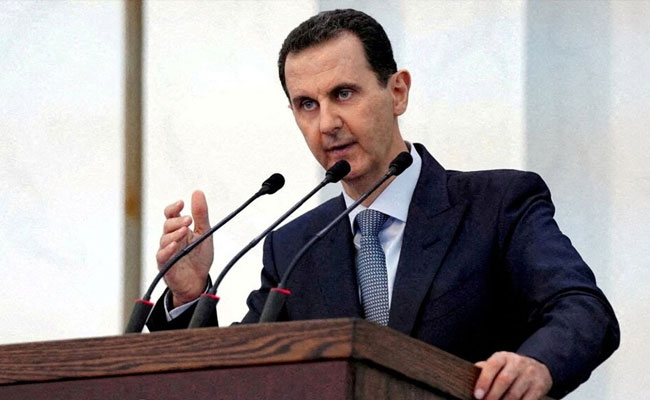
Paris (AP): French judicial authorities issued international arrest warrants for Syrian President Bashar Assad, his brother, and two army generals for alleged complicity in war crimes and crimes against humanity, lawyers for Syrian victims said.
They include a 2013 chemical attack on rebel-held Damascus suburbs.
A victim of the attack welcomed the move as a reminder of the horrors of Syria's civil war and urged countries where Assad might travel to arrest him.
While he is unlikely to face trial in France, international warrants for a serving world leader are very rare and send a strong message about Assad's leadership at a time when some countries have welcomed him back into the diplomatic fold.
In addition to President Assad, the arrest warrants were issued for his brother, Maher Assad, the commander of the 4th Armored Division, and two Syrian army generals, Ghassan Abbas and Bassam al-Hassan, the lawyers said.
There was no immediate comment from the Syrian government on the warrants.
Jeanne Sulzer and Clemence Witt, lawyers at the Paris Bar who represent the plaintiffs, and non-governmental organisations behind the complaint, hailed the decision.
"It marks a crucial milestone in the battle against impunity," Sulzer said. "It signifies a positive evolution in case law recognizing the grave nature of the crimes committed."
The Paris prosecutor's office has not publicly commented on the arrest warrants, which remain secret under French law while an investigation is ongoing.
"Legally speaking, this is a procedural act as the investigation into the 2013 attacks in Eastern Ghouta and Douma continues," Sulzer said. The four individuals named in the arrest warrants "can be arrested and brought to France for questioning," she said.
More than 1,000 people were killed and thousands were injured in the August 2013 attacks on Douma and Eastern Ghouta.
The investigation into the two chemical weapons attacks has been conducted under universal jurisdiction in France by a special unit of the Paris Judicial Court. It was opened in 2021 in response to a criminal complaint by the survivors, and filed by the Syrian Center for Media and Freedom of Expression.
Mazen Darwish, the director of the center, called the warrants "a new victory for the victims, their families and survivors" of the 2013 attacks.
Assad's government was widely deemed by the international community to be responsible for the August 21, 2013, sarin gas attack in the then-opposition-held Damascus suburb of eastern Ghouta.
The Syrian government and its allies have denied their responsibility and claimed the Ghouta attack was carried out by opposition forces trying to push for foreign military intervention.
The United States threatened military retaliation in the aftermath of the attack, with then-President Barack Obama saying Assad's use of chemical weapons would be Washington's "red line." However, the US public and Congress were wary of a new war, as invasions in Afghanistan and Iraq had turned into quagmires.
Washington settled for a deal with Moscow for Syria to give up its chemical weapons stockpile.
Syria says it eliminated its chemical arsenal under the 2013 agreement. However, watchdog groups have continued to allege chemical attacks by Syrian government forces since then.
Alaa Makhzoumi, a survivor of the chemical attack in Eastern Ghouta, said the French decision is an "initial step towards achieving justice and fulfilling the rights of all martyrs and victims we lost that day."
Makhzoumi, now a refugee in Turkey, said she and her husband and son suffered respiratory problems after the attack, and her younger son was born with birth defects that she believes are linked to chemical exposure.
"The most important thing about this decision is to bring the chemical (attacks) issue back to the forefront," she said, at a time when international attention has drifted away from Syria following normalisation agreements of several Arab countries with Assad's government.
"I hope that all countries will contribute to the implementation of the decision by arresting Assad if they have the opportunity," Makhzoumi said.
In addition to France, complaints relating to the chemical attacks in Eastern Ghouta in 2013 and Khan Shaykhun in 2017 were submitted to the authorities in Germany in 2020, and Sweden in 2021, based on witness testimonies, visual evidence, and information about the chain of command of the entities suspected of carrying out the attacks.
The volume and detailed evidence in the Eastern Ghouta case filed in France convinced the judges that there is "serious or corroborating evidence making it likely" that President Assad, his brother Maher and generals Abbas and Hassan, "took part in planning an execution of these attacks and bear individual criminal responsibility for the crimes," the NGOs behind the complaint in France said in a statement.
Syria is not a member of the International Criminal Court, meaning it does not have jurisdiction there. However, human rights lawyers in the past have urged prosecutors to open an investigation into crimes during the country's civil war, arguing that the court could exercise jurisdiction over Syrian civilians forced into Jordan, which is a member of the court.
So far, the court has not opened an investigation.
An investigative team at the Organization for the Prohibition of Chemical Weapons has repeatedly found that Syrian forces used chemical weapons, including in the April 2018 attack on Douma. However, the OPCW does not have any means of prosecuting perpetrators.
Let the Truth be known. If you read VB and like VB, please be a VB Supporter and Help us deliver the Truth to one and all.
Will vacate one of two assembly seats won in 10 days: BJP''s Suvendu
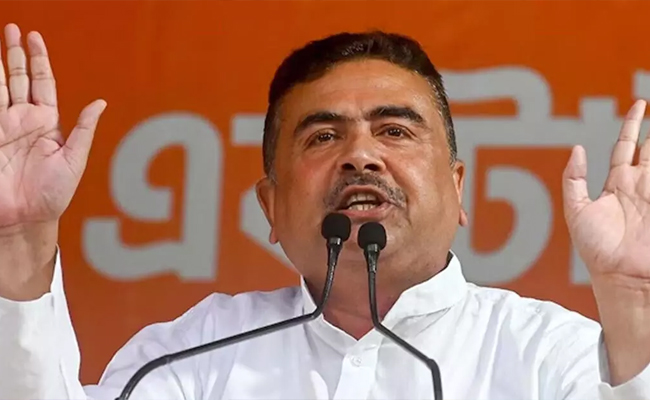
Kolkata (PTI): BJP leader Suvendu Adhikari, who defeated West Bengal Chief Minister Mamata Banerjee in Bhabanipur and secured Nandigram for three times in a row in the recent assembly polls, said on Wednesday that he would vacate one of the two constituencies within 10 days.
Adhikari also asserted that the party's central leadership would decide which constituency he would retain.
"I will vacate one seat within 10 days. The party will decide which one I retain. I will not forget my responsibility towards the people of Bhabanipur and Nandigram," he said.
Adhikari on Monday defeated Banerjee in Bhabanipur by over 15,000 votes, puncturing what was long seen as her safest political refuge and delivering a decisive psychological blow to the TMC, amid a sweeping BJP surge across West Bengal.
Addressing party workers and supporters in Nandigram in Purba Medinipur district, the BJP leader appealed to them not to take out victory processions immediately and instead maintain peace.
"Do not take out victory rallies now. Maintain peace and discipline. Celebrate after May 9, after taking permission," he told party workers.
State BJP president Samik Bhattacharya on Wednesday announced that the oath-taking ceremony of the new government will be held on May 9 at Brigade Parade Ground.
Referring to alleged attacks on BJP workers during the TMC regime, Adhikari said he would not forget the “atrocities" faced by them and assured them of taking appropriate action against perpetrators through legal processes.
"I was part of the 2011 ‘poribartan’ (change), and now I am part of the real change. I offer my gratitude to the people of Nandigram," Adhikari said.
He was referring to the TMC's victory in 2011 when the Mamata Banerjee party dismantled the 34-year Left Front regime in the state.
Adhikari offered prayers at a Hanuman statue in Nandigram and remembered the BJP workers, who had died in political violence.
"We will work in such a way that the BJP government in Bengal stays for 100 years," he said, expressing hope that the BJP’s vote share in the state would rise from the current 46 per cent to 60 per cent in future elections.
The BJP leader also assured residents of Nandigram of improved drinking water supply and better hospital and education infrastructure.