French govt collapses as PM Barnier loses no-confidence vote
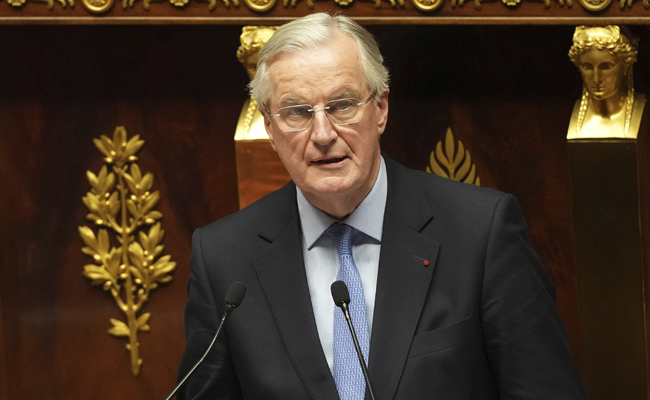
Paris, Dec 5 (AP): France's far-right and left-wing lawmakers joined together Wednesday in a historic no-confidence vote prompted by budget disputes that forces Prime Minister Michel Barnier and his Cabinet members to resign, a first since 1962.
The National Assembly approved the motion by 331 votes. A minimum of 288 were needed.
President Emmanuel Macron insisted he will serve the rest of his term until 2027. However, he will need to appoint a new prime minister for the second time after July's legislative elections led to a deeply divided parliament.
Macron will address the French on Thursday evening, his office said, without providing details. Barnier is expected to formally resign by then.
A conservative appointed in September, Barnier becomes the shortest-serving prime minister in France's modern Republic.
“I can tell you that it will remain an honor for me to have served France and the French with dignity,” Barnier said in his final speech before the vote.
“This no-confidence motion… will make everything more serious and more difficult. That's what I'm sure of,” he said.
Opposition to Barnier's proposed budget
Wednesday's crucial vote rose from fierce opposition to Barnier's proposed budget.
The National Assembly, France's lower house of parliament, is deeply fractured, with no single party holding a majority. It comprises three major blocs: Macron's centrist allies, the left-wing coalition New Popular Front, and the far-right National Rally. Both opposition blocs, typically at odds, are uniting against Barnier, accusing him of imposing austerity measures and failing to address citizens' needs.
Speaking on TF1 television after the vote, National Rally leader Marine Le Pen said “we had a choice to make, and our choice is to protect the French” from a “toxic” budget.
Le Pen also accused Macron of being “largely responsible for the current situation,” adding that “the pressure on the President of the Republic will get stronger and stronger.”
Speaking at the National Assembly ahead of the vote, hard-left lawmaker Eric Coquerel had called on the government to “stop pretending the lights will go out,” noting the possibility of an emergency law to levy taxes from Jan. 1, based on this year's rules.
“The special law will prevent a shutdown. It will allow us to get through the end of the year by delaying the budget by a few weeks,” Coquerel said.
Macron to pick a new prime minister
Macron must appoint a new prime minister, but the fragmented parliament remains unchanged. No new legislative elections can be held until at least July, creating a potential stalemate for policymakers.
Macron said discussions about him potentially resigning were “make-believe politics” during a trip to Saudi Arabia earlier this week, according to French media reports.
“I'm here because I've been elected twice by the French people,” Macron said. He was also reported as saying: “We must not scare people with such things. We have a strong economy.”
Impact on financial markets
While France is not at risk of a U.S.-style government shutdown, political instability could spook financial markets.
France is under pressure from the European Union to reduce its colossal debt. The country's deficit is estimated to reach 6% of gross domestic product this year and analysts say it could rise to 7% next year without drastic adjustments. The political instability could push up French interest rates, digging the debt even further.
Carsten Brzeski, global chief of macro at ING Bank, said uncertainty over France's future government and finances is deterring investment and growth. “The impact of France not having a government would clearly be negative for the growth of France and hence the Eurozone,” Brzeski said.
France has seen bond market borrowing costs rise, bringing back ugly memories of the Greek debt crisis and default in 2010-2012.
Analysts say France is far from a similar crisis because much of its outstanding debt does not come due for years, and because its bonds remain in demand due to a shortage of German government bonds. Additionally, the European Central Bank could intervene to lower French borrowing costs in case of extreme market turmoil, though the bar for that remains high.
Let the Truth be known. If you read VB and like VB, please be a VB Supporter and Help us deliver the Truth to one and all.
EC role, Hindu vote consolidation among factors for BJP win in Bengal polls: J-K CM Omar
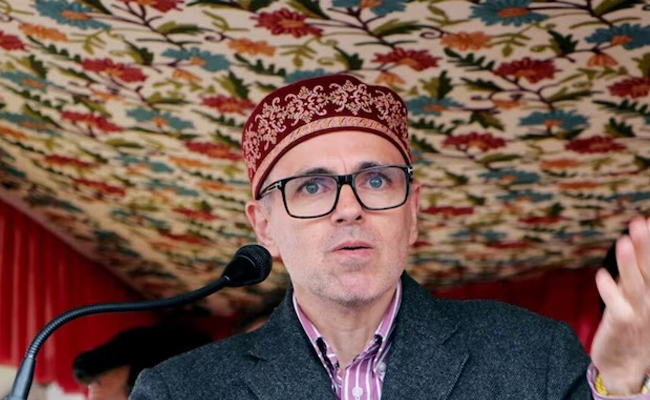
Srinagar (PTI): Jammu and Kashmir Chief Minister Omar Abdullah on Tuesday attributed the BJP's West Bengal win to a "significant role" played by the Election Commission (EC), alongside a consolidation of Hindu votes and a fractured minority mandate.
Abdullah also said the INDIA bloc needs to define its role in the political landscape of the country and make it clear whether the opposition alliance was limited to the parliamentary elections or extended to the state elections as well.
Talking to PTI Videos, Abdullah hinted that the EC has compromised its neutrality by conducting the Special Intensive Revision (SIR) in West Bengal and linked it to the BJP's gains in the state, claiming large-scale deletion of legitimate voters.
On the performance of the BJP in the just concluded assembly elections, Abdullah said the saffron party has almost nothing to show in southern states.
"So then you look at West Bengal and Assam. Yes, the BJP improved its tally in Assam. There are various reasons for that. You know as well as I do, what those are. West Bengal, I think we need to look at the results very carefully," he said.
"The easiest explanation for the West Bengal result is the serious curtailing of voter list," Abdullah said.
"Voters found their names deleted. People who served in uniform and fought for this country on the borders, who were considered Indian citizens all their lives, were suddenly held to a higher standard and not allowed to vote. Something is not right," he said.
While alleging that the EC played a "significant part" in the results, the chief minister admitted the outcome was multifaceted and noted a consolidation of over 60 per cent of the Hindu vote towards the BJP and a "significant fracture" in the minority vote, particularly in seats where Muslims constitute over 50 per cent of the population.
"There is no doubt that the role of the Election Commission played a significant part in the results but we will also have to look at the other factors," he said.
He said the results of West Bengal cannot be compared to those in other states. "The situation was unique to West Bengal. The SIR that was done, the way in which the voter lists were changed, the sort of minute scrutiny that the Election Commission subjected West Bengal to, the role of the central investigative agencies.
"All of these are situations that at least in recent electoral history of India are unique to West Bengal. So to suggest that we can learn lessons from West Bengal and implement them in other parts of the country, I think would not be correct," he said.
Abdullah had recently said that if the West Bengal results throw a surprise, the role of EC will come under scrutiny.
However, during Tuesday's interview, the chief minister said he still maintains that electronic voting machines (EVMs) do not lead to vote theft.
"What we saw in West Bengal...I know there are a lot of people who believe that the EVMs themselves are flawed. I am not a proponent of that conspiracy theory.
"But I do believe that the Election Commission has done itself no favours in the way in which it has gone about both the process of delimitation and the process of finalisation of electoral rolls," he said and cited the example of delimitation exercise in Jammu and Kashmir or Assam.
"These are clear examples of how the process was done to benefit one party or in the case of Jammu and Kashmir, one party and its allies. And the results speak for themselves. You created seven new seats in Jammu and Kashmir and out of those six seats were won by the BJP. You redrew assembly constituencies to benefit one particular party or its allies. And the same is true for West Bengal as well," he said.
Referring to the INIDA bloc, he said the election results were no new message for the alliance.
"We need to decide what the INDIA bloc is for. Is it only for Parliament or for state elections as well?" he asked.
"What happened in West Bengal is unfortunate. The Congress and TMC fought against each other. Now the Congress agrees with Mamata Banerjee that 100 seats were stolen, but the fact is they fought each other," he said.
Despite the friction, Abdullah reaffirmed the "pre-eminent position" of the Congress within the opposition alliance, dismissing the idea of any other party assuming the mantle.
"The Congress is the only party other than the BJP with a pan-India presence. All of us acknowledge this," he stated.
"To suggest someone else can assume a leadership role would be incorrect. Kharge Sahib is the president of the Congress, and by virtue of that, he assumes leadership of the INDIA bloc meetings. That is the way it should be," the chief minister said.
Abdullah said any 'Common Minimum Programme' would depend on whether the opposition alliance decides to fight state assembly elections collectively, noting that he would share his specific views with the bloc internally rather than through the media.