From power to peril: Sheikh Hasina joins list of 9 world leaders who faced death sentences
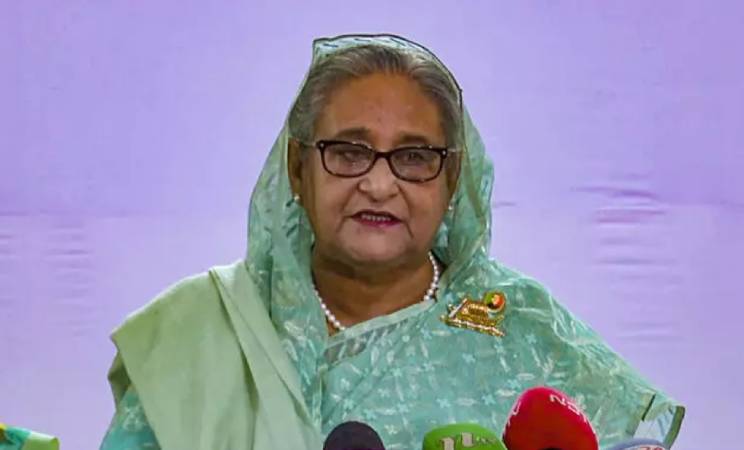
New Delhi: The sentencing of former Bangladesh Prime Minister Sheikh Hasina to death on November 17 has drawn global attention to the volatile nature of political power. While the situation in Dhaka remains fluid, Hasina is not the first head of state to face the ultimate penalty following a shift in regime.
Throughout modern history, coups, revolutions, and military interventions have frequently resulted in former leaders being tried and condemned. Following the recent developments in Bangladesh, here is a look at nine prominent heads of state who were sentenced to death, ranging from those who were executed to those whose sentences were later commuted.
1. Sheikh Hasina (Bangladesh)
Prime Minister: 1996–2001; 2009–2024
The most recent addition to this list, Sheikh Hasina was sentenced to death on November 17, 2025, following her ouster amid significant political turmoil. The charges were brought by the new regime, though the proceedings have sparked international debate regarding due process and judicial transparency.
2. Zulfikar Ali Bhutto (Pakistan)
President: 1971–1973 | Prime Minister: 1973–1977
In one of South Asia's most controversial legal chapters, Zulfikar Ali Bhutto was removed from power in a military coup led by General Zia-ul-Haq. Charged with a political murder, Bhutto was convicted and subsequently hanged on April 4, 1979. His execution remains a polarising event in Pakistan's political history.
3. Saddam Hussein (Iraq)
President: 1979–2003
Following the US invasion of Iraq and his capture in 2003, Saddam Hussein was tried by an Iraqi tribunal for crimes against humanity. He was found guilty and executed by hanging on December 30, 2006, marking a definitive end to his decades-long rule.
4. Benito Mussolini (Italy)
Prime Minister: 1922–1943
As World War II neared its conclusion, the Fascist leader lost the support of his country. Mussolini was captured by Italian partisans while attempting to flee and was executed by firing squad on April 28, 1945. His death symbolised the collapse of fascism in Europe.
5. Adnan Menderes (Turkey)
Prime Minister: 1950–1960
Menderes was toppled during the military coup of 1960. Accused of violating the constitution and misusing power, he was executed on September 17, 1961. His death is often cited as one of the darkest moments in Turkish democracy.
6. Celal Bayar (Turkey)
President: 1950–1960 | Prime Minister: 1937–1939
Like Menderes, President Celal Bayar was sentenced to death following the 1960 Turkish coup for alleged constitutional violations. However, unlike his Prime Minister, Bayar’s sentence was commuted. He was released in 1964 due to ill health and advanced age.
7. Hideki Tojo (Japan)
Prime Minister: 1941–1944
A general of the Imperial Japanese Army and Prime Minister during much of World War II, Tojo was charged with war crimes by the International Military Tribunal for the Far East after Japan's defeat. He was executed by hanging on December 23, 1948.
8. Imre Nagy (Hungary)
Prime Minister: 1953–1955; 1956
Nagy led Hungary during the 1956 uprising against Soviet control. After the revolt was crushed, he was arrested, tried in secret, and executed on June 16, 1958. Decades later, he was rehabilitated and is now remembered as a national hero in Hungary.
9. Pervez Musharraf (Pakistan)
President: 2001–2008
Former military ruler Pervez Musharraf faced a high treason case long after leaving office. In 2019, a special court sentenced him to death in absentia. However, the ruling was later overturned by a higher court. Musharraf passed away in 2023.
Let the Truth be known. If you read VB and like VB, please be a VB Supporter and Help us deliver the Truth to one and all.
4 workers die after being buried under coal slurry in Jharkhand's Dhanbad
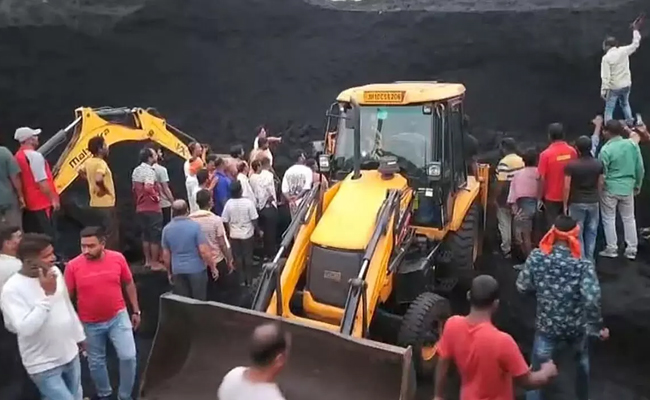
Dhanbad (Jharkhand) (PTI): At least four workers died after being buried under coal slurry in Jharkhand's Dhanbad district on Saturday, a police official said.
The incident took place at Moonidih coal washery in the command area of Bharat Coking Coal Limited (BCCL).
"Bodies of all four workers were dug out of debris during a rescue operation," Putki police station in-charge Waqar Hussain told PTI.
The incident took place when coal slurry was being loaded into trucks by workers, during which a large chunk of slurry fell and trapped several workers underneath, officials said.
The deceased have been identified as Manik Bauri, Dinesh Bauri, Deepak Bauri, and Hemlal Gope.
Meanwhile, the family members of the deceased and local villagers placed the bodies in front of the washery gate and began a protest.
They demanded compensation, jobs for dependents and action against those responsible for the incident.
Police and administration officials are trying to pacify the protesters, an official said.