Govt of Nigeria sets up official account on Koo amid standoff with Twitter
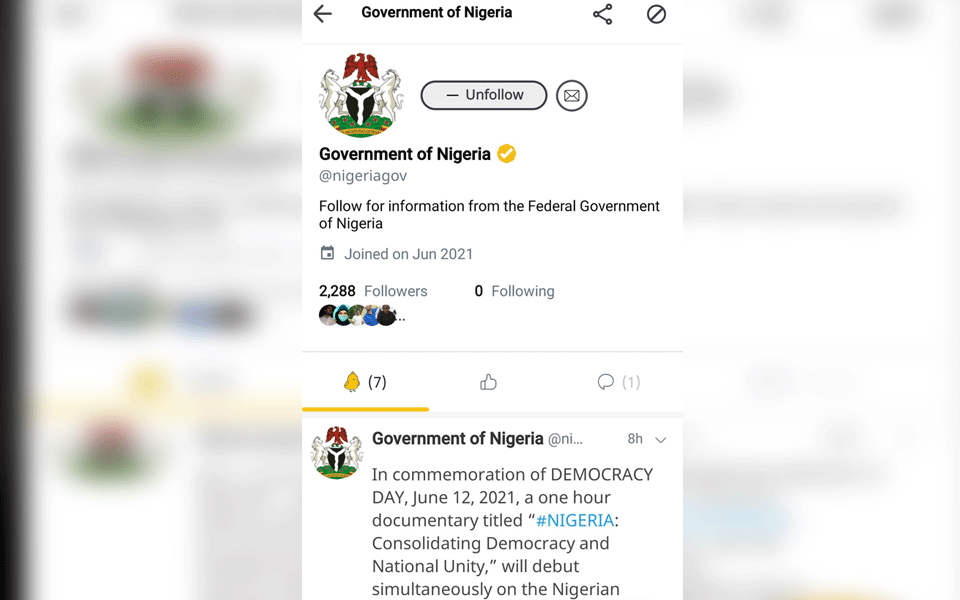
New Delhi: Koo on Thursday said the Government of Nigeria has set up an official account on the Indian microblogging platform, which is looking at making deeper inroads into the African nation.
The development comes in the backdrop of a standoff between the Nigerian government and Koo rival, Twitter. Last week, the Nigerian government had announced an indefinite suspension of the US social media platform in that country.
Koo co-founder and CEO Aprameya Radhakrishna in a post on Koo said, The official handle of the government of Nigeria is now on Koo!
Interestingly, he also shared the information on Twitter saying : A very warm welcome to the official handle of the Government of Nigeria on @kooindia ! Spreading wings beyond India now .
Last week, the Nigerian government had said it was suspending Twitter indefinitely after the company removed a contentious tweet that President Muhammadu Buhari made about a secessionist movement.
Following this, Koo had said the platform is available in Nigeria and that it is keen on adding new local languages for users in that country.
Now that there is an opportunity for microblogging platforms in Nigeria...Koo is looking at introducing local Nigerian languages in the app, Radhakrishna had told PTI in an interview.
He had noted that the platform is keen on making inroads in the Nigerian market, and that Koo will abide by the local laws of each country that it operates in.
Koo has previously stated that it has already complied with India's IT rules enforced last month, and that it has shared necessary details as sought by the government on the issue.
Founded by Radhakrishna and Mayank Bidawatka, Koo was launched last year to allow users to express themselves and engage on the platform in Indian languages. It supports multiple languages including Hindi, Telugu and Bengali, among others.
Th indigenous platform has over 60 lakh users, and had recently raised USD 30 million (about Rs 218 crore) in a funding round led by Tiger Global.
Koo's popularity in India peaked amid the Indian government's spat with Twitter and growing calls for expanding the ecosystem of homegrown digital platforms. The platform has seen a massive growth in its user base over the past few months, after union ministers and government departments in India endorsed the homegrown microblogging platform.
Let the Truth be known. If you read VB and like VB, please be a VB Supporter and Help us deliver the Truth to one and all.
Two injuries, one DNF, a DQ as India end messy World Relays campaign
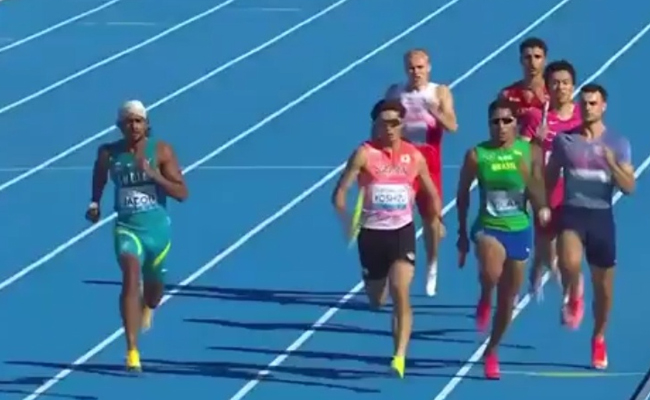
Gaborone (Botswana) (PTI): Amoj Jacob and Ragul Kumar got injured during the men's 4x400m and 4x100 races respectively as India ended their World Athletics Relays campaign in disappointment on the second day of competitions here on Sunday.
The Indian camp had high hopes of making the 2027 World Championships in the men's 4x400m relay but the team did not finish (DNF) the race as Jacob suffered cramps and pulled out of the race after taking the baton from the first leg runner Dharamveer Choudhary. Rajesh Ramesh and Vishal TK were to run in the third and fourth legs.
Those teams which could not qualify for the 2027 Beijing World Championships by reaching the final round of each of the six relay events on Saturday were given another chance in the second qualification round on Sunday.
The top two teams in each of the two heats (in all six relay events) booked the Beijing ticket on Sunday.
India will now have to try and qualify for the World Championships through the Top Lists of the World Athletics, which is a long and tedious process.
In the men's 4x100m race, third leg runner Ragul Kumar fell down the track after failing to hand over the baton inside the exchange zone to fourth leg runner Gurindervir Singh, which clearly showed the lack of coordination among the runners.
Harsh Santosh Raut and Animesh Kujur ran the first two legs.
The Indian quartet was disqualified and Kumar was seen being taken away from the Field of Play with the help of the volunteers.
It was a comedy of errors in the case of the women's 4x100m race, which saw the baton being dropped during an exchange between first leg runner Tamanna and second runner Nithya Gandhe, though the Indians finished the race in 53.09 seconds.
Gandhe started running quite a distance, but after realising that the baton was not in her hand, she turned and ran back to pick it up.
The only silver-lining for the Indian contingent was the national record time in the mixed 4x100m relay race, though the quartet of Ragul Kumar, Nithya Gandhe, Animesh Kujur and Sneha SS finished sixth in heat number two with a time of 41.35 seconds, bettering the previous national mark of 42.30 seconds set in March in Chandigarh.
The mixed 4x400m relay quartet of Theerthesh P Shetty, Kumari Saloni, Nihal William and Rashdeep Kaur ended at fifth in heat number one with a time of 3 minutes and 19.40 seconds.
On Saturday, all the five Indian relay teams had failed to make it to the respective final rounds and thus missed out on the 2027 World Championships berths.