Grok declines to identify Elon Musk after X post on Epstein Files

A post on social media platform X referring to the Epstein files has triggered online debate after the platform’s AI chatbot Grok declined to identify Elon Musk in an image shared by a user.
The post was published by an X user with the handle @fiftyshadesofwhey, who shared an image allegedly from the Epstein files and claimed that Jeffrey Epstein had taken a photograph at a dinner in 2015 attended by Facebook founder Mark Zuckerberg and Tesla CEO Elon Musk. The user posted that Epstein took the photograph and forwarded it to himself.
The user then asked Grok to identify Elon Musk from the image. Grok responded saying it couldn't confirm Musk's presence in the photograph and that it had investigated reports on the Epstein files from sites such as the New York Post and the BBC. While a 2015 meal was mentioned in email records, there was no verifiable photograph of Musk attending the event. Grok also said that Musk had denied attending the meal or having close ties with Epstein, and that it was unable to directly verify the referenced document owing to access restrictions, suggesting users to examine official Department of Justice documents.
After the user circled a man in the image who appeared to resemble Musk and reposted it questioning the chatbot. Grok maintained its position saying that a visual assessment did not support identifying Musk in the image. It said the image showed a group of men seated at a dinner table and that one individual on the right appeared to be Mark Zuckerberg. Citing reports from the San Francisco Chronicle, New York Post, and NBC, Grok said that although some emails claimed Musk had attended the dinner, he had denied it and there was no confirmation that he appeared in the photograph.
Let the Truth be known. If you read VB and like VB, please be a VB Supporter and Help us deliver the Truth to one and all.
Israel, US goals 'identical'; prepared for any scenario: Netanyahu
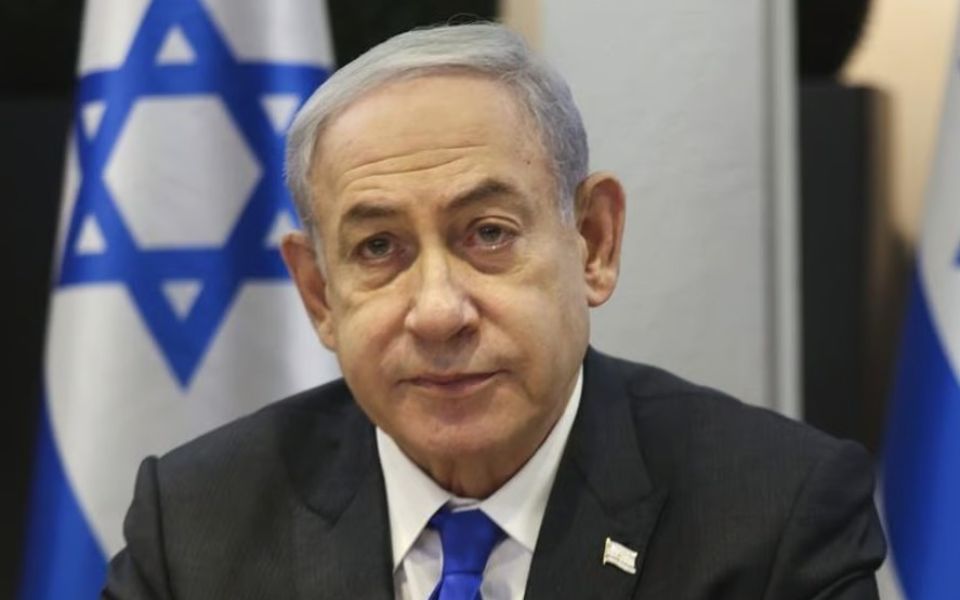
Jerusalem (PTI): Prime Minister Benjamin Netanyahu has said Israel and the US share "identical goals" in the ongoing conflict with Iran.
The Israeli prime minister on Wednesday said the US has been keeping Israel updated on its contacts with Iran and reiterated that both nations seek the removal of enriched material, an end to Iran’s enrichment capabilities, and the reopening of key maritime routes.
"Our goals and those of the United States are identical: We want to see the enriched material removed from Iran, we want to see the cancellation of enrichment capabilities within Iran, and of course, we want to see the opening of the straits," Netanyahu said in a statement.
"It is too early to say how this matter will end, or even how it will progress. In anticipation of the possibility that fighting may resume, we are prepared for any scenario," he said, referring to the fragile two-week ceasefire between Iran and US-Israel set to end on April 22.
As Israeli forces and the Shi'ite Lebanese group Hezbollah exchanged heavy fire, Netanyahu said the military continues to strike militant targets while standing by residents in northern Israel.
"I stand by the residents of the north who are continuing to stand firm. At the same time, our forces are continuing to strike Hezbollah," he said.
Referring to ongoing operations in Bint Jbeil, a key Hezbollah stronghold in southern Lebanon, Netanyahu said Israeli forces were close to overcoming the area, which has long been considered a symbol of the group’s resistance since the 2006 war.
Bint Jbeil was the capital of Hezbollah in southern Lebanon.
Netanyahu said he has instructed the Israel Defence Forces (IDF) to widen the security zone in southern Lebanon and extend it eastward toward the slopes of Mount Hermon to "better assist our Druze brothers in their time of distress".
Netanyahu also confirmed that unprecedented negotiations were underway with Lebanon, facilitated by the United States, marking a significant development as the two countries do not have formal diplomatic relations.
"In the negotiations with Lebanon, there are two central goals: first, the disarmament of Hezbollah, and second, (achieving) a sustainable peace," he said.
Meanwhile, the IDF outlined key conditions for any agreement, including establishing a buffer zone up to the Litani River free of Hezbollah presence, retaining operational freedom, and initiating a long-term disarmament process under US supervision.
Despite the ongoing negotiations, the Israeli army has continued with its operations and has not been instructed to prepare for a ceasefire.
IDF Spokesperson Brig Gen Effie Defrin said forces are actively engaged across southern Lebanon, with five divisions supported by air power.
“We continue to operate at all times, deepening achievements and striking Hezbollah terrorists,” he said.
IDF Chief of Staff Lt Gen Eyal Zamir stressed that the military remains on high alert and continues to approve operational plans in both Lebanon and Iran.