Guterres appoints Indian Army officer as commander of UN mission in South Sudan
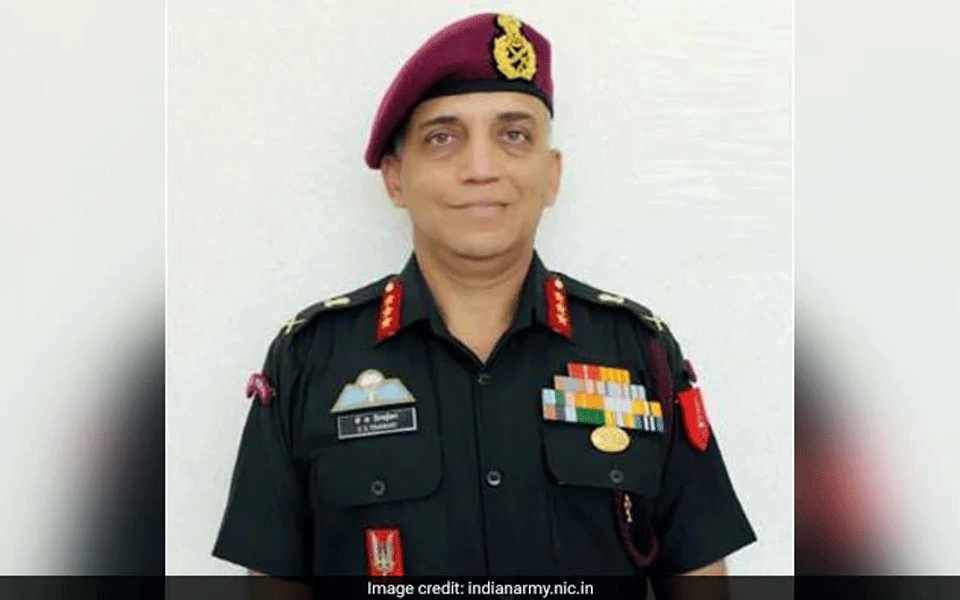
United Nations: UN Secretary-General Antonio Guterres has appointed a decorated Indian Army officer as the new Force Commander of the United Nations Mission in South Sudan.
Lieutenant General Shailesh Tinaikar, 57, will succeed Lieutenant General Frank Kamanzi of Rwanda who completes his assignment on May 26. The announcement was made by the UN chief on Friday.
The decorated Indian Army officer "has had a long and distinguished career with the Indian Armed Forces spanning over 34 years," a statement by the UN Spokesperson said.
Tinaikar graduated from the Indian Military Academy in 1983 and is currently serving as the Commandant of the Infantry School since July 2018.
He previously served as the Additional Director General of Military Operations at the Army Headquarters from 2017 to 2018. From 2012 to 2017, he commanded a division, a recruit training centre and a brigade.
Tinaikar was awarded the Sena Medal and the Vishisht Seva Medal for distinguished service.
From 1996 to 1997, he served in the United Nations Angola Verification Mission III, and from 2008 to 2009, in the United Nations Mission in Sudan.
He holds a Master of Philosophy (M.Phil) in Defence and Strategic Studies from The University of Madras.
India, the fourth largest contributor of uniformed personnel to the UN peacekeeping missions, currently contributes more than 6,400 military and police personnel to the UN peace operations in Abyei, Cyprus, the Democratic Republic of Congo, Haiti, Lebanon, the Middle East, South Sudan and the Western Sahara.
The UN mission in South Sudan, a country born in July 2011, has 19,400 personnel deployed with it as of March 2019.
India is the second highest troop contributing country to UNMISS with 2,337 Indian peacekeepers, second only to Rwanda with 2,750. In addition, India currently contributes 22 police personnel to UNMISS.
Let the Truth be known. If you read VB and like VB, please be a VB Supporter and Help us deliver the Truth to one and all.
Four months on, no breakthrough in missing Bengaluru girls case; CID probe ordered
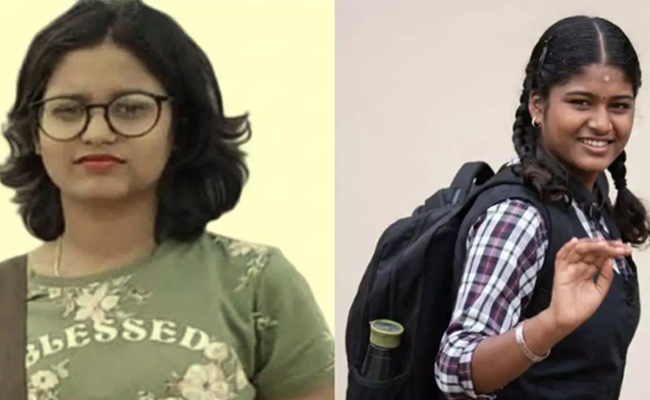
Bengaluru: The case of two students who went missing under mysterious circumstances four months ago in the jurisdiction of Vidyaranyapura Police Station has been transferred to the Criminal Investigation Department for further investigation, as no breakthrough has been made so far.
The missing students have been identified as Taniska, a second PUC student, and Tejaswini, a first PUC student. Both went missing on January 31 after leaving their homes, carrying only their Aadhaar cards. They have not returned since, prompting their parents to file a complaint with the police.
During the initial investigation, police found CCTV footage showing the two students crossing certain junctions. There were early indications that they may have travelled towards Male Mahadeshwara Hills, but searches conducted there did not yield any results, sources said.
Police teams carried out searches in more than 100 locations across the country, including Mysuru, Chennai, Coimbatore, Kerala, and Delhi. However, no trace of the students has been found. Cops said the two have not used mobile phones or ATM cards since their disappearance. They have also not contacted friends, relatives, or family members, making the case more difficult to crack.
With no progress in the investigation, the parents had urged the government to hand over the case to the CID. Following this, the government transferred the case to the CID, and a special team has now been formed to trace the missing students.