Hezbollah fires missile at Tel Aviv as Israel activates reserve troops in response to rising tension
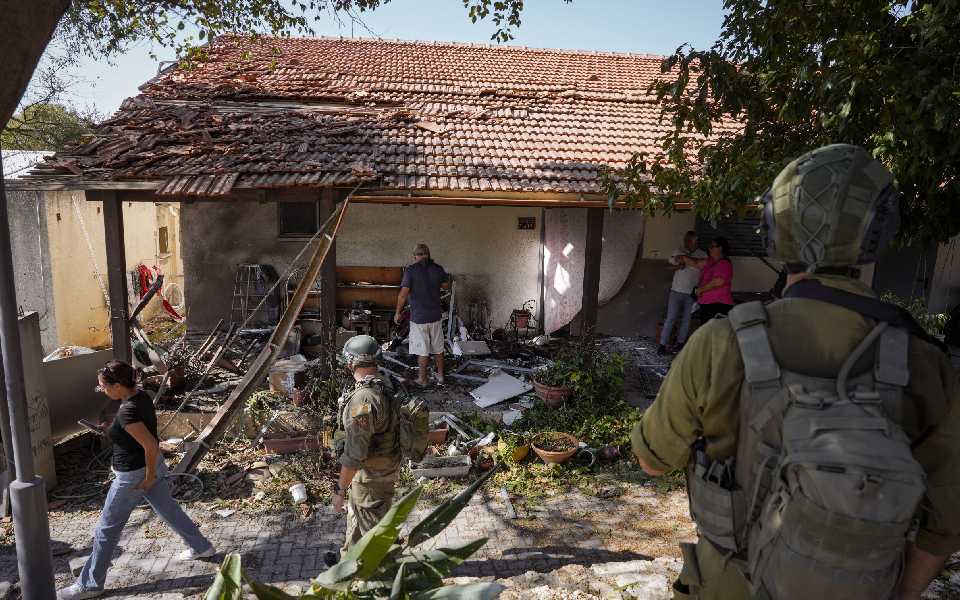
Tel Aviv, Sep 25: Hezbollah hurled dozens of projectiles into Israel early Wednesday, including a missile aimed at Tel Aviv that was the group's deepest strike yet, and the Israeli military said it would activate reserve troops in response to the rising tensions.
The Israeli military said it intercepted the surface-to-surface missile, which marked a further escalation after Israeli strikes on Lebanon killed hundreds of people.
The missile set off air-raid sirens in Tel Aviv and across central Israel. There were no reports of casualties or damage. The military said it struck the site in southern Lebanon where the missile was launched.
The launch ratcheted up hostilities as the region appeared to be teetering toward another all-out war, even as Israel continues to battle Hamas in the Gaza Strip. A wave of Israeli strikes on Monday and Tuesday killed at least 560 people in Lebanon and forced thousands to seek refuge.
Fleeing families have flocked to Beirut and the coastal city of Sidon, sleeping in schools turned into shelters, as well as in cars, parks and along the beach. Some sought to leave the country, causing a traffic jam at the border with Syria.
The United Nations said more than 90,000 people have been displaced by five days of Israeli strikes on Lebanon. The U.N. Office for the Coordination of Humanitarian Affairs said Wednesday that a total of 20,000 people have been displaced in Lebanon since Hezbollah began firing rockets into northern Israel nearly a year ago, drawing Israeli retaliation.
Hezbollah said it fired a Qader 1 ballistic missile targeting the headquarters of Israel's Mossad intelligence agency, which it blames for a recent string of targeted killings of its top commanders and for an attack last week in which explosives hidden in pagers and walkie-talkies killed dozens of people and wounded thousands, including many Hezbollah members.
The Israeli military said it was the first time a projectile fired from Lebanon had reached central Israel. Hezbollah claimed to have targeted an intelligence base near Tel Aviv last month in an aerial attack, but there was no confirmation. The Palestinian Hamas group in Gaza repeatedly targeted Tel Aviv in the opening months of the war.
The announcement about reserve troops indicated that Israel is planning even tougher action against Hezbollah. The army said it would call up two reserve brigades for missions in the north.
“This will enable the continuation of combat against the Hezbollah terrorist organization,” the military said.
Hezbollah's latest strikes included dozens of rockets fired Wednesday into northern Israel, the military said. Two people suffered shrapnel wounds in the agricultural community of Kibbutz Saar, according to Israel's Magen David Adom rescue service.
Israel responded with its own new strikes on Hezbollah. In Lebanon, at least three people were killed and nine wounded in an Israeli strike near Byblos, according to the country's Health Ministry. The coastal town is north of Beirut and far from Hezbollah's main strongholds.
The Israeli military has said there are no immediate plans for a ground invasion, but it has declined to give a timetable for the air campaign.
Tensions between Israel and the Lebanese group have steadily escalated over the last 11 months. Hezbollah has been firing rockets, missiles and drones into northern Israel in solidarity with Palestinians in Gaza and its ally Hamas, a fellow Iran-backed group.
Israel has responded with increasingly heavy airstrikes and the targeted killing of Hezbollah commanders while threatening a wider operation.
The U.N. Security Council scheduled an emergency meeting on Lebanon for Wednesday at the request of France.
Nearly a year of fighting between Hezbollah and Israel had already displaced tens of thousands of people on both sides of the border before this week's escalation. Israel has vowed to do whatever it takes to ensure its citizens can return to their homes in the north, while Hezbollah has said it will keep up its rocket attacks until there is a cease-fire in Gaza, something that appears increasingly remote.
The rocket fire over the past week has disrupted life for more than 1 million people across northern Israel, with schools closed and restrictions on public gatherings. Many restaurants and other businesses are shut in the coastal city of Haifa, and there are fewer people on the streets. Some who fled south from communities near the border are coming under rocket fire again.
Israel has moved thousands of troops who had been serving in Gaza to the northern border. It says Hezbollah has some 150,000 rockets and missiles, including some capable of striking anywhere in Israel, and that the group has fired some 9,000 rockets and drones since last October.
Lt. Col. Nadav Shoshani, an Israeli military spokesperson, said the missile fired Wednesday had a “heavy warhead” but declined to elaborate or confirm it was the type described by Hezbollah. He dismissed Hezbollah's claim of targeting the Mossad headquarters, located just north of Tel Aviv, as “psychological warfare.”
The Iranian-made Qader is a medium-range surface-to-surface ballistic missile with multiple types and payloads. It can carry an explosive payload of up to 800 kilograms (1,760 pounds), according to the Washington-based Center for Strategic and International Studies. Iranian officials have described the liquid-fueled missile as having a range of 2,000 kilometers (1,240 miles).
Cross-border fire began ramping up Sunday in the wake of the pager and walkie-talkie bombings, which killed 39 people and wounded nearly 3,000, many of them civilians. Lebanon blamed Israel, but Israel did not confirm or deny responsibility.
On Sunday, Hezbollah launched around 150 rockets, missiles and drones into northern Israel.
The next day, Israel said its warplanes struck 1,600 Hezbollah targets, destroying cruise missiles, long- and short-range rockets and attack drones, including weapons concealed in private homes. The strikes racked up the highest one-day death toll in Lebanon since Israel and Hezbollah fought a bruising monthlong war in 2006.
An Israeli airstrike in Beirut on Tuesday killed Ibrahim Kobeisi, whom Israel described as a top Hezbollah commander with the group's rocket and missile unit. Military officials said Kobeisi was responsible for launches toward Israel and planned a 2000 attack in which three Israeli soldiers were kidnapped and killed. Hezbollah later confirmed his death.
It was the latest in a string of assassinations and other setbacks for Hezbollah, which is Lebanon's strongest political and military actor and is widely considered the top paramilitary force in the Arab world.
Lebanon's Health Ministry said six people were killed and 15 were wounded in the strike in a southern Beirut suburb, an area where Hezbollah has a strong presence. The country's National News Agency said the attack destroyed three floors of a six-story apartment building.
The U.N.'s High Commissioner for Refugees in Lebanon said one of its staffers and her young son were among those killed Monday in the Bekaa region, while a cleaner under contract was killed in a strike in the south.
Hezbollah fired 300 rockets on Tuesday, injuring six Israeli soldiers and civilians, most of them lightly, according to the Israeli military.
The Lebanese Health Ministry said at least 564 people have been killed in Israeli strikes since Monday, including 50 children and 94 women, and that more than 1,800 have been wounded, a staggering toll for a country still reeling from the deadly pager and walkie-talkie bombings last week.
Let the Truth be known. If you read VB and like VB, please be a VB Supporter and Help us deliver the Truth to one and all.
CM Siddaramaiah alleges ‘criminal conspiracy’ in Sringeri recount, vows legal action
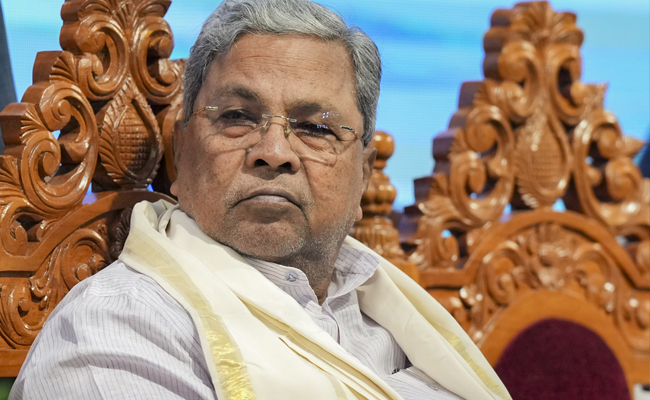
Bengaluru (PTI): Alleging a “criminal conspiracy” by BJP candidate D N Jeevaraj in the Sringeri Assembly poll recounting, Karnataka CM Siddaramaiah on Tuesday said the outcome was manipulated after valid postal ballot votes in favour of Congress leader T D Raje Gowda were tampered with during the recounting process.
Following a Karnataka High Court order on an election petition filed by Jeevaraj, challenging Raje Gowda’s election, the reverification and recounting were conducted on Saturday.
After the reverification and recount of postal ballots for the Sringeri Assembly constituency, votes polled in favour of Raje Gowda were reduced by 255, the returning officer said.
A report on the matter has been submitted to the Election Commission of India for further action, the officer added.
Congress leader Raje Gowda had won the 2023 Assembly polls from Sringeri by 201 votes, defeating his nearest rival Jeevaraj.
Addressing a press conference in Bengaluru, Siddaramaiah said the High Court had directed the recounting of postal ballots and that irregularities were noticed during the exercise conducted on May 2.
“This is a clear case of criminal conspiracy,” Siddaramaiah said, alleging that valid votes cast in favour of Raje Gowda were altered after being accepted by counting agents of all parties, including Congress, BJP, and JD(S).
He claimed that during the recounting of postal ballots, 255 votes were initially accepted as valid by all agents but were later tampered with by subordinate officials.
“There is a second mark on the votes polled in favour of Raje Gowda. They had accepted these as valid votes. Subsequently, another mark was made by officials. This is a clear case of criminal conspiracy,” he said.
When asked who was behind the alleged conspiracy, the CM replied, “It was hatched by Jeevaraj and others. It is planned.”
Siddaramaiah further alleged that the returning officer acted improperly by declaring the result despite the presence of an Election Commission observer during the recounting.
“Immediately after the counting, the returning officer announced the result. He should not have done so; this is against the law,” he said.
He pointed out that Raje Gowda had originally won by 201 votes, but after the recounting, the BJP candidate was declared the winner by 52 votes.
“The BJP has committed a criminal act of conspiracy. This is not vote chori but vote dacoity,” he alleged.
The CM said a police complaint had already been filed by Raje Gowda’s election agent, Sudhir Kumar, and emphasised the need for electoral integrity.
“We want transparency and free and fair elections. That is what our Constitution mandates,” he added.
Stating that the government would pursue legal remedies, Siddaramaiah said, “We are preparing an appeal challenging the returning officer’s announcement in a court of law.”
Responding to a separate query on elections in other states, the CM said there appeared to be an anti-incumbency factor in West Bengal, while results in Tamil Nadu were “surprising,” adding that Vijay’s party was emerging as the largest there.
Following the victory of party candidates in Bagalkote and Davanagere South, Siddaramaiah expressed confidence about future electoral prospects in Karnataka.
“Even in 2028, we will win the Assembly elections. We will come back,” the CM said.
Siddaramaiah added that he would order a forensic examination into the alleged tampering of postal ballots.