Hezbollah leader vows not to disarm, criticises Lebanese government’s move
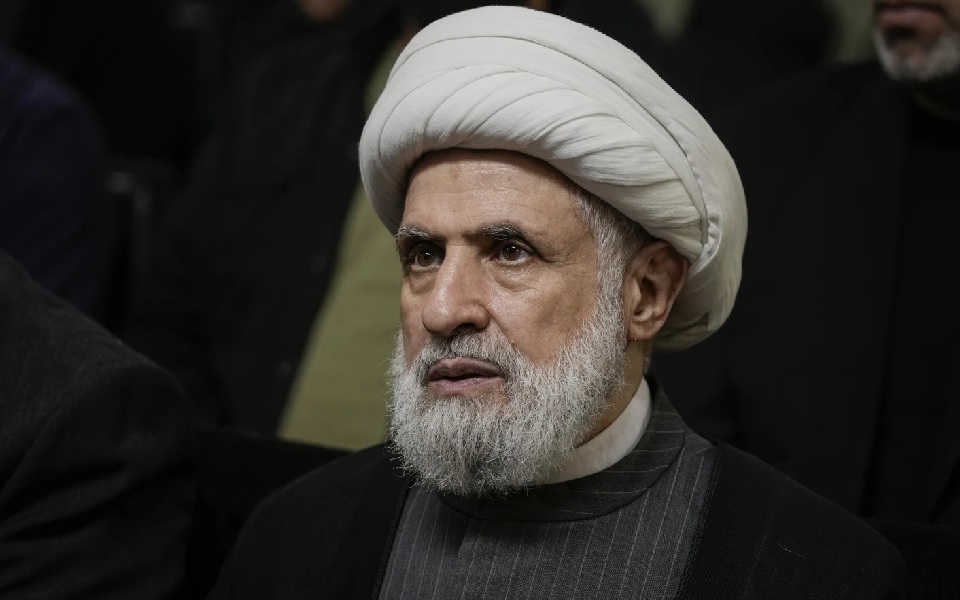
Beirut: Hezbollah deputy leader Naim Kassem on Friday (August 15, 2025) vowed that the Iran-backed group would not lay down its weapons, criticising the Lebanese government’s recent decision to disarm the group by the end of the year, according to a report published by The Hindu. Speaking during a televised address marking a Shiite religious event, Kassem said the move “serves Israel’s interests” and endangers the lives of “resistance fighters and their families.”
Kassem argued that the government should instead have “spread its authority and evicted Israel from Lebanon,” adding that it is “serving the Israeli project.” He warned that if the ongoing crisis escalates into internal conflict, the government would be responsible. While Hezbollah and its Shiite ally, the Amal movement, have not yet called for street protests, Kassem cautioned that if such a decision is made, demonstrators “will be all over Lebanon and head to the U.S. embassy.”
Last week, the Lebanese government approved a U.S.-backed plan to disarm Hezbollah and implement a ceasefire with Israel, a move urged by the international community following the 14-month Israel-Hezbollah war that ended in November.
Kassem insisted that Hezbollah will only discuss a national defence strategy concerning its weapons once Israel withdraws and halts near-daily airstrikes, which have killed many of its members since the war. “The resistance will not hand over its weapons as the aggression continues and occupation remains,” he said, adding that the group is prepared for a prolonged battle if necessary.
The war has weakened Hezbollah, causing significant loss of life among its leadership, displacing over 1 million people in Lebanon, and inflicting reconstruction costs estimated at $11 billion by the World Bank.
Let the Truth be known. If you read VB and like VB, please be a VB Supporter and Help us deliver the Truth to one and all.
Indian startup's 'Drishti' satellite launched aboard SpaceX rocket
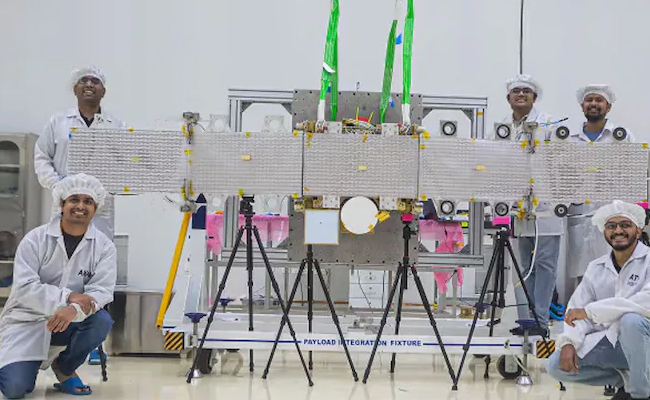
New Delhi (PTI): Bengaluru-based space start-up GalaxEye's Mission Drishti satellite was launched on Sunday aboard SpaceX's Falcon 9 rocket from California.
Mission Drishti is the world's first OptoSAR satellite, integrating electro-optical (EO) and synthetic aperture radar (SAR) sensors into a single operational platform, according to the company.
While EO sensors capture high-resolution images during sunlight and clear skies, SAR sensors provide all-weather and all-time images, using radar pulses.
In a statement, Suyash Singh, founder and CEO of GalaxEye, said, "With the satellite (Mission Drishti) now successfully in orbit, our immediate focus is on completing its commissioning. As we move through this phase, we are already witnessing strong global interest in the differentiated datasets enabled by our OptoSAR payload."
The satellite will help address long-standing limitations of conventional systems and enable more reliable and consistent data acquisition across diverse environmental conditions, the company said.
As a dual-use Earth observation satellite, the mission will support use cases across defence, agriculture, disaster management, maritime monitoring, and infrastructure planning.
The satellite is also expected to complement India's broader initiatives, including the 29 active Earth Observation satellites outlined in ISRO's recent annual report.
The launch came after five years of indigenous research and development, and extensive environmental testing and performance validation of the Mission Drishti.
In a statement, Lt Gen AK Bhatt (Retd), director general of Indian Space Association (ISpA), said, "GalaxEye has achieved what only a few global players have, which is seamlessly combining optical and SAR capabilities on a single platform to enable persistent, all-weather intelligence."
What stands out is not just the technology, but its broader impact on how downstream applications will increasingly define value in the space economy, particularly in Earth observation, where timely, decision-grade insights are critical," he added.
ISpA is the premier industry association of space and satellite companies in the country.
Union Minister Jitendra Singh also took note of the Mission Drishti launch, saying the development marked a significant milestone in India's space journey.
In a post on X, the minister said, "The successful launch of the world's first OptoSAR satellite, and the largest privately-built satellite in the country, reflects the immense potential of our young innovators driving nation-building."
GalaxEye aims to scale up Mission Drishti to a constellation of 10 satellites by 2030, developing a robust and sovereign Earth observation infrastructure for India.