Hezbollah names Naim Kassem as new chief to replace Nasrallah
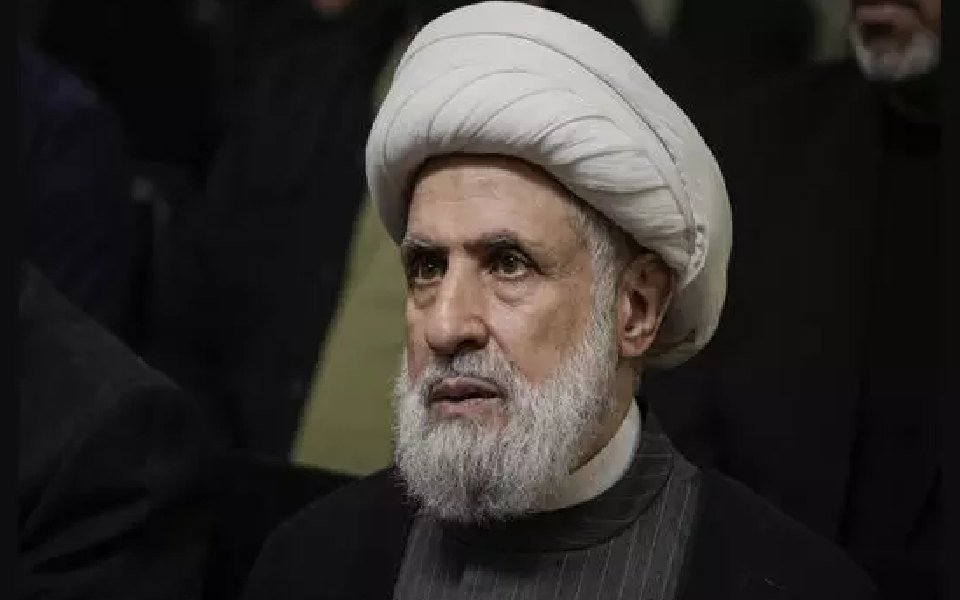
Beirut, Oct 29: Hezbollah announced Tuesday it has chosen cleric Naim Kassem to lead the Lebanese group after the killing of its longtime leader Hassan Nasrallah in an Israeli airstrike on a Beirut suburb in late September.
The group said in a statement that Hezbollah's decision-making Shura Council elected Kassem, 71, as its new secretary-general and vowed to continue Nasrallah's policies “until victory is achieved.”
Since Nasrallah's death as part of an Israeli offensive that took out many of Hezbollah's senior officials, the white-turbaned cleric with a gray beard has often been the public face of the Lebanese group. He is one of its founding members but is widely seen by supporters as lacking his predecessor's oratory skills.
Israel's Defense Minister Yoav Gallant posted on X after the announcement about Kassem: “Temporary appointment. Not for long.” It was a clear threat that Israel will go after Kassem as it did earlier by assassinating top Hezbollah officials.
In a televised speech earlier this month, Kassem, who carries the clerical title of sheikh, claimed Hezbollah's military capabilities were intact after Nasrallah's assassination and warned Israelis they will only suffer further as fighting continues.
Kassem has been sanctioned by the United States, which considers Hezbollah a terrorist group. His appointment came as no surprise since he had served as Nasrallah's deputy for 32 years and had also long been Hezbollah's public face, giving interviews to local and foreign media outlets.
“This is a message to Lebanon and abroad that Hezbollah has reorganized itself,” said Qassim Qassir, a Lebanese analyst close to Hezbollah.
Kassem's appointment shows Hezbollah is running its own affairs and not — as some have reported — that advisers from Iran's paramilitary Revolutionary Guard are now in charge of the group, Qassir added.
In an interview with The Associated Press in July, Kassem said he didn't believe that Israel had the capacity — or had yet made the decision — to launch a full-blown war with Hezbollah. But he warned that even if Israel intended to undertake a limited operation in Lebanon that stopped short of a full-scale war, it should not expect the fighting to remain limited.
A day after Hamas-led group stormed into Israel on Oct. 7, 2023, killing some 1,200 people, mostly civilians, and abducting around 250 as hostages, Hezbollah began attacking Israeli military posts along the border with Lebanon, saying it was opening a backup front for its Hamas allies.
The attack triggered the yearlong Israel-Hamas war and Israel's retaliatory offensive in Gaza has killed over 43,000 Palestinians, according to local health authorities. The count does not distinguish between civilians and combatants but more than half of the dead are said to be women and children.
“No one knows the consequences of igniting the war in Lebanon, regionally and even internationally,” Kassem said at the time, speaking from the group's political headquarters in Beirut's southern suburbs.
He said he was proud of Hezbollah's achievements in its “support front” for Hamas, saying it “required sacrifices on our part.”
Less than three months later, Israel expanded the war in Lebanon, leaving hundreds dead and more than 1.2 million people displaced. The invasion has caused wide destruction in southern and eastern Lebanon, as well as Beirut's southern suburbs that are home to Hezbollah's headquarters. Israeli troops engage in daily fierce clashes with Hezbollah in the border region as they try to push deeper into south Lebanon.
Hezbollah is still firing dozens of rockets and missiles into northern Israel and in recent days claimed an attack on an Israeli military base south of Tel Aviv. It also claimed responsibility for a drone attack that hit the home of Israeli Prime Minister Benjamin Netanyahu earlier this month. No one was hurt in that attack.
Born in 1953 in the town of Kfar Fila in southern Lebanon, Kassem studied chemistry at the Lebanese University before working for several years as a chemistry teacher. He simultaneously pursued religious studies and participated in founding the Lebanese Union for Muslim Students, an organization meant to promote religion.
In the 1970s, he joined the Movement of the Dispossessed, a political organization that pushed for greater representation for Lebanon's historically overlooked and impoverished Shiite community.
The group morphed into the Amal movement, one of the main armed groups in Lebanon's 1975-1990 civil war and now a powerful political party led by Parliament Speaker Nabih Berri. Kassem then joined the nascent Hezbollah, formed with support from Iran after Israel invaded Lebanon in 1982 and occupied the country's southern region.
From 1991, Kassem served as the group's deputy, initially under Nasrallah's predecessor, Abbas Mousawi, who was killed by an Israeli helicopter attack in 1992.
The choice of Kassem to take the helm of Hezbollah came a week after it confirmed that Hashem Safieddine — a top figure who had been widely expected to succeed Nasrallah — was killed in an Israeli airstrike on southern Beirut earlier this month.
Safieddine was Nasrallah's cousin and had close links to Iran, where he spent years of his life. Safieddine's son, Rida, is married to Zeinab Soleimani, the daughter of Gen. Qassem Soleimani, head of Iran's elite Quds Force, who was killed in a U.S. airstrike in Iraq in 2020.
“We ask God to help him in the great mission in leading Hezbollah and the Islamic Resistance,” Hezbollah said in its statement about Kassem.
In another blow to Hezbollah, thousands of communication devices used by its members — both fighters and workers with the group's civilian institutions — exploded near-simultaneously in mid-September, killing 39 people and wounding nearly 3,000. Israel was blamed for the attack that left scores with permanent disabilities.
Choosing Kassem is "proof that Hezbollah is not scared regarding the developments,” Qassir also said.
Let the Truth be known. If you read VB and like VB, please be a VB Supporter and Help us deliver the Truth to one and all.
CM Siddaramaiah alleges ‘criminal conspiracy’ in Sringeri recount, vows legal action
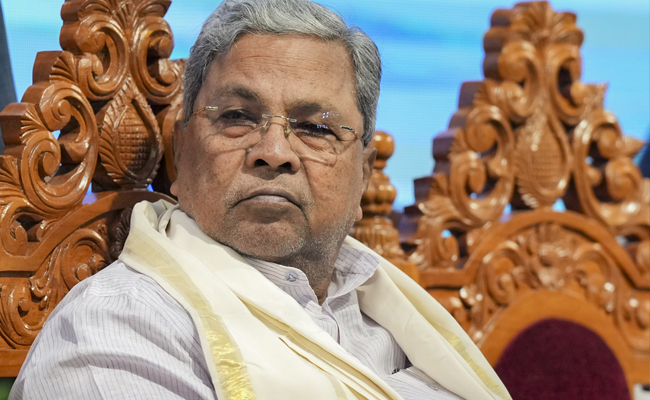
Bengaluru (PTI): Alleging a “criminal conspiracy” by BJP candidate D N Jeevaraj in the Sringeri Assembly poll recounting, Karnataka CM Siddaramaiah on Tuesday said the outcome was manipulated after valid postal ballot votes in favour of Congress leader T D Raje Gowda were tampered with during the recounting process.
Following a Karnataka High Court order on an election petition filed by Jeevaraj, challenging Raje Gowda’s election, the reverification and recounting were conducted on Saturday.
After the reverification and recount of postal ballots for the Sringeri Assembly constituency, votes polled in favour of Raje Gowda were reduced by 255, the returning officer said.
A report on the matter has been submitted to the Election Commission of India for further action, the officer added.
Congress leader Raje Gowda had won the 2023 Assembly polls from Sringeri by 201 votes, defeating his nearest rival Jeevaraj.
Addressing a press conference in Bengaluru, Siddaramaiah said the High Court had directed the recounting of postal ballots and that irregularities were noticed during the exercise conducted on May 2.
“This is a clear case of criminal conspiracy,” Siddaramaiah said, alleging that valid votes cast in favour of Raje Gowda were altered after being accepted by counting agents of all parties, including Congress, BJP, and JD(S).
He claimed that during the recounting of postal ballots, 255 votes were initially accepted as valid by all agents but were later tampered with by subordinate officials.
“There is a second mark on the votes polled in favour of Raje Gowda. They had accepted these as valid votes. Subsequently, another mark was made by officials. This is a clear case of criminal conspiracy,” he said.
When asked who was behind the alleged conspiracy, the CM replied, “It was hatched by Jeevaraj and others. It is planned.”
Siddaramaiah further alleged that the returning officer acted improperly by declaring the result despite the presence of an Election Commission observer during the recounting.
“Immediately after the counting, the returning officer announced the result. He should not have done so; this is against the law,” he said.
He pointed out that Raje Gowda had originally won by 201 votes, but after the recounting, the BJP candidate was declared the winner by 52 votes.
“The BJP has committed a criminal act of conspiracy. This is not vote chori but vote dacoity,” he alleged.
The CM said a police complaint had already been filed by Raje Gowda’s election agent, Sudhir Kumar, and emphasised the need for electoral integrity.
“We want transparency and free and fair elections. That is what our Constitution mandates,” he added.
Stating that the government would pursue legal remedies, Siddaramaiah said, “We are preparing an appeal challenging the returning officer’s announcement in a court of law.”
Responding to a separate query on elections in other states, the CM said there appeared to be an anti-incumbency factor in West Bengal, while results in Tamil Nadu were “surprising,” adding that Vijay’s party was emerging as the largest there.
Following the victory of party candidates in Bagalkote and Davanagere South, Siddaramaiah expressed confidence about future electoral prospects in Karnataka.
“Even in 2028, we will win the Assembly elections. We will come back,” the CM said.
Siddaramaiah added that he would order a forensic examination into the alleged tampering of postal ballots.