Hong Kong police draw guns, arrest 36 in latest protest
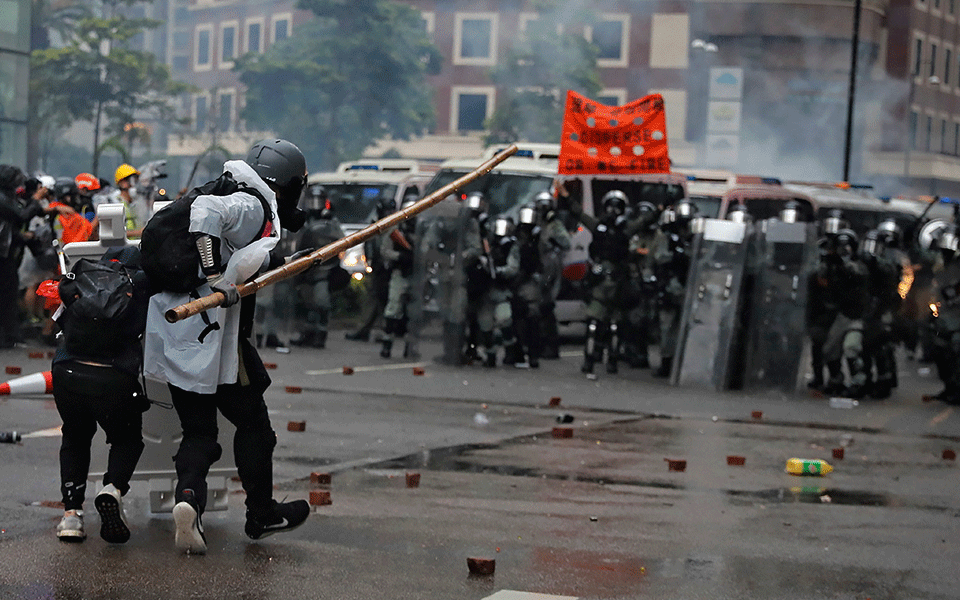
Hong Kong: Hong Kong police drew their guns and fired a warning shot Sunday night after protesters attacked officers with sticks and rods, and brought out water cannon trucks for the first time, an escalation in the summerlong protests that have shaken the city's government and residents.
The day's main showdown took place on a major drag in the outlying Tsuen Wan district following a protest march that ended in a nearby park.
While a large crowd rallied in the park, a group of hard-line protesters took over a main street, strewing bamboo poles on the pavement and lining up orange and white traffic barriers and cones to obstruct police.
After hoisting warning flags, police used tear gas to try to disperse the crowd. Protesters responded by throwing bricks and gasoline bombs toward the police. The result was a surreal scene of small fires and scattered paving bricks on the street between the two sides, rising clouds of tear gas and green and blue laser lights pointed by the protesters at the police.
The protesters eventually decided to abandon their position. Two water cannon trucks and a phalanx of police vehicles with flashing lights joined riot police on foot as they advanced up the street. They met little resistance. Tel
Television footage showed a water cannon being fired once, but perhaps more as a test, as it didn't appear to reach the retreating protesters.
Officers pulled their guns after a group of remaining protesters chased them down a street with sticks and rods, calling them "gangsters." The officers held up their shields to defend themselves as they retreated. Police said that one officer fell to the ground and six drew their pistols after they were surrounded, with one firing the warning shot.
Some protesters said they're resorting to violence because the government has not responded to their peaceful demonstrations.
"The escalation you're seeing now is just a product of our government's indifference toward the people of Hong Kong," said Rory Wong, who was at the showdown after the march.
One neighbourhood resident, Dong Wong, complained about the tear gas.
"I live on the 15th floor and I can even smell it at home," he said. "I have four dogs, sneezing, sneezing all day. ... The protesters didn't do anything, they just blocked the road to protect themselves."
Police said they arrested 36 people, including a 12-year-old, for offenses such as unlawful assembly, possession of an offensive weapon and assaulting police officers.
Earlier Sunday, tens of thousands of umbrella-carrying protesters marched in the rain. Many filled Tsuen Wan Park, the endpoint of the rally, chanting, "Fight for freedom, stand with Hong Kong," the South China Morning Post newspaper reported.
The march in Hong Kong's New Territories started near the Kwai Fong train station, which has become a focal point for protesters after police used tear gas there earlier this month. Police with riot gear could be seen moving into position along the march route.
Protesters have taken to the semiautonomous Chinese territory's streets for more than two months. Their demands include democratic elections and an investigation into police use of force to quell the protests.
A large group clashed with police on Saturday after a march in the Kowloon Bay neighbourhood, building barricades and setting fires in the streets. Police said they arrested 29 people for various offenses, including unlawful assembly, possession of offensive weapons and assaulting police officers.
The clashes, while not as prolonged or violent as some earlier ones, ended a brief lull in the violence. The protests, which began in early June, had turned largely peaceful the previous weekend, after weeks of escalating violence.
In nearby Macao, another Chinese territory, a pro-Beijing committee chose a businessman as the gambling hub's next leader with little of the controversy surrounding the government in Hong Kong.
Ho Iat-seng, running unopposed, will succeed current leader Chui Sai-on in December. Asked about the protests in Hong Kong, the 62-year-old Ho said they would end eventually, like a major typhoon.
Protesters in Hong Kong have demanded that the city's leader, Carrie Lam, also chosen by a pro-Beijing committee, step down, though that demand has evolved into a broader call for fully democratic elections.
Let the Truth be known. If you read VB and like VB, please be a VB Supporter and Help us deliver the Truth to one and all.
Chhattisgarh Vedanta power plant blast: Death toll rises to 20; sixteen workers undergoing treatment
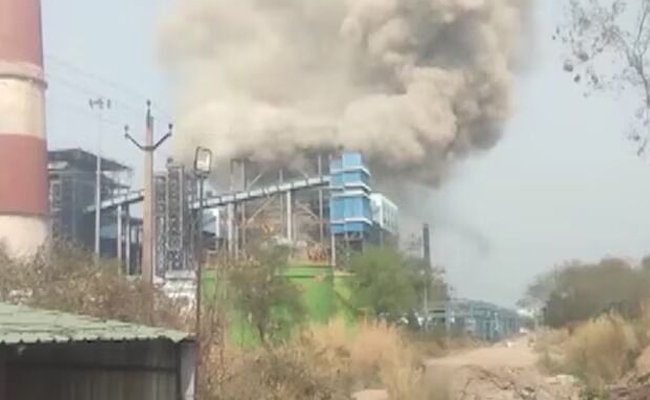
Sakti (Chhattisgarh) (PTI): The death toll in a blast at the Vedanta power plant in Chhattisgarh's Sakti district has mounted to 20 with seven more workers succumbing to injuries, while 16 others are undergoing treatment at different hospitals, officials said on Wednesday.
The deceased include six labourers from West Bengal, five from Chhattisgarh, three each from Jharkhand and Uttar Pradesh, two from Bihar, and one from Madhya Pradesh.
The opposition Congress has demanded registration of an FIR against the plant management and a judicial inquiry into the incident.
The explosion occurred on Tuesday afternoon in a steel tube carrying high-pressure steam from the boiler to the turbine at the Vedanta Ltd power plant located in Singhitarai village, leaving several workers with severe burn injuries.
According to officials, four workers died on the spot, while nine others succumbed to injuries soon after the incident.
Seven more workers have died in hospitals, raising the toll to 20, Sakti Collector Amrit Vikas Topno told PTI on Wednesday.
He said that a total of 36 workers were affected in the blast, and 20 of them died.
"Of the 16 injured workers, five are undergoing treatment in hospitals in Raipur, while 11 others are in hospitals of Raigarh, the neighbouring district of Sakti," he added.
Topno added that every possible effort was being made to provide the best medical treatment to the injured.
The deceased were identified, and their family members are being contacted. Arrangements have been made to transport the mortal remains to their native villages via ambulance following the postmortem examination and to provide immediate financial assistance, he said.
Chief Minister Vishnu Deo Sai has announced a compensation of Rs 5 lakh to the families of each deceased worker and Rs 50,000 for those injured.
Vedanta Power has also announced a Rs 35 lakh compensation for the family of each deceased worker, along with employment support.
The company will also provide Rs 15 lakh to each injured person, ensure salary continuation until recovery, and offer counselling support, a statement from the plant management said.
The chief minister has ordered an inquiry by the Commissioner of the Bilaspur division, assuring strict action against the guilty.
He directed officials to ensure free and proper medical treatment for all injured and emphasised that no negligence in their care would be tolerated.
The district administration has also ordered a separate magisterial probe, while the company has initiated its own internal investigation.
Collector Topno has appointed the Sub-Divisional Magistrate (SDM) of Dabhra to conduct the magisterial inquiry.
The SDM has been asked to submit a report within 30 days covering key aspects, including the cause of the accident, whether it was due to technical or human error, and details of safety inspections carried out at the plant.
Meanwhile, the opposition Congress has demanded registration of an FIR against the plant management and a judicial inquiry into the incident.
State Congress communication wing head Sushil Anand Shukla on Wednesday alleged negligence on the plant management's part and accused the government of attempting to shield those responsible.
He also demanded compensation of Rs 1 crore for the families of the deceased and Rs 50 lakh for the injured.
The construction of a 1,200 MW coal-based thermal power project (two units of 600 MW each) in Singhitarai, originally owned by Athena Chhattisgarh Power Ltd, started in 2009, but remained stalled between 2016 and 2022.
Vedanta acquired the plant in 2022, after which a 600 MW unit was completed and commissioned in August last year, while the second unit is still under construction.
The deceased have been identified as Amrit Lal Patel, Thanda Ram Lahre, Udhab Singh Yadav, Rameshwar Mahilange, and Nadeem Ansari (all from Chhattisgarh); Susanta Jana, Sheikh Saifuddin, Manas Giri, Kailash Mahto, Shibnath Murmu, and Dipankar Singh (West Bengal), Tarun Kumar Ojha, Abdul Karim and Ashok Parhiya (Jharkhand), Raju Ram, Pappu Kumar and Brijesh Kumar (Uttar Pradesh), Aakib Khan and Ritesh Kumar (Bihar), and Chitranjan Dhulai of Madhya Pradesh, officials said.