Hospital Shooting: Doctor, pharmaceutical assistant among 4 dead
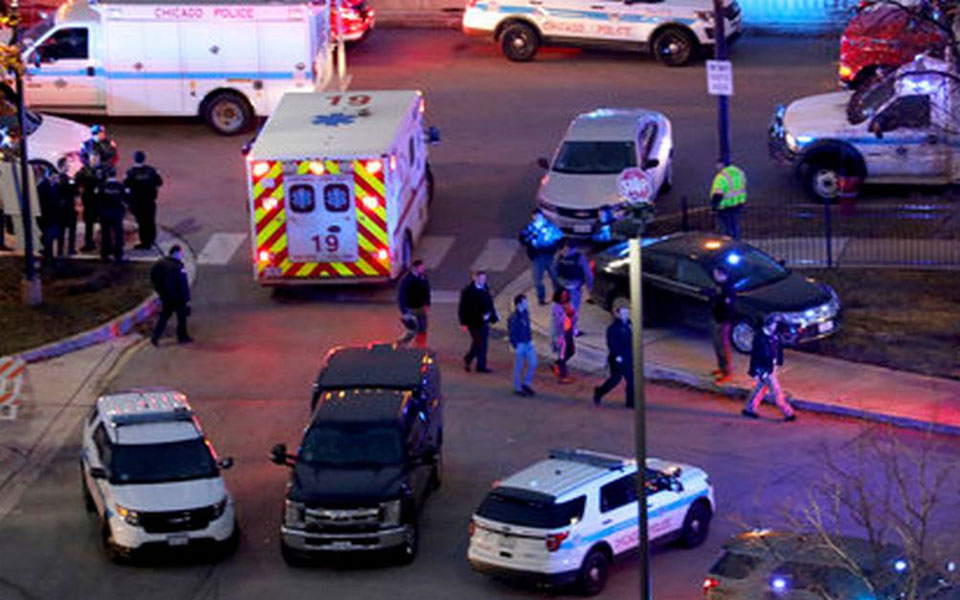
Chicago, Nov 20: Mercy Hospital has identified two members of its staff killed in a shooting that left four dead, also including the gunman and a police officer.
Emergency room physician, 38-year-old Tamera O'Neal, was described as a fascinating, hardworking person. Hospital officials said that O'Neal never worked on Sunday because of her religious beliefs.
Police say O'Neal was confronted in the hospital parking lot by the gunman, with whom she had been in a domestic relationship. Witnesses say the man shot her and she fell to the ground. The gunman then stood over her and shot her again.
Hospital officials say 25-year-old pharmaceutical assistant Dayna Less, who was in training to become a pharmacist, was also killed. According to police Superintendent Eddie Johnson, the woman was shot as she stepped from an elevator. She was a recent Purdue University graduate.
Also killed was 28-year-old Chicago Police Officer Samuel Jimenez, the father of three children.
Chicago Police Superintendent Eddie Johnson says the four dead in the shooting at Mercy Hospital include two hospital employees, a Chicago police officer and the suspected gunman.
Johnson says the shooting began outside the hospital with a "verbal altercation" in the parking lot between people who knew each other. A friend tried to intervene and the suspected gunman pulled up his shirt and showed a weapon. Gunfire erupted and the shooter ran inside the hospital, where police confronted him.
He says that one of the women killed was in a domestic relationship with the gunman.
Earlier, witnesses said a gunman repeatedly shot a woman near a parking lot outside the building before entering the hospital and opening fire. Police say the suspected gunman is dead, but it's unclear if he took his own life or was killed by police.
Mercy Hospital & Medical Center released a statement late Monday afternoon saying police officers have secured the facility and that patients are now safe.
Police haven't released details about the suspected gunman, the victims or a possible motive.
Let the Truth be known. If you read VB and like VB, please be a VB Supporter and Help us deliver the Truth to one and all.
Brothers awaiting board exam results drown in canal

Erode (Tamil Nadu) (PTI): Minor brothers who were awaiting their board exam results have drowned in a canal in this district while spending their Summer holidays at their aunt's place, police said.
According to Arachalure Police, Santhosh, aged 17, and his younger brother Sanjai, aged 15, natives of Musiri village in Tiruchirapalli district, came to Gopaliparai hamlet near Arachalure to their Aunt's house a couple of days ago after writing their annual 12th and 10th examinations, respectively.
The police said on Friday that both boys went to the nearby Lower Bhavani Project canal to take a bath. It was alleged that while taking a bath, both boys went to a deeper area of the canal and went missing.
As they didn't return home, even two hours after they left, their aunt grew suspicious and informed the Fire and Rescue Services, Chennimalai. A rescue team from the department rushed to the spot. After a few minutes of searching, they located the dead bodies of the brothers and sent them to the hospital. Arachalure police registered a case of death due to drowning and are investigating.