ICC opens probe into Myanmar's treatment of Rohingyas
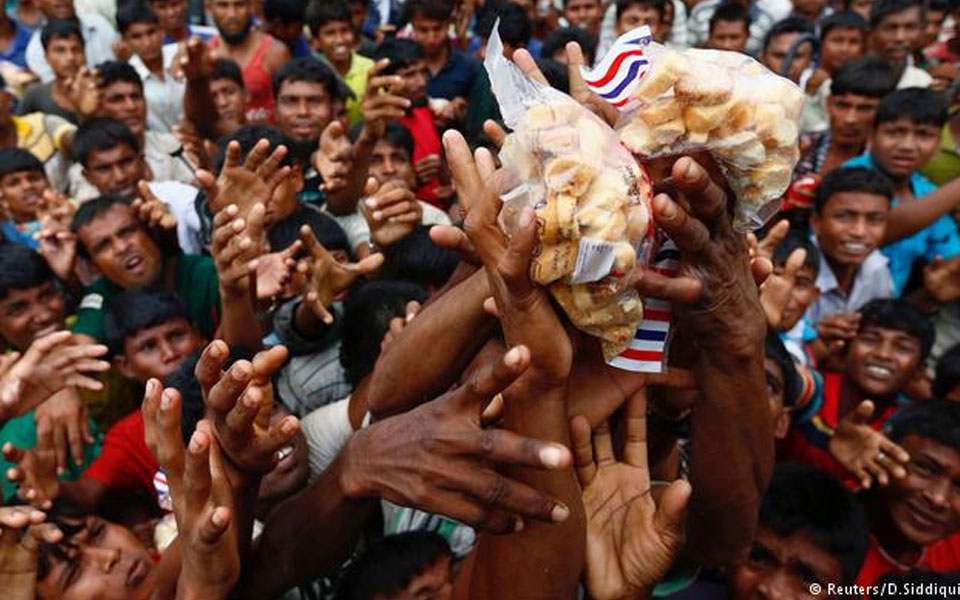
The Hague, Sep 19 : The International Criminal Court has opened a preliminary examination into Myanmar's alleged crimes against its Rohingya Muslim minority, including killings, sexual violence and forced deportations.
The move was the first step towards a full investigation of Myanmar's military crackdown that killed thousands and forced over 700,000 of the stateless people flee the northern Rakhine state into neighbouring Bangladesh.
The development came nearly two weeks after judges ruled that even though Myanmar did not sign up to the Hague-based ICC, the court still had jurisdiction over crimes against the Rohingyas because Bangladesh is an ICC member, the BBC reported.
In August, Myanmar rejected a UN report calling for military figures to be investigated for genocide. The Myanmar Army has previously cleared itself of wrongdoing in the Rohingya crisis.
The military launched a crackdown in Myanmar's Rakhine last year after Rohingya militants carried out attacks on police posts. Hundreds of thousands have since fled to Bangladesh.
There have been widespread allegations of human rights abuses, including arbitrary killing, rape and burning of land over many years.
ICC prosecutor Fatou Bensouda on Tuesday said she had decided "to carry out a full-fledged preliminary examination of the situation at hand".
Bensouda said the initial probe, which could lead to a formal investigation by the ICC, could focus on a number of alleged "coercive acts" that possibly led to the "forced displacement" of Rohingya Muslims.
She said that these might include "deprivation of fundamental rights, killing, sexual violence, enforced disappearance, destruction and looting".
The Hague-based court would also consider whether persecution or "other inhumane acts" played a part in the plight of the Rohingya.
The ICC announcement came as British Foreign Secretary Jeremy Hunt, who was set to arrive in Myanmar on Wednesday for talks with the country's leaders, promised additional support for victims of sexual violence.
Hunt will visit Rakhine and will also meet Myanmar's State Counsellor and Nobel Peace Prize laureate Aung San Suu Kyi, who recently said her government could in hindsight have handled the Rohingya situation differently.
Earlier on Tuesday, UN investigators presented a 444-page report detailing alleged violations committed by the Myanmar military in relation to violence against the Rohingya Muslim population.
"It is hard to fathom the level of brutality," the head of the UN's fact-finding mission on Myanmar, Marzuki Darusman, told the UN Human Rights Council, adding that the military showed a "total disregard for civilian life".
The report was criticised by Myanmar's Ambassador to the UN, Kyaw Moe Tun, who labelled it "one-sided" and "flawed".
courtesy :
Let the Truth be known. If you read VB and like VB, please be a VB Supporter and Help us deliver the Truth to one and all.
4 workers die after being buried under coal slurry in Jharkhand's Dhanbad
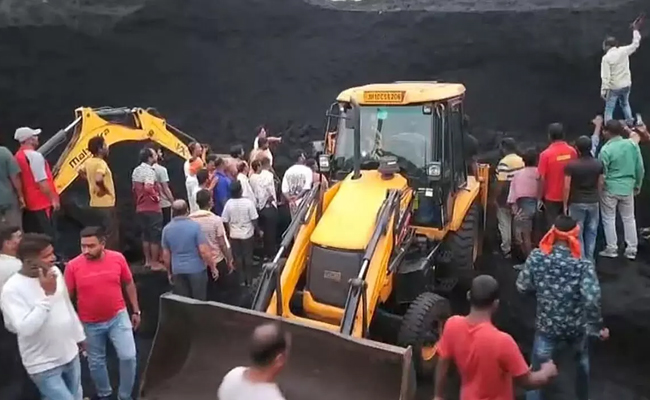
Dhanbad (Jharkhand) (PTI): At least four workers died after being buried under coal slurry in Jharkhand's Dhanbad district on Saturday, a police official said.
The incident took place at Moonidih coal washery in the command area of Bharat Coking Coal Limited (BCCL).
"Bodies of all four workers were dug out of debris during a rescue operation," Putki police station in-charge Waqar Hussain told PTI.
The incident took place when coal slurry was being loaded into trucks by workers, during which a large chunk of slurry fell and trapped several workers underneath, officials said.
The deceased have been identified as Manik Bauri, Dinesh Bauri, Deepak Bauri, and Hemlal Gope.
Meanwhile, the family members of the deceased and local villagers placed the bodies in front of the washery gate and began a protest.
They demanded compensation, jobs for dependents and action against those responsible for the incident.
Police and administration officials are trying to pacify the protesters, an official said.